THE ADVENTURE COLLECTIVE® · Independent discovery and booking for outdoor travel

Pedal between two of Cambodia’s greatest temples on an easy, guided bike tour through shaded trails and wide temple courtyards. Expect steady flats, frequent stops for history, and local flavors along the way.
Pedal between two of Cambodia’s greatest temples on an easy, guided bike tour through shaded trails and wide temple courtyards. Expect steady flats, frequent stops for history, and local flavors along the way.
The morning light slides across ancient sandstone as a line of bicycles rolls under a canopy of towering trees; leaves whisper and the moat nudges its reflection closer. Riders move at a steady, unhurried pace, passing monkeys that dart from wall to walkway and butterflies that thread the humid air—this is a gentle pedal through the heart of the Angkor Archaeological Park.
Verified experiences and guided adventures in the surrounding area.
Operated by Angkor Focus Travel · Siem Reap, Siem Reap Province
The morning light slides across ancient sandstone as a line of bicycles rolls under a canopy of towering trees; leaves whisper and the moat nudges its reflection closer. Riders move at a steady, unhurried pace, passing monkeys that dart from wall to walkway and butterflies that thread the humid air—this is a gentle pedal through the heart of the Angkor Archaeological Park.
The route links two of Cambodia’s most significant monuments: Angkor Wat, the vast 12th‑century temple complex built under Suryavarman II, and Bayon, the enigmatic state temple at Angkor Thom famed for its 216 carved faces. Geologically, the temples sit on a low, flat floodplain fed by seasonal Tonlé Sap tributaries; centuries of tropical weather sculpted both the forest and the stone, while Khmer builders raised massive laterite and sandstone blocks into precise reliefs and galleries.
Culturally the area remains alive: vendors, local guides, and monks maintain a daily rhythm around the ruins. Hidden trails push close to temple walls where roots and masonry contest the ground—nature here is forward, occasionally reclaiming a step or two.
Practical guidance: expect an easy, mostly flat 4–6 hour ride with regular stops for photos and explanation. Bring a valid Angkor pass (purchase at the park ticket center), carry water and sunscreen, and plan to start early to avoid midday heat and crowds. Helmets and a quality mountain bike are typically provided; comfortable clothing, insect repellent, and a small camera bag make the day more comfortable. With steady pace and local guidance, the tour suits anyone looking for cultural immersion without intense exertion.
easy.
5 hours.
Suitable for casual cyclists and most fitness levels; basic stamina for up to five hours of on‑and‑off riding is sufficient
Yes — the park requires a valid Angkor pass for entry; tour operators may advise purchasing it at the official ticket center in Siem Reap before the ride.
Helmets and quality mountain bikes are typically provided by the operator; bring personal gloves or a properly fitted helmet if you prefer.
Yes — the route is described as leisurely and suitable for non‑professional riders, though children should be comfortable on a bike for several hours and supervised by an adult.
Most packages include bottled water and a lunch or snack; operators may also offer fresh coconut juice and rest stops along the way.
Angkor Wat was built in the early 12th century under King Suryavarman II and later became the heart of Angkor Thom; Bayon, with its carved smiling faces, served as the state temple of Jayavarman VII.
The park faces pressure from tourism and environmental wear; visitors are asked to stay on paths, avoid touching bas‑reliefs, and support local guides who follow conservation guidelines.
Angkor Focus Travel operates guided outdoor trips and adventures with an emphasis on safety, stewardship, and memorable experiences.
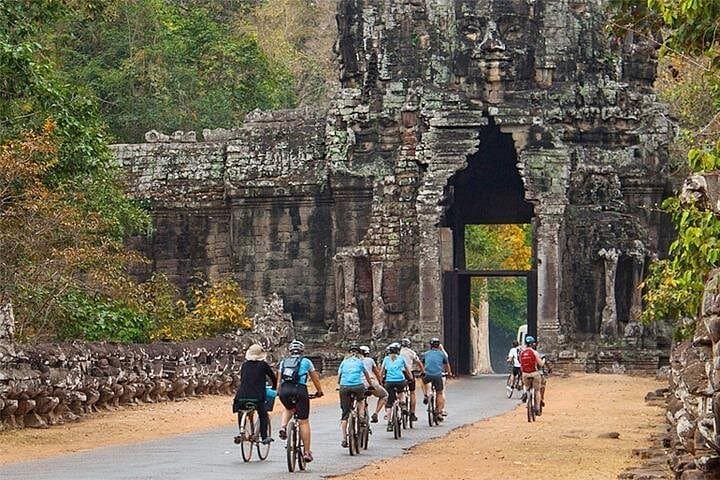
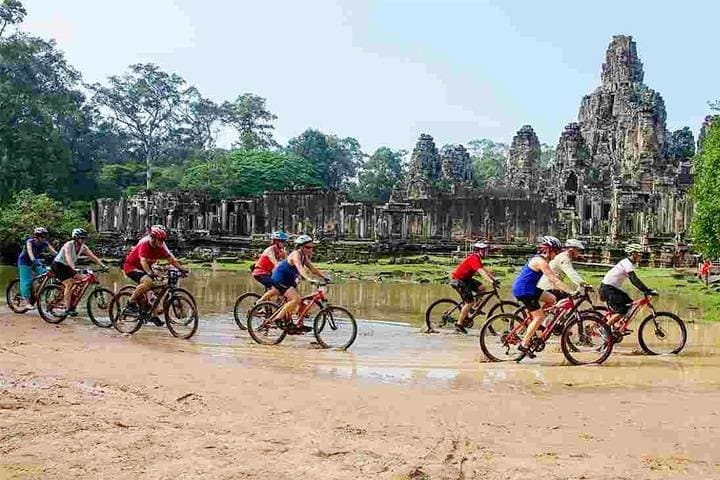
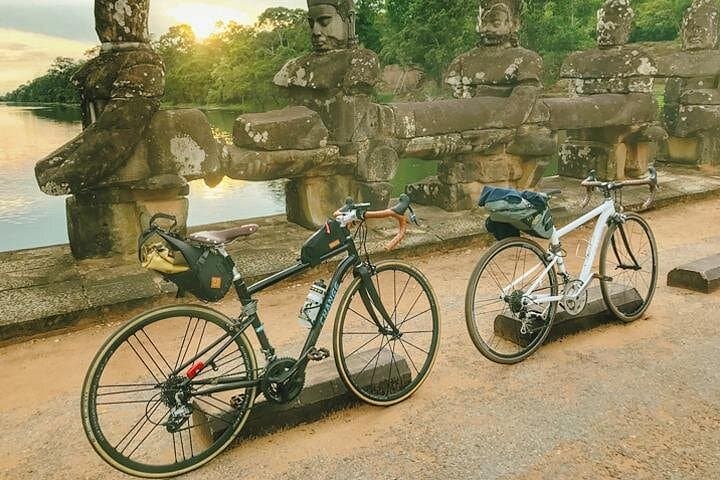
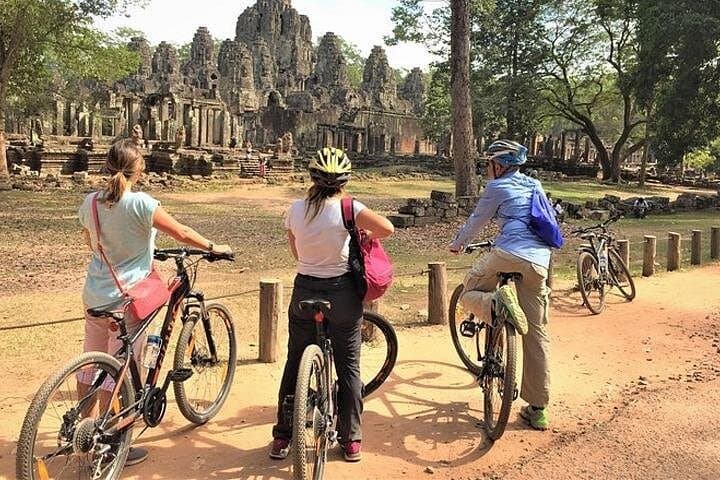
The morning light slides across ancient sandstone as a line of bicycles rolls under a canopy of towering trees; leaves whisper and the moat nudges its reflection closer. Riders move at a steady, unhurried pace, passing monkeys that dart from wall to walkway and butterflies that thread the humid air—this is a gentle pedal through the heart of the Angkor Archaeological Park.
The morning light slides across ancient sandstone as a line of bicycles rolls under a canopy of towering trees; leaves whisper and the moat nudges its reflection closer. Riders move at a steady, unhurried pace, passing monkeys that dart from wall to walkway and butterflies that thread the humid air—this is a gentle pedal through the heart of the Angkor Archaeological Park.
The route links two of Cambodia’s most significant monuments: Angkor Wat, the vast 12th‑century temple complex built under Suryavarman II, and Bayon, the enigmatic state temple at Angkor Thom famed for its 216 carved faces. Geologically, the temples sit on a low, flat floodplain fed by seasonal Tonlé Sap tributaries; centuries of tropical weather sculpted both the forest and the stone, while Khmer builders raised massive laterite and sandstone blocks into precise reliefs and galleries.
Culturally the area remains alive: vendors, local guides, and monks maintain a daily rhythm around the ruins. Hidden trails push close to temple walls where roots and masonry contest the ground—nature here is forward, occasionally reclaiming a step or two.
Practical guidance: expect an easy, mostly flat 4–6 hour ride with regular stops for photos and explanation. Bring a valid Angkor pass (purchase at the park ticket center), carry water and sunscreen, and plan to start early to avoid midday heat and crowds. Helmets and a quality mountain bike are typically provided; comfortable clothing, insect repellent, and a small camera bag make the day more comfortable. With steady pace and local guidance, the tour suits anyone looking for cultural immersion without intense exertion.