THE ADVENTURE COLLECTIVE® · Independent discovery and booking for outdoor travel

Beat the crowds on a private morning bike tour of Angkor Wat and surrounding temples. Pedal quiet village tracks and jungle trails to reach Ta Prohm, Bayon and hidden viewing platforms before the heat and tourists arrive.
Beat the crowds on a private morning bike tour of Angkor Wat and surrounding temples. Pedal quiet village tracks and jungle trails to reach Ta Prohm, Bayon and hidden viewing platforms before the heat and tourists arrive.
Morning light slices between ancient sandstone towers as a small group pedals out from Siem Reap, tires humming on compacted earth and narrow village tracks. The route threads past rice paddies where water reflects the sky and local life unfolds—children running to the fence, oxen grazing—before the forest swallows the road and temples loom through banyan roots.
Verified experiences and guided adventures in the surrounding area.
Operated by Siem Reap Biking Tour · Siem Reap, Siem Reap Province
Morning light slices between ancient sandstone towers as a small group pedals out from Siem Reap, tires humming on compacted earth and narrow village tracks. The route threads past rice paddies where water reflects the sky and local life unfolds—children running to the fence, oxen grazing—before the forest swallows the road and temples loom through banyan roots.
Angkor was the heart of the Khmer Empire (9th–15th centuries), and these temples—Angkor Wat, Ta Prohm, Bayon—record a layered history of Hindu and Buddhist practice carved into laterite and sandstone. Geology matters here: sandstone blocks were quarried from nearby hills and arranged into towering galleries that expand and erode unevenly, creating the moss-soft textures you’ll see up close.
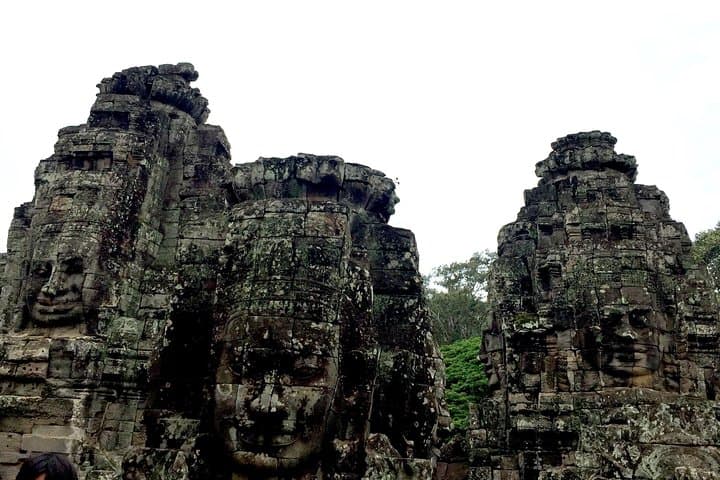
Culturally, the ride passes working villages where traditional crafts and temple-bound customs persist; guides often point out local shrines and seasonal festivals. The private, early start aims to avoid crowds, letting riders linger at viewing platforms and photograph Bayon’s calm, four-faced towers.
Practical guidance: expect an 8-hour day with mostly flat terrain but intermittent rough, root-filled jungle tracks—basic bike-handling skills are required. Wear sun-covering clothing that meets temple dress codes (shoulders and knees covered), bring sunscreen, insect repellent, and at least 1.5–2 liters of water. Most operators provide helmets and bottled water; carry a small first-aid kit and lightweight rain protection in wet months.
Timing your visit for the dry season (November–February) yields cooler mornings and clearer light. Respect ropes and signs: many carvings are fragile. This tour is an effective blend of active sightseeing and cultural immersion for travelers who want space to absorb Angkor’s architecture without the midday crush.
moderate.
7–8 hours.
Suitable for riders with basic cycling fitness able to handle up to a full day of on-and-off road pedaling and occasional short hikes
Yes—visitors must hold a valid Angkor Park ticket (single-day or multi-day). Guides often assist with the ticketing process at the start.
Yes if you have basic cycling experience and are comfortable riding on uneven surfaces; guides tailor pace to the group's ability.
Operators may shift portions onto main paved roads during heavy rain; bring waterproof protection and expect muddier trails.
Standard mountain bicycles and helmets are typically included; confirm bike size and condition when booking.
Angkor was the Khmer Empire’s capital; its temples record shifts from Hindu to Buddhist practice and reflect centuries of regional engineering and water management.
High visitor numbers stress fragile stone and ecology—stay on marked paths, avoid touching carvings, and follow guide instructions to reduce impact.
Siem Reap Biking Tour operates guided outdoor trips and adventures with an emphasis on safety, stewardship, and memorable experiences.
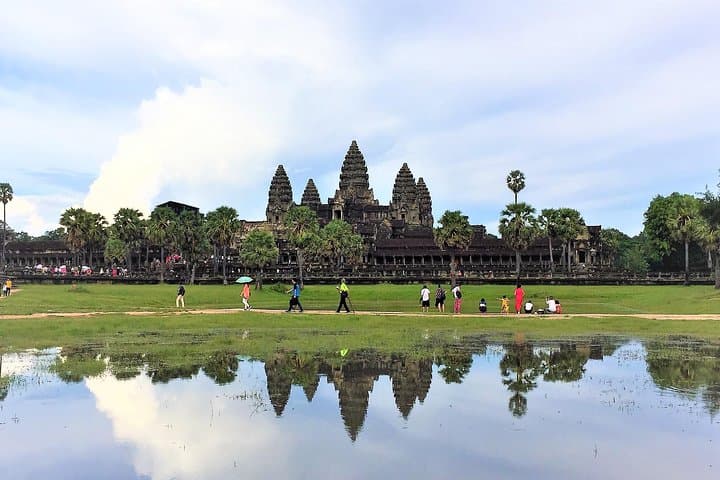
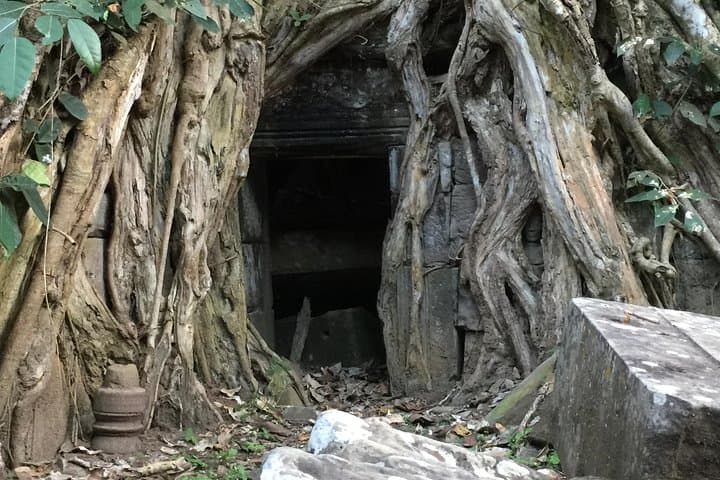
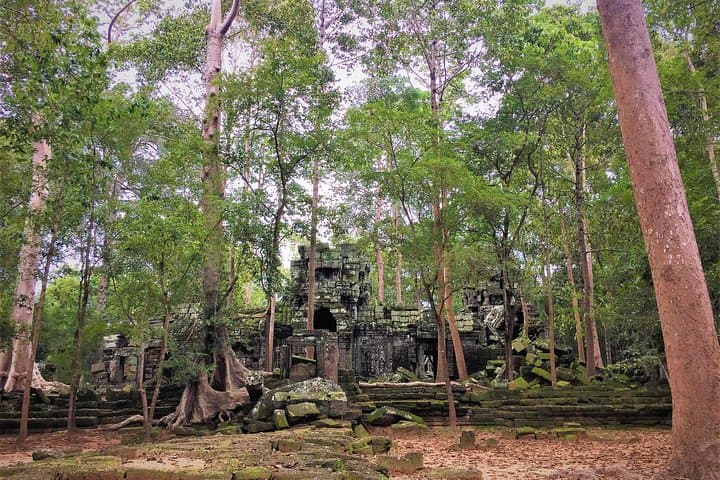
Morning light slices between ancient sandstone towers as a small group pedals out from Siem Reap, tires humming on compacted earth and narrow village tracks. The route threads past rice paddies where water reflects the sky and local life unfolds—children running to the fence, oxen grazing—before the forest swallows the road and temples loom through banyan roots.
Morning light slices between ancient sandstone towers as a small group pedals out from Siem Reap, tires humming on compacted earth and narrow village tracks. The route threads past rice paddies where water reflects the sky and local life unfolds—children running to the fence, oxen grazing—before the forest swallows the road and temples loom through banyan roots.
Angkor was the heart of the Khmer Empire (9th–15th centuries), and these temples—Angkor Wat, Ta Prohm, Bayon—record a layered history of Hindu and Buddhist practice carved into laterite and sandstone. Geology matters here: sandstone blocks were quarried from nearby hills and arranged into towering galleries that expand and erode unevenly, creating the moss-soft textures you’ll see up close.
Culturally, the ride passes working villages where traditional crafts and temple-bound customs persist; guides often point out local shrines and seasonal festivals. The private, early start aims to avoid crowds, letting riders linger at viewing platforms and photograph Bayon’s calm, four-faced towers.
Practical guidance: expect an 8-hour day with mostly flat terrain but intermittent rough, root-filled jungle tracks—basic bike-handling skills are required. Wear sun-covering clothing that meets temple dress codes (shoulders and knees covered), bring sunscreen, insect repellent, and at least 1.5–2 liters of water. Most operators provide helmets and bottled water; carry a small first-aid kit and lightweight rain protection in wet months.
Timing your visit for the dry season (November–February) yields cooler mornings and clearer light. Respect ropes and signs: many carvings are fragile. This tour is an effective blend of active sightseeing and cultural immersion for travelers who want space to absorb Angkor’s architecture without the midday crush.