THE ADVENTURE COLLECTIVE® · Independent discovery and booking for outdoor travel

See Angkor Wat at sunrise, explore jungle-strangled Ta Prohm and glide through Tonle Sap’s floating villages on a 2.5-day small-group tour from Siem Reap. Expect long days, uneven stone, and close-up history told by local guides.
See Angkor Wat at sunrise, explore jungle-strangled Ta Prohm and glide through Tonle Sap’s floating villages on a 2.5-day small-group tour from Siem Reap. Expect long days, uneven stone, and close-up history told by local guides.
A humid pre-dawn air hushes the causeway as your small group assembles outside Angkor Wat. Torches cut lanes through shadowed galleries while the first pale ribbon of sunrise lifts over lotus ponds and sandstone towers; the bas-reliefs begin to breathe in gold light.
Verified experiences and guided adventures in the surrounding area.
Operated by Journey Cambodia · Siem Reap, Siem Reap Province
A humid pre-dawn air hushes the causeway as your small group assembles outside Angkor Wat. Torches cut lanes through shadowed galleries while the first pale ribbon of sunrise lifts over lotus ponds and sandstone towers; the bas-reliefs begin to breathe in gold light.
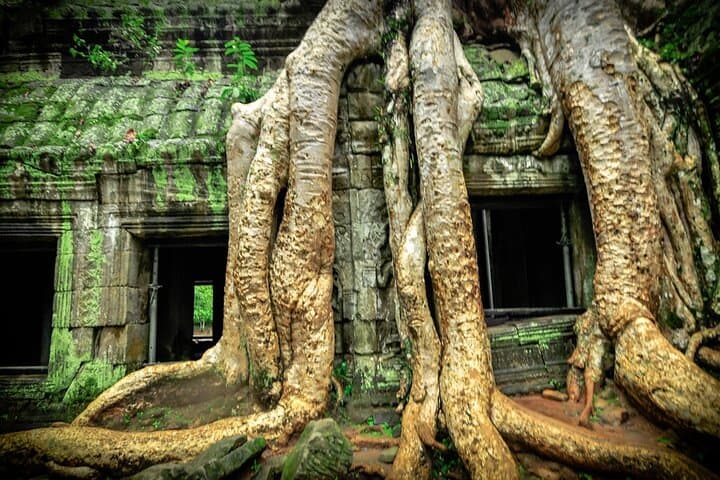
This 2.5-day itinerary moves with classical cadence: dawn at Angkor Wat, the jungle-claimed corridors of Ta Prohm, the many-faced towers of Bayon in Angkor Thom, and the finely carved sandstone of Banteay Srei farther afield. Geology here is visible in the building blocks — laterite cores with sandstone faces carved for detail — and in the way tree roots pry at mortar, an ongoing dialogue between forest and stone. Tonle Sap, Southeast Asia's great seasonal lake, brings a different rhythm: its flood pulse changes villages into floating communities and concentrates bird and fish life in the wet months.
Culturally, the sites mark the height of the Khmer Empire (9th–15th centuries); local guides translate temple panels into stories of gods, kings and irrigation that shaped the region's wealth. In the dry season an alternative performance by Cambodia's Phare Circus often replaces the lake visit.
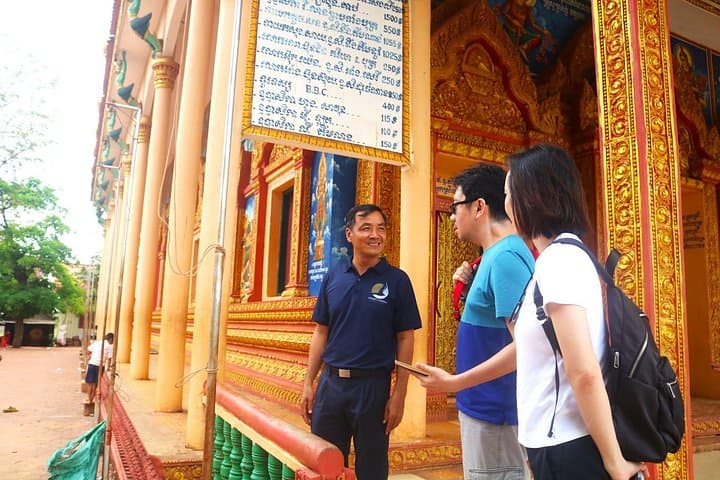
Practical notes: expect multiple short walks across uneven stone and soft dirt, early departures for sunrise, and warm, humid conditions. Wear sturdy shoes, bring sun protection, insect repellent and a reusable water bottle. Follow guide directions around fragile carvings and be prepared for seasonal changes in water levels at Tonle Sap.
easy.
2–3 days.
Suitable for most travelers with basic mobility; involves moderate walking on uneven surfaces and some steps.
Yes—Angkor Archaeological Park issues a multi-day pass; most operators arrange passes or instruct where to buy one in Siem Reap.
When water is low (roughly March–July) floating village access is limited and many tours substitute a visit to Cambodia Phare Circus or other cultural sites.
Yes—this small-group tour is rated easy with vehicle transfers between sites, but expect early starts and some walking on uneven terrain.
Guided visits are recommended for historical context and to navigate fragile areas; solo wandering in certain off-track zones is discouraged for safety and conservation reasons.
Angkor was the heartland of the Khmer Empire from the 9th to the 15th centuries; its hydraulic systems and temple complexes reflect a civilization built on rice irrigation and monumental religion.
High visitor numbers and seasonal flooding stress sandstone reliefs and village ecosystems—stick to paths, avoid touching carvings and support community-based businesses.
Journey Cambodia operates guided outdoor trips and adventures with an emphasis on safety, stewardship, and memorable experiences.
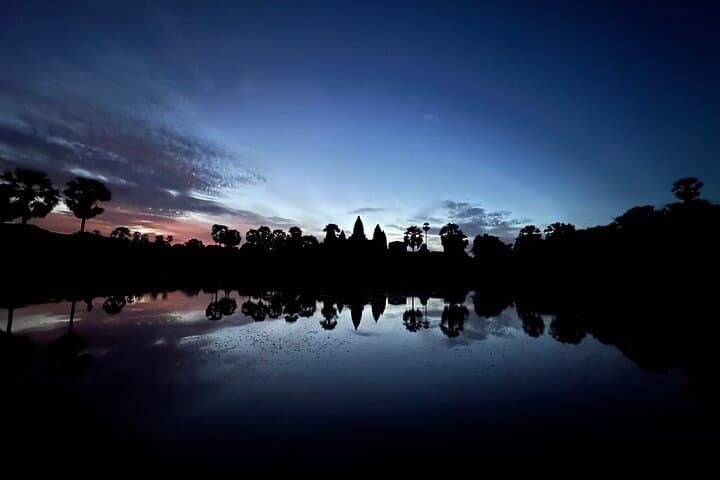
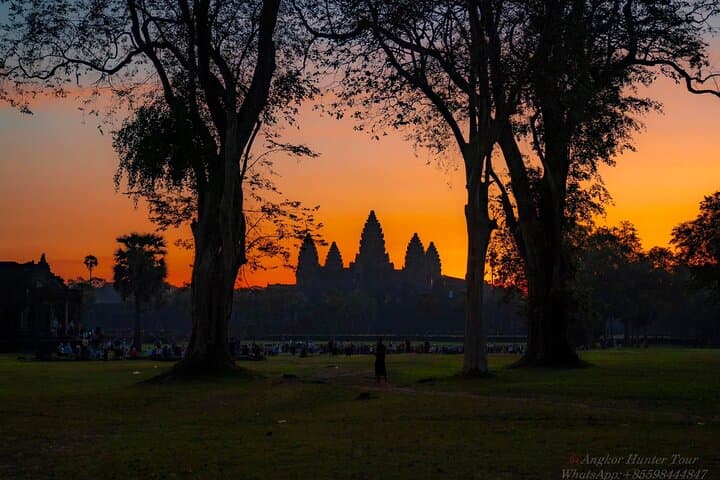
A humid pre-dawn air hushes the causeway as your small group assembles outside Angkor Wat. Torches cut lanes through shadowed galleries while the first pale ribbon of sunrise lifts over lotus ponds and sandstone towers; the bas-reliefs begin to breathe in gold light.
A humid pre-dawn air hushes the causeway as your small group assembles outside Angkor Wat. Torches cut lanes through shadowed galleries while the first pale ribbon of sunrise lifts over lotus ponds and sandstone towers; the bas-reliefs begin to breathe in gold light.
This 2.5-day itinerary moves with classical cadence: dawn at Angkor Wat, the jungle-claimed corridors of Ta Prohm, the many-faced towers of Bayon in Angkor Thom, and the finely carved sandstone of Banteay Srei farther afield. Geology here is visible in the building blocks — laterite cores with sandstone faces carved for detail — and in the way tree roots pry at mortar, an ongoing dialogue between forest and stone. Tonle Sap, Southeast Asia's great seasonal lake, brings a different rhythm: its flood pulse changes villages into floating communities and concentrates bird and fish life in the wet months.
Culturally, the sites mark the height of the Khmer Empire (9th–15th centuries); local guides translate temple panels into stories of gods, kings and irrigation that shaped the region's wealth. In the dry season an alternative performance by Cambodia's Phare Circus often replaces the lake visit.
Practical notes: expect multiple short walks across uneven stone and soft dirt, early departures for sunrise, and warm, humid conditions. Wear sturdy shoes, bring sun protection, insect repellent and a reusable water bottle. Follow guide directions around fragile carvings and be prepared for seasonal changes in water levels at Tonle Sap.