THE ADVENTURE COLLECTIVE® · Independent discovery and booking for outdoor travel

See Angkor’s greatest temples across two carefully paced days that bookend big moments with sunrise at Angkor Wat and sunset from Pre Rup. This private itinerary pairs quieter access with expert historical commentary to help you read the stone, not just photograph it.
See Angkor’s greatest temples across two carefully paced days that bookend big moments with sunrise at Angkor Wat and sunset from Pre Rup. This private itinerary pairs quieter access with expert historical commentary to help you read the stone, not just photograph it.
Before dawn you stand with a small group at the western moat of Angkor Wat, the air cool and water glassy enough to catch the temple’s silhouette. Torches and the hush of a private tour make the sunrise feel intentional — the stone wakes slowly as light spills across bas-reliefs that have watched centuries of monsoons and kings.
Verified experiences and guided adventures in the surrounding area.
Operated by Angkor Focus Travel · Siem Reap, Siem Reap Province
Before dawn you stand with a small group at the western moat of Angkor Wat, the air cool and water glassy enough to catch the temple’s silhouette. Torches and the hush of a private tour make the sunrise feel intentional — the stone wakes slowly as light spills across bas-reliefs that have watched centuries of monsoons and kings.
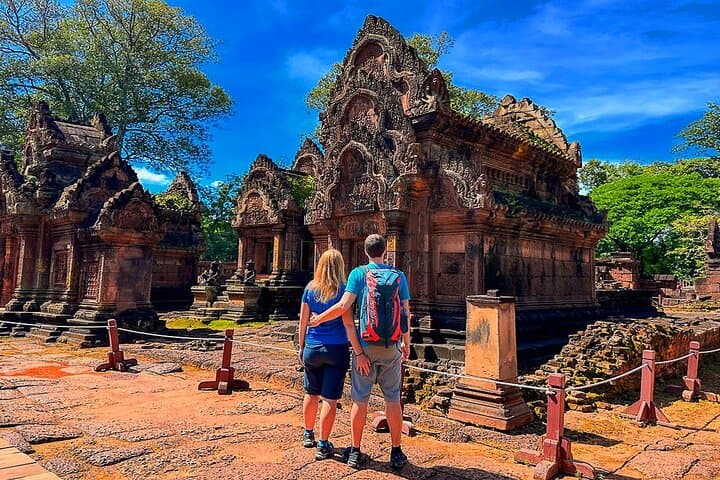
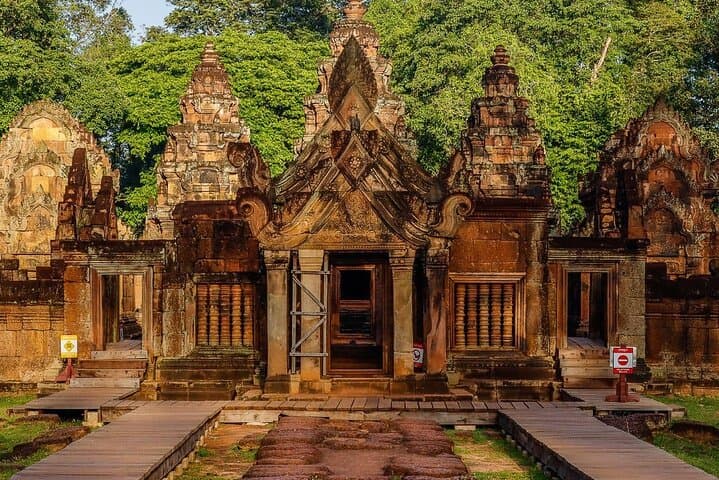
Over two days you move from the riverine approach of Angkor Thom to the intimate carvings of Banteay Srei, the buried courtyards of Preah Khan and the root-wrapped corridors of Ta Prohm. The Khmer Empire (9th–15th centuries) left a dense landscape of sandstone and laterite; the temples read like open-air libraries of religion, politics and hydraulic engineering. Geology matters here: softer sandstone holds delicate bas-reliefs while laterite forms rougher cores and foundations that resist tropical weathering.
Local culture is present in small ways — monks in saffron, vendors selling iced sugarcane, workers conserving fragile carvings — and your guide translates not just history but the etiquette needed around sacred sites.
Practical guidance: start before dawn for Angkor Wat’s mirror pools and save Ta Prohm and Banteay Srei for cooler afternoon light. Dress shoulders and knees covered, bring a headlamp or small torch for pre-dawn corridors, and drink often; Siem Reap’s heat and humidity can drain energy quickly. Expect lots of short walks, some steep temple steps and uneven stone underfoot; comfortable shoes and a lightweight daypack will keep the days focused on discovery rather than discomfort.
easy.
2 days (full days — ~8–10 hours/day).
Suitable for most fitness levels; you should be able to walk several kilometers on uneven surfaces and climb temple steps.
Yes — entry to the Angkor Archaeological Park requires a paid pass; guides usually advise purchase prior to or on arrival at the park entrance.
No — the itinerary is suitable for most travelers but includes uneven surfaces and steep steps, so comfortable footwear is recommended.
Yes — private tours typically include hotel pickup and drop-off in Siem Reap via air-conditioned vehicle as noted in inclusions.
Photography is allowed for non-commercial use at most temples; drones are restricted and often require separate permits — check current park rules in advance.
Angkor’s monuments were built by successive Khmer kings between the 9th and 15th centuries, reflecting a blend of Hindu and Buddhist beliefs and sophisticated water-management systems.
Visitor revenue helps fund conservation and community programs; avoid touching bas-reliefs, stay on designated paths and don’t feed wildlife to reduce impact.
Angkor Focus Travel operates guided outdoor trips and adventures with an emphasis on safety, stewardship, and memorable experiences.
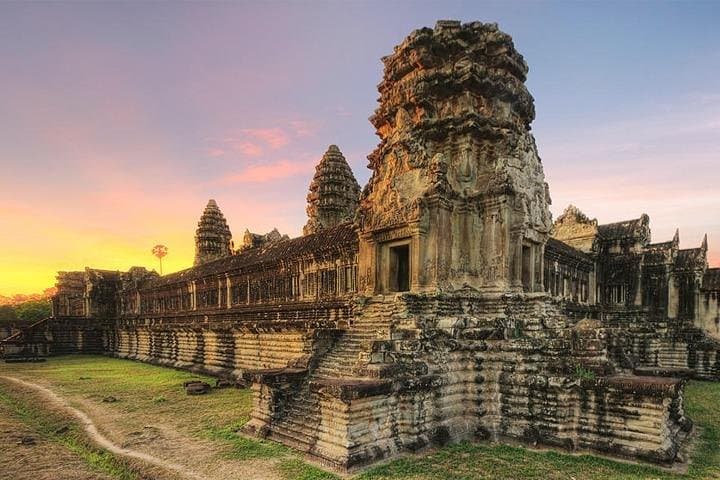
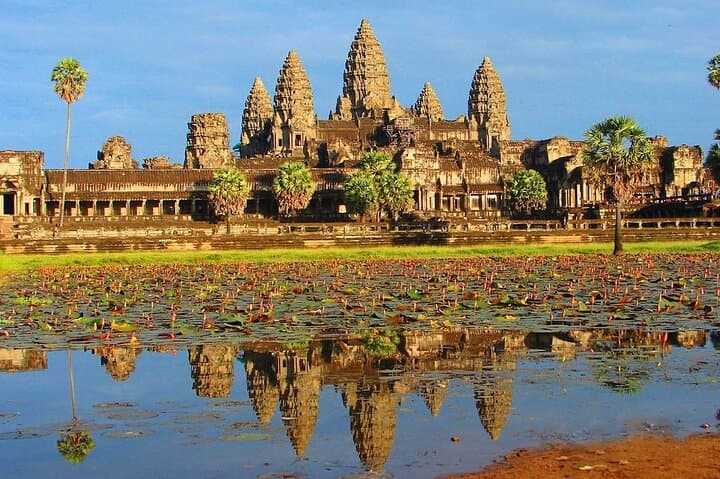
Before dawn you stand with a small group at the western moat of Angkor Wat, the air cool and water glassy enough to catch the temple’s silhouette. Torches and the hush of a private tour make the sunrise feel intentional — the stone wakes slowly as light spills across bas-reliefs that have watched centuries of monsoons and kings.
Before dawn you stand with a small group at the western moat of Angkor Wat, the air cool and water glassy enough to catch the temple’s silhouette. Torches and the hush of a private tour make the sunrise feel intentional — the stone wakes slowly as light spills across bas-reliefs that have watched centuries of monsoons and kings.
Over two days you move from the riverine approach of Angkor Thom to the intimate carvings of Banteay Srei, the buried courtyards of Preah Khan and the root-wrapped corridors of Ta Prohm. The Khmer Empire (9th–15th centuries) left a dense landscape of sandstone and laterite; the temples read like open-air libraries of religion, politics and hydraulic engineering. Geology matters here: softer sandstone holds delicate bas-reliefs while laterite forms rougher cores and foundations that resist tropical weathering.
Local culture is present in small ways — monks in saffron, vendors selling iced sugarcane, workers conserving fragile carvings — and your guide translates not just history but the etiquette needed around sacred sites.
Practical guidance: start before dawn for Angkor Wat’s mirror pools and save Ta Prohm and Banteay Srei for cooler afternoon light. Dress shoulders and knees covered, bring a headlamp or small torch for pre-dawn corridors, and drink often; Siem Reap’s heat and humidity can drain energy quickly. Expect lots of short walks, some steep temple steps and uneven stone underfoot; comfortable shoes and a lightweight daypack will keep the days focused on discovery rather than discomfort.