THE ADVENTURE COLLECTIVE® · Independent discovery and booking for outdoor travel

Pedal a full‑day loop through Angkor’s greatest temples—Arrive by bike at Angkor Wat, Bayon and Ta Prohm, pause for a Khmer lunch, and explore quieter ruins between the main sites. Practical tips and what to expect on this 8‑hour cultural cycle.
Pedal a full‑day loop through Angkor’s greatest temples—Arrive by bike at Angkor Wat, Bayon and Ta Prohm, pause for a Khmer lunch, and explore quieter ruins between the main sites. Practical tips and what to expect on this 8‑hour cultural cycle.
Morning light slices through the fig roots as you push off from the shop and onto cracked laterite roads, a cool breeze briefly erasing the day's heat.
Verified experiences and guided adventures in the surrounding area.
Operated by Angkor Temple Tours · Siem Reap, Siem Reap
Morning light slices through the fig roots as you push off from the shop and onto cracked laterite roads, a cool breeze briefly erasing the day's heat.
This full-day cycling loop threads between forested clearings and temple courtyards, letting you arrive at Angkor Wat, Bayon and Ta Prohm on two wheels while the tour guide frames the ruins with historical detail. The stones are 12th‑century sandstone carved under the Khmer Empire; bas‑reliefs and giant faces bear the slow abrasion of seasons and roots that now pry through masonry.
Expect low, flat terrain across the Angkor Archaeological Park and the Grand Circuit: a comfortable 20–30 km ride paced over eight hours with frequent stops for exploration and a midday Khmer lunch. Temple admission is not included, so plan for the Angkor Pass at the park entrance. Cultural notes: many temples served religious and political purposes, and sites like Bayon express the era’s fusion of statecraft and spirituality.
Practical guidance: bring a refillable water bottle (guides supply water), sunscreen and insect repellent; wear closed‑toe shoes for uneven steps and root-laced trails. Morning departures avoid the hottest hours and deliver softer light for photography. Respect conservation rules—stay on marked paths, don’t climb fragile carvings—and be prepared for humidity and sudden showers during the monsoon.
By bike you cover more ground than on foot and connect villages, reservoirs and lesser-known ruins between the big temples—an efficient, immersive way to read the landscape and the long story written in stone.
moderate.
8 hours.
Comfortable aerobic fitness for an all‑day ride; able to cycle 20–30 km with stops throughout the day.
No — the Angkor Park Pass (one‑day, three‑day or weekly) is purchased separately at the park entrance and is required for entry.
Expect roughly 20–30 km over mixed surfaces: paved roads, laterite paths and compact dirt trails with occasional rutted sections.
Yes — the ride is paced with frequent stops and is described as suitable for all fitness levels, but participants should be comfortable riding for multiple hours.
The itinerary includes a Khmer lunch and guides typically supply unlimited drinking water, though bringing a refillable bottle is recommended.
Angkor was the capital of the Khmer Empire (9th–15th centuries); many temples date to the 12th century and reflect Hindu and Buddhist influences.
High visitor volumes threaten fragile stone and root‑ingress; follow marked paths, avoid touching carvings, and use refillable containers to limit plastic waste.
Angkor Temple Tours operates guided outdoor trips and adventures with an emphasis on safety, stewardship, and memorable experiences.


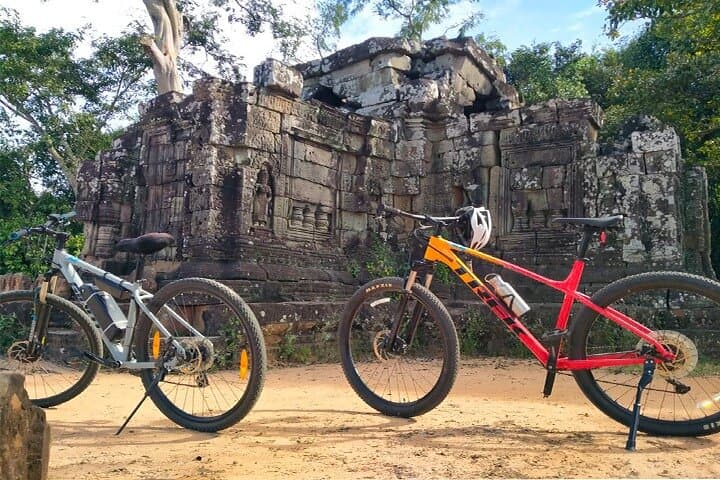

Morning light slices through the fig roots as you push off from the shop and onto cracked laterite roads, a cool breeze briefly erasing the day's heat.
Morning light slices through the fig roots as you push off from the shop and onto cracked laterite roads, a cool breeze briefly erasing the day's heat.
This full-day cycling loop threads between forested clearings and temple courtyards, letting you arrive at Angkor Wat, Bayon and Ta Prohm on two wheels while the tour guide frames the ruins with historical detail. The stones are 12th‑century sandstone carved under the Khmer Empire; bas‑reliefs and giant faces bear the slow abrasion of seasons and roots that now pry through masonry.
Expect low, flat terrain across the Angkor Archaeological Park and the Grand Circuit: a comfortable 20–30 km ride paced over eight hours with frequent stops for exploration and a midday Khmer lunch. Temple admission is not included, so plan for the Angkor Pass at the park entrance. Cultural notes: many temples served religious and political purposes, and sites like Bayon express the era’s fusion of statecraft and spirituality.
Practical guidance: bring a refillable water bottle (guides supply water), sunscreen and insect repellent; wear closed‑toe shoes for uneven steps and root-laced trails. Morning departures avoid the hottest hours and deliver softer light for photography. Respect conservation rules—stay on marked paths, don’t climb fragile carvings—and be prepared for humidity and sudden showers during the monsoon.
By bike you cover more ground than on foot and connect villages, reservoirs and lesser-known ruins between the big temples—an efficient, immersive way to read the landscape and the long story written in stone.