THE ADVENTURE COLLECTIVE® · Independent discovery and booking for outdoor travel

Cycle between Angkor Wat’s stone giants and the surrounding Cambodian countryside on an 8–9 hour guided tour from Siem Reap. Expect temples, village encounters, lunch, and a mix of paved and dirt lanes—ideal for riders with moderate fitness.
Cycle between Angkor Wat’s stone giants and the surrounding Cambodian countryside on an 8–9 hour guided tour from Siem Reap. Expect temples, village encounters, lunch, and a mix of paved and dirt lanes—ideal for riders with moderate fitness.
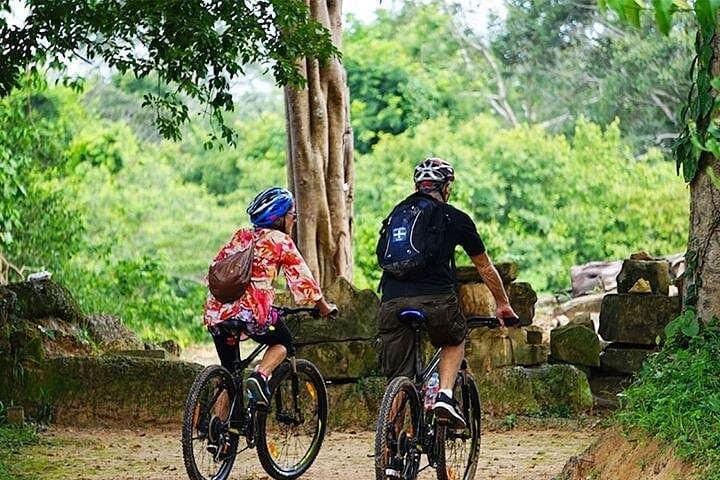
The first pedal stroke out of Siem Reap feels deliberate: warm air presses against your face, temple spires appear through columns of kapok and dipterocarp forest, and the road hums with tuk-tuks and distant calls to prayer. On this full-day bike tour you move through history at a human pace — wheels turning between Khmer stonework and rice paddies where water mirrors the sky.
Verified experiences and guided adventures in the surrounding area.
Operated by Angkor Focus Travel · Siem Reap, Siem Reap
The first pedal stroke out of Siem Reap feels deliberate: warm air presses against your face, temple spires appear through columns of kapok and dipterocarp forest, and the road hums with tuk-tuks and distant calls to prayer. On this full-day bike tour you move through history at a human pace — wheels turning between Khmer stonework and rice paddies where water mirrors the sky.
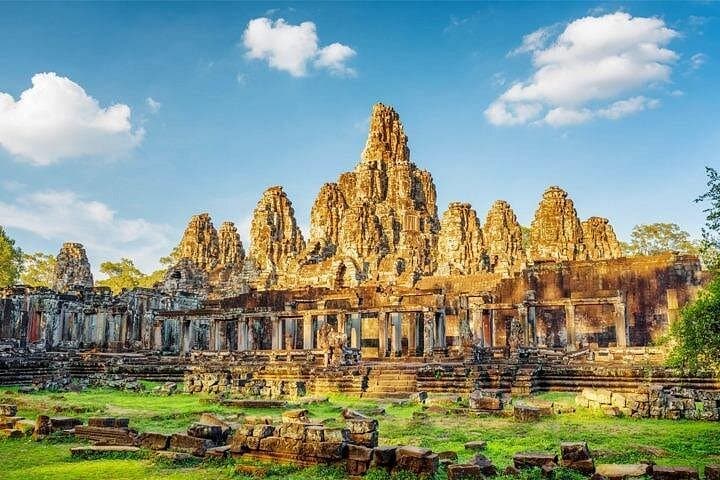
Angkor’s monuments date largely to the 9th–12th centuries, when the Khmer Empire carved hydraulic cities from sandstone and laterite. Angkor Wat’s axial layout, the carved faces of Bayon, and the terrace sculpture at the Royal Enclosure reveal both religious evolution and skilled masonry; the surrounding plains sit atop alluvial deposits that kept rice fields fertile for centuries.
Culturally the route threads modern village life with sacred ruins: floating villages, roadside shrines, and farmers who continue ancestral cycles. Guides translate glyphs and local stories that give context to temple reliefs and daily rhythms.
Practically, expect 8–9 hours, varied surfaces (paved main roads, compact dirt lanes), and frequent short stops for photos and shade. Bring sunscreen, a brimmed hat, and a lightweight rain jacket during the wet season; carry cash for the Angkor pass you’ll purchase on arrival. Start early to avoid midday heat, keep cadence steady over short climbs, and accept a relaxed tempo—this is a cultural ride as much as a workout.
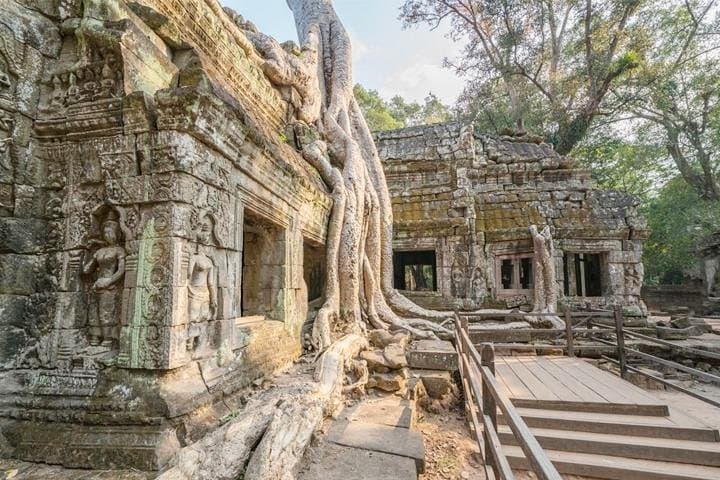
The payoff is immediate: a close view of carved bas-reliefs, quiet alleys of the ancient city, and the countryside that still feeds modern Siem Reap.
moderate.
8–9 hours.
Suitable for people with regular aerobic activity; you should be comfortable cycling several hours with short breaks.
Passes are typically purchased at the park entrance; allow time on arrival to buy the 1-day or multi-day ticket — carry cash or card.
Moderate fitness is recommended: expect 20–35 km of easy-to-moderate cycling spread over the day with frequent stops.
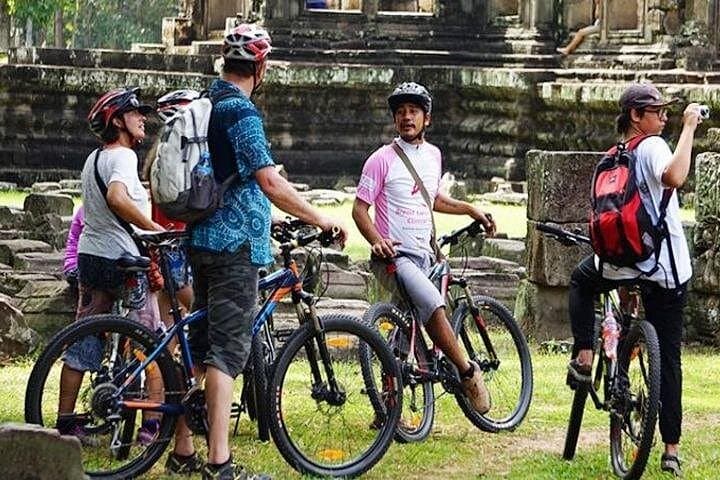
Yes — the tour includes bicycles and safety equipment; check that the helmet fits properly before departure.
Lunch, snacks, and bottled water are included; bringing small additional snacks is fine for extra energy.
The Angkor complex reflects the Khmer Empire’s shift from hydraulic city planning and Hindu-Buddhist syncretism between the 9th and 12th centuries, with later royal additions and restorations.
Visitor pressure is managed through timed access and ticketing; stick to marked paths, avoid touching carvings, and minimize plastic use to reduce impact.
Angkor Focus Travel operates guided outdoor trips and adventures with an emphasis on safety, stewardship, and memorable experiences.
The first pedal stroke out of Siem Reap feels deliberate: warm air presses against your face, temple spires appear through columns of kapok and dipterocarp forest, and the road hums with tuk-tuks and distant calls to prayer. On this full-day bike tour you move through history at a human pace — wheels turning between Khmer stonework and rice paddies where water mirrors the sky.
The first pedal stroke out of Siem Reap feels deliberate: warm air presses against your face, temple spires appear through columns of kapok and dipterocarp forest, and the road hums with tuk-tuks and distant calls to prayer. On this full-day bike tour you move through history at a human pace — wheels turning between Khmer stonework and rice paddies where water mirrors the sky.
Angkor’s monuments date largely to the 9th–12th centuries, when the Khmer Empire carved hydraulic cities from sandstone and laterite. Angkor Wat’s axial layout, the carved faces of Bayon, and the terrace sculpture at the Royal Enclosure reveal both religious evolution and skilled masonry; the surrounding plains sit atop alluvial deposits that kept rice fields fertile for centuries.
Culturally the route threads modern village life with sacred ruins: floating villages, roadside shrines, and farmers who continue ancestral cycles. Guides translate glyphs and local stories that give context to temple reliefs and daily rhythms.
Practically, expect 8–9 hours, varied surfaces (paved main roads, compact dirt lanes), and frequent short stops for photos and shade. Bring sunscreen, a brimmed hat, and a lightweight rain jacket during the wet season; carry cash for the Angkor pass you’ll purchase on arrival. Start early to avoid midday heat, keep cadence steady over short climbs, and accept a relaxed tempo—this is a cultural ride as much as a workout.
The payoff is immediate: a close view of carved bas-reliefs, quiet alleys of the ancient city, and the countryside that still feeds modern Siem Reap.