THE ADVENTURE COLLECTIVE® · Independent discovery and booking for outdoor travel

Spend a day on an electric bike exploring Angkor’s small circuit—Angkor Wat, Ta Prohm, Ta Nei, Bayon and a Phnom Bakheng sunset. This accessible nine-hour tour mixes cultural depth with easy pedaling and local flavors.
Spend a day on an electric bike exploring Angkor’s small circuit—Angkor Wat, Ta Prohm, Ta Nei, Bayon and a Phnom Bakheng sunset. This accessible nine-hour tour mixes cultural depth with easy pedaling and local flavors.
The sun thins into gold as you glide past the first silhouette of Angkor Wat, the e-bike humming beneath you while the temple’s reflection trembles in a shallow moat.
Verified experiences and guided adventures in the surrounding area.
Operated by Siem Reap Bike Tour · Siem Reap, Siem Reap Province
The sun thins into gold as you glide past the first silhouette of Angkor Wat, the e-bike humming beneath you while the temple’s reflection trembles in a shallow moat.
This full-day small-circuit ride threads classic Khmer monuments and quieter ruins: Angkor Wat’s 12th-century galleries, the root-choked corridors of Ta Prohm, the discreet ruins of Ta Nei, the carved faces of Bayon and the ceremonial terraces that once hosted royal spectacle. The geology is simple — sandstone blocks and laterite beds hewn and stacked over centuries — but the scale and precision give the stone a living presence.
Local villages and rice paddies frame the route; fishermen, water buffalo and market stalls remind you this is an inhabited cultural landscape, not a museum. Guides will point out Jayavarman VII’s Mahayana influence at Bayon and explain the park’s modern conservation challenges, including erosion and visitor pressure.
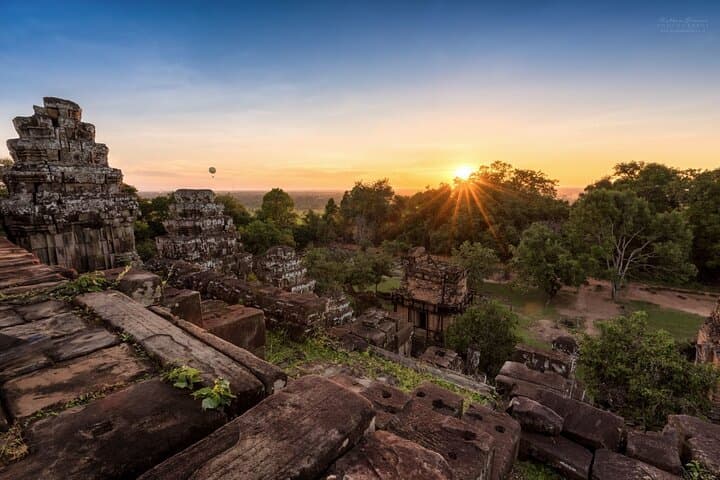
Practically, expect a long but accessible day: the operator schedules about nine hours, with multiple short stops and a lunch break. Distances on the small circuit typically fall in the 15–25 km range across mostly flat terrain, with a short climb to Phnom Bakheng for sunset (a modest hill—steep steps, roughly 60–100 m of ascent). Note that the Angkor Archaeological Park pass is not included, and some temples have uneven stone and stairs.
Bring sun protection, a filled water bottle, sturdy shoes and insect repellent; plan to arrive at Phnom Bakheng with time to spare for the viewpoint. Respect restricted areas, and follow your guide’s instructions for photography and access.
moderate.
9 hours.
Suitable for travelers with basic cycling ability and moderate stamina—long day on an e-bike with short stair climbs.
No. Admission to Angkor Archaeological Park is not included—buy a 1-day or multi-day pass at the official ticket center before entering.
E-bikes provide pedal assistance and are easy for riders with basic cycling experience; guides give a quick orientation before departure.
Yes. The itinerary specifically includes Ta Prohm and the quieter Ta Nei temple along the small circuit, plus Bayon and Phnom Bakheng for sunset.
Children can participate with infant seats available, but the operator advises against the tour for travelers with spinal or serious heart conditions and for pregnant guests.
Angkor was the heart of the Khmer Empire (9th–15th centuries); Angkor Wat dates to the 12th century under Suryavarman II, while Bayon reflects Jayavarman VII’s 12th–13th-century Mahayana patronage.
The park faces erosion and wear from heavy visitation; follow path restrictions, avoid climbing fragile bas-reliefs and support local guides and community-run services.
Siem Reap Bike Tour operates guided outdoor trips and adventures with an emphasis on safety, stewardship, and memorable experiences.



The sun thins into gold as you glide past the first silhouette of Angkor Wat, the e-bike humming beneath you while the temple’s reflection trembles in a shallow moat.
The sun thins into gold as you glide past the first silhouette of Angkor Wat, the e-bike humming beneath you while the temple’s reflection trembles in a shallow moat.
This full-day small-circuit ride threads classic Khmer monuments and quieter ruins: Angkor Wat’s 12th-century galleries, the root-choked corridors of Ta Prohm, the discreet ruins of Ta Nei, the carved faces of Bayon and the ceremonial terraces that once hosted royal spectacle. The geology is simple — sandstone blocks and laterite beds hewn and stacked over centuries — but the scale and precision give the stone a living presence.
Local villages and rice paddies frame the route; fishermen, water buffalo and market stalls remind you this is an inhabited cultural landscape, not a museum. Guides will point out Jayavarman VII’s Mahayana influence at Bayon and explain the park’s modern conservation challenges, including erosion and visitor pressure.
Practically, expect a long but accessible day: the operator schedules about nine hours, with multiple short stops and a lunch break. Distances on the small circuit typically fall in the 15–25 km range across mostly flat terrain, with a short climb to Phnom Bakheng for sunset (a modest hill—steep steps, roughly 60–100 m of ascent). Note that the Angkor Archaeological Park pass is not included, and some temples have uneven stone and stairs.
Bring sun protection, a filled water bottle, sturdy shoes and insect repellent; plan to arrive at Phnom Bakheng with time to spare for the viewpoint. Respect restricted areas, and follow your guide’s instructions for photography and access.