THE ADVENTURE COLLECTIVE® · Independent discovery and booking for outdoor travel

Watch Angkor Wat ignite at sunrise, then explore Ta Prohm, Bayon and Angkor Thom with a guide. This full-day tour combines early-morning light, temple history and practical logistics for a single, immersive day in the Angkor Park.
Watch Angkor Wat ignite at sunrise, then explore Ta Prohm, Bayon and Angkor Thom with a guide. This full-day tour combines early-morning light, temple history and practical logistics for a single, immersive day in the Angkor Park.
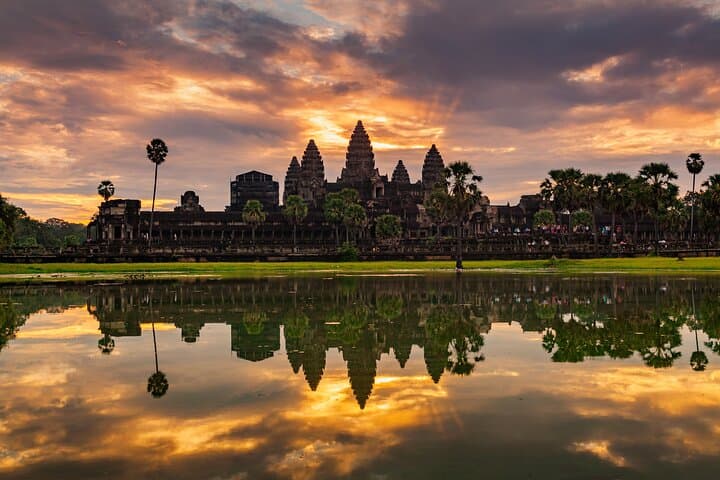
You arrive before dawn; the moat holds a glassy mirror and the silhouette of Angkor Wat sharpens as the light edges forward. Mist lifts from paddy fields and the jungle breathes—roots and strangler figs seem to reach toward the rising sun, as if the forest itself were marking time.
Verified experiences and guided adventures in the surrounding area.
Operated by Siem Reaper Travel - Phnom Penh Day Tours · Siem Reap, Siem Reap Province
You arrive before dawn; the moat holds a glassy mirror and the silhouette of Angkor Wat sharpens as the light edges forward. Mist lifts from paddy fields and the jungle breathes—roots and strangler figs seem to reach toward the rising sun, as if the forest itself were marking time.
This full-day tour threads through the heart of the Angkor Archaeological Park, where 9th–15th century Khmer builders hewed sandstone into galleries, bas-reliefs and the famous Bayon faces. The geology here is largely compacted sandstone sitting on a laterite core, sculpted by centuries of monsoon weather and human hands. Culture remains present: monks in saffron pass quietly, and small villages outside the park sustain craft and rice-farming traditions.
Expect the cinematic root-wrapped corridors of Ta Prohm, the vast causeways of Angkor Thom and the introspective symmetry of Angkor Wat at sunrise—each site offers different light, scale and crowds. The tour covers short walks between monuments (roughly 4–6 km of walking on mostly flat terrain, minimal elevation gain) and uses an air-conditioned vehicle for transfers.
Practical notes: an Angkor Park pass is required and typically isn’t included in tour pricing; bring cash for the ticket center, modest clothing that covers shoulders and knees, sun protection and refillable water. Start early to beat heat and congestion; wear sturdy sandals or lightweight hiking shoes for uneven sandstone steps. Guides add historical context, point out bas-reliefs and advise on respectful behavior. Return to Siem Reap mid-afternoon with clearer maps in hand and a better sense of why these stone cities still command attention.
moderate.
8 hours.
Suitable for most fitness levels but expect several hours of walking and standing; comfortable endurance for a long day is helpful
No; the Angkor Park pass is typically purchased separately at the official ticket center near the main entrance and is required for entry.
Expect roughly 4–6 km of walking across temple grounds with mostly flat terrain and many steps at temple entrances and towers.
Many temple sites have uneven stone and steps; accessibility varies—contact the operator in advance to discuss vehicle drop-offs and alternative routes.
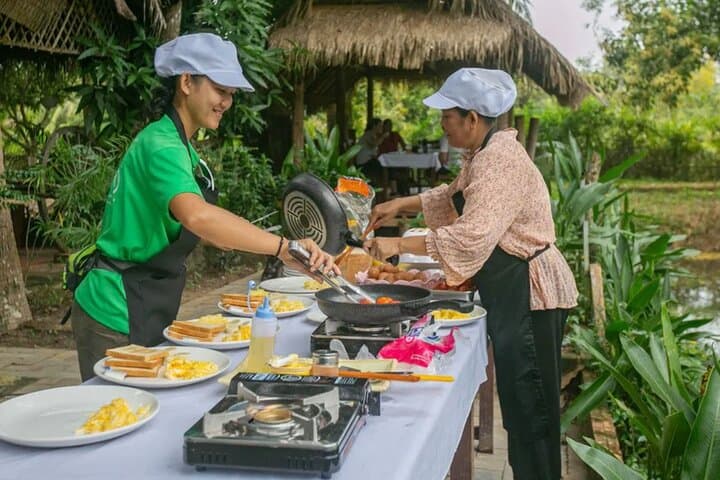
The tour includes breakfast and lunch and can handle vegetarian options if advised at booking; notify the operator of allergies or special diets in advance.
Angkor was the political and religious center of the Khmer Empire from the 9th to the 15th century; its temples combine Hindu and Buddhist iconography as rulers changed faiths over centuries.
Visitor numbers are managed through ticketing and site restoration projects; avoid touching bas-reliefs, stay on paths and support local guides to reduce impact.
Siem Reaper Travel - Phnom Penh Day Tours operates guided outdoor trips and adventures with an emphasis on safety, stewardship, and memorable experiences.

You arrive before dawn; the moat holds a glassy mirror and the silhouette of Angkor Wat sharpens as the light edges forward. Mist lifts from paddy fields and the jungle breathes—roots and strangler figs seem to reach toward the rising sun, as if the forest itself were marking time.
You arrive before dawn; the moat holds a glassy mirror and the silhouette of Angkor Wat sharpens as the light edges forward. Mist lifts from paddy fields and the jungle breathes—roots and strangler figs seem to reach toward the rising sun, as if the forest itself were marking time.
This full-day tour threads through the heart of the Angkor Archaeological Park, where 9th–15th century Khmer builders hewed sandstone into galleries, bas-reliefs and the famous Bayon faces. The geology here is largely compacted sandstone sitting on a laterite core, sculpted by centuries of monsoon weather and human hands. Culture remains present: monks in saffron pass quietly, and small villages outside the park sustain craft and rice-farming traditions.
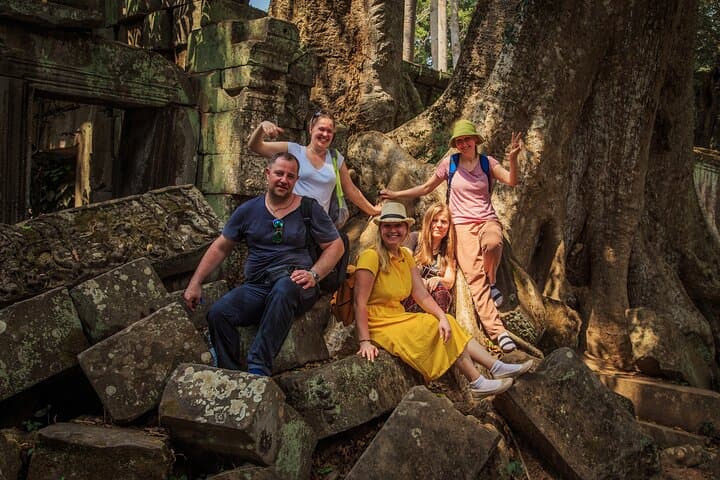
Expect the cinematic root-wrapped corridors of Ta Prohm, the vast causeways of Angkor Thom and the introspective symmetry of Angkor Wat at sunrise—each site offers different light, scale and crowds. The tour covers short walks between monuments (roughly 4–6 km of walking on mostly flat terrain, minimal elevation gain) and uses an air-conditioned vehicle for transfers.
Practical notes: an Angkor Park pass is required and typically isn’t included in tour pricing; bring cash for the ticket center, modest clothing that covers shoulders and knees, sun protection and refillable water. Start early to beat heat and congestion; wear sturdy sandals or lightweight hiking shoes for uneven sandstone steps. Guides add historical context, point out bas-reliefs and advise on respectful behavior. Return to Siem Reap mid-afternoon with clearer maps in hand and a better sense of why these stone cities still command attention.