THE ADVENTURE COLLECTIVE® · Independent discovery and booking for outdoor travel

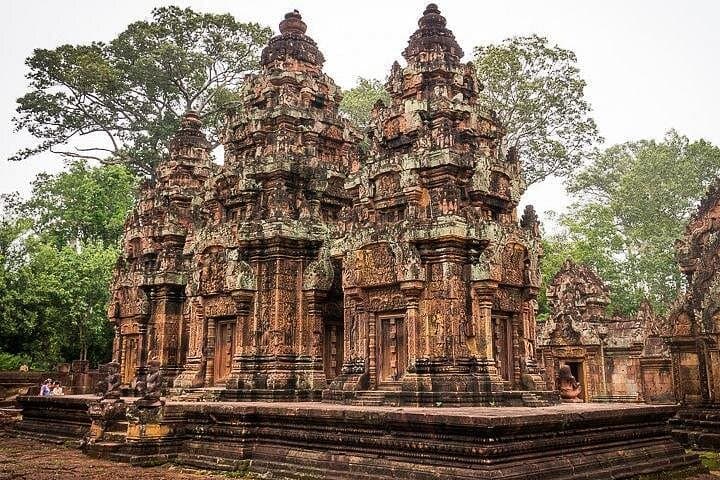
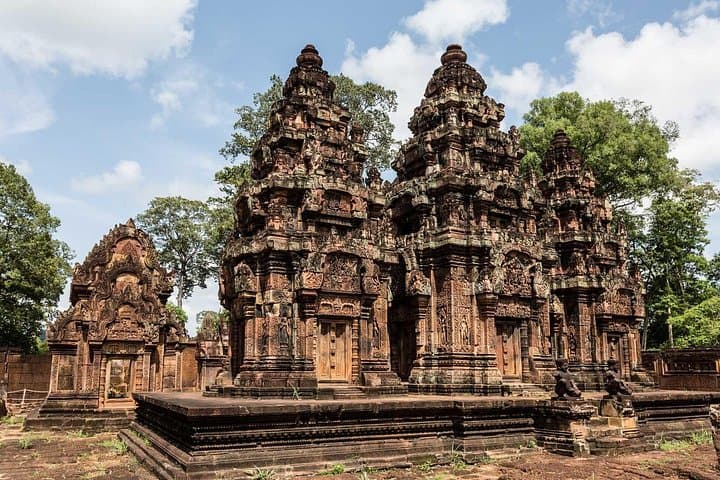
Watch sunrise over Angkor Wat, cruise a floating village at sunset, and explore Banteay Srei’s pink sandstone carvings on a focused two-day circuit from Siem Reap. This compact tour balances iconic temples with quieter backcountry sights.
Watch sunrise over Angkor Wat, cruise a floating village at sunset, and explore Banteay Srei’s pink sandstone carvings on a focused two-day circuit from Siem Reap. This compact tour balances iconic temples with quieter backcountry sights.
The day begins with a cool predawn hush as Angkor Wat’s towers silhouette against a sky the color of old gold; the lotus pond mirrors the temple and the air tastes faintly of river mud and jasmine. You move through that first light with a guide who sizes the crowds and points out reliefs that have weathered centuries.
Verified experiences and guided adventures in the surrounding area.
Operated by Siem Reap Shuttle · Siem Reap, Siem Reap Province
The day begins with a cool predawn hush as Angkor Wat’s towers silhouette against a sky the color of old gold; the lotus pond mirrors the temple and the air tastes faintly of river mud and jasmine. You move through that first light with a guide who sizes the crowds and points out reliefs that have weathered centuries.
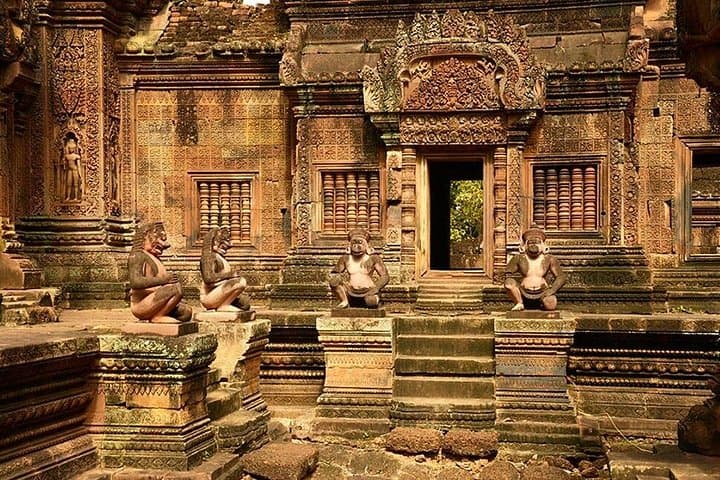
This two-day circuit stitches together the Khmer Empire’s high points — Angkor Wat and Bayon from the Angkor Thom capital, the jungle-rooted chambers of Ta Prohm, and the pink sandstone intricacy of Banteay Srei. Geologically the sites sit on a mix of sandstone and laterite; many carvings were cut from fine-grained sandstone that holds delicate detail but erodes in wet seasons. Tonle Sap’s flood pulse defines the region’s rhythm: in the dry months stilt villages sit high and compact, in the monsoon they float and spread, reshaping local livelihoods.
On day one expect temple walks, a boat through Kompong Phluk’s stilted lanes, and sunset over Tonle Sap. Day two explores quieter monuments — Pre Rup’s climb for wide views, Neak Poan’s healing ponds, and hidden carvings at Ta Som and East Mebon.
Practical edge: bring sun protection, insect repellent, and cash for the Angkor Pass (required). Wear sturdy, non-slip shoes — pathways are uneven and stairs can be steep (Pre Rup has roughly a hundred steps). Start before dawn for Angkor Wat, schedule boat time in the late afternoon for calm water and the best light, and allow flexible time for modest breaks — heat and humidity slow the pace. Respect dress codes at active religious sites: shoulders and knees covered. With basic fitness and sensible gear, this two-day loop delivers both history and a close-up of riverside life.
moderate.
2 days (approx. 18–20 hours total touring).
Suitable for travelers with basic fitness who can walk 1–3 miles over uneven ground and climb sets of stairs.
Yes — the Angkor Pass is required to enter the main temple complexes; guides typically help arrange it or you can buy it in Siem Reap beforehand.
Expect several short to moderate walks (0.5–2 km) at each complex and some stair climbs — total walking per day commonly reaches 3–6 km depending on stops.
Yes — in the wet season (May–October) water levels rise and villages are more inundated, enabling deeper boat access; in the dry season, boats still operate but routes and views differ.
Children can enjoy the visual drama, but mobility-restricted travelers may find uneven steps and long walks challenging; some temples have limited accessibility and boat transfers require stepping on/off small craft.
These monuments were built across several centuries of the Khmer Empire; many major works date to the 9th–12th centuries and reflect Hindu-Buddhist royal patronage and hydraulic engineering.
Angkor’s ruins are affected by visitor wear and the region’s water table; follow marked paths, avoid climbing fragile carvings, and support local guides who practice sustainable visitation.
Siem Reap Shuttle operates guided outdoor trips and adventures with an emphasis on safety, stewardship, and memorable experiences.
The day begins with a cool predawn hush as Angkor Wat’s towers silhouette against a sky the color of old gold; the lotus pond mirrors the temple and the air tastes faintly of river mud and jasmine. You move through that first light with a guide who sizes the crowds and points out reliefs that have weathered centuries.
The day begins with a cool predawn hush as Angkor Wat’s towers silhouette against a sky the color of old gold; the lotus pond mirrors the temple and the air tastes faintly of river mud and jasmine. You move through that first light with a guide who sizes the crowds and points out reliefs that have weathered centuries.
This two-day circuit stitches together the Khmer Empire’s high points — Angkor Wat and Bayon from the Angkor Thom capital, the jungle-rooted chambers of Ta Prohm, and the pink sandstone intricacy of Banteay Srei. Geologically the sites sit on a mix of sandstone and laterite; many carvings were cut from fine-grained sandstone that holds delicate detail but erodes in wet seasons. Tonle Sap’s flood pulse defines the region’s rhythm: in the dry months stilt villages sit high and compact, in the monsoon they float and spread, reshaping local livelihoods.
On day one expect temple walks, a boat through Kompong Phluk’s stilted lanes, and sunset over Tonle Sap. Day two explores quieter monuments — Pre Rup’s climb for wide views, Neak Poan’s healing ponds, and hidden carvings at Ta Som and East Mebon.
Practical edge: bring sun protection, insect repellent, and cash for the Angkor Pass (required). Wear sturdy, non-slip shoes — pathways are uneven and stairs can be steep (Pre Rup has roughly a hundred steps). Start before dawn for Angkor Wat, schedule boat time in the late afternoon for calm water and the best light, and allow flexible time for modest breaks — heat and humidity slow the pace. Respect dress codes at active religious sites: shoulders and knees covered. With basic fitness and sensible gear, this two-day loop delivers both history and a close-up of riverside life.