THE ADVENTURE COLLECTIVE® · Independent discovery and booking for outdoor travel

Watch sunrise over Angkor Wat, follow carved galleries at Banteay Srei and lose yourself among the roots at Beng Mealea on a two-day private tour. Practical pacing and a local guide turn iconic temples into a manageable, immersive experience.
Watch sunrise over Angkor Wat, follow carved galleries at Banteay Srei and lose yourself among the roots at Beng Mealea on a two-day private tour. Practical pacing and a local guide turn iconic temples into a manageable, immersive experience.
Before dawn a low mist sits in the moat and the spires of Angkor Wat pierce the paling sky. The tour begins with that brief hush—the temple’s silhouette pulling visitors forward as the first light washes bas-reliefs in gold.
Verified experiences and guided adventures in the surrounding area.
Operated by Angkor Special Tours · Siem Reap, Siem Reap Province
Before dawn a low mist sits in the moat and the spires of Angkor Wat pierce the paling sky. The tour begins with that brief hush—the temple’s silhouette pulling visitors forward as the first light washes bas-reliefs in gold.
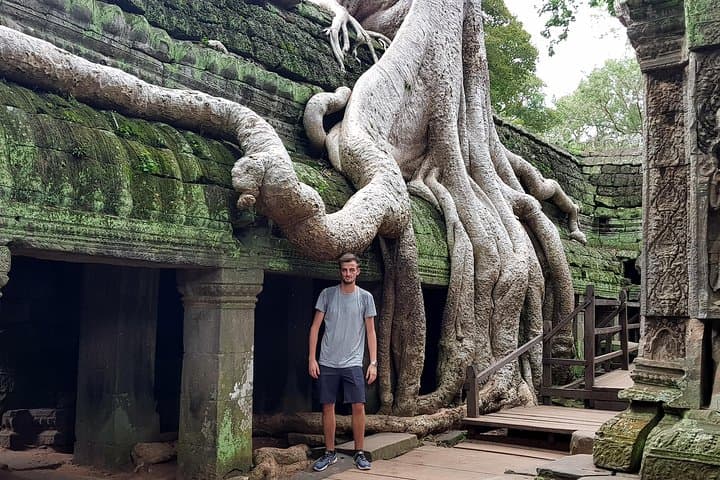
Over two days the itinerary moves from Angkor Wat’s monumental galleries to the intimate pink sandstone carvings of Banteay Srei, the face-carved towers of Bayon and the root-entwined corridors of Ta Prohm. Geologically, Angkor’s temples are hewn from sandstone and set atop laterite foundations; centuries of monsoon and root pressure have sculpted their surfaces into the weathered textures you’ll trace with your eyes.
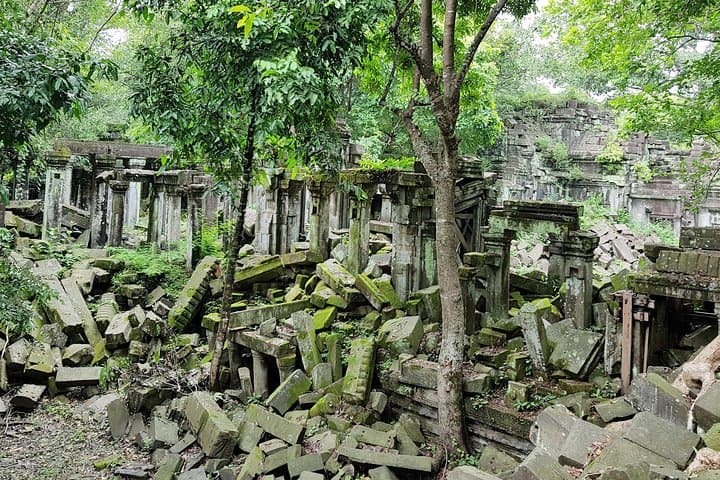
Culturally the sites map the Khmer Empire’s high points—royal capitals, Jayavarman VII’s Buddhist monuments, and later Hindu overlays—so expect layered iconography and shifting religious meaning in the stone. Beng Mealea and Preah Khan feel more forest-reclaimed than curated, offering a wilder counterpoint to Angkor Wat’s ordered causeways.
Practically: the private guide meets before sunrise (around 4:45), and each day runs roughly eight hours with walks over uneven steps and packed-earth paths. Angkor Park admission is not included in many private tours—buy the pass in advance if possible. Bring sun protection, sturdy footwear, modest clothing for temple entry, and cash for lunches and tips. Hydrate early and stay with your guide on quieter ruins where trails can be overgrown.
This tour balances big-ticket vistas with quiet temple corners; plan for lots of standing, photographic pauses and the occasional scramble over collapsed masonry. Respect restricted zones, move deliberately on slick stone, and you’ll leave with a clearer sense of how jungle and empire shaped each other here.
moderate.
2 days (approx. 8–9 hours per day).
Should be comfortable walking several kilometers over uneven stone, steps and soft trails; moderate stamina required.
Most private tours do not include the Angkor Archaeological Park pass—buy a 1-, 3- or 7-day pass at the official ticket center or ask your operator to add it.
Expect multiple short hikes and long temple circuits totaling several kilometers with uneven stone, stairs and some soft trails; comfortable walking fitness is recommended.
Private guides typically accommodate preferences like skipping crowded sites or extending time at a favorite temple—confirm flexibility when booking.
Yes, photography is allowed in most areas but avoid flash on delicate carvings and obey signs restricting access to fragile zones.
The Angkor complex records the Khmer Empire’s shift from Hindu to Buddhist kingship across the 9th–13th centuries; Banteay Srei’s pink sandstone predates Angkor’s largest monuments and is famed for fine carvings.
Angkor Archaeological Park manages visitor flow and conservation work—stick to marked paths, avoid touching carvings and support local guides to reduce impact.
Angkor Special Tours operates guided outdoor trips and adventures with an emphasis on safety, stewardship, and memorable experiences.
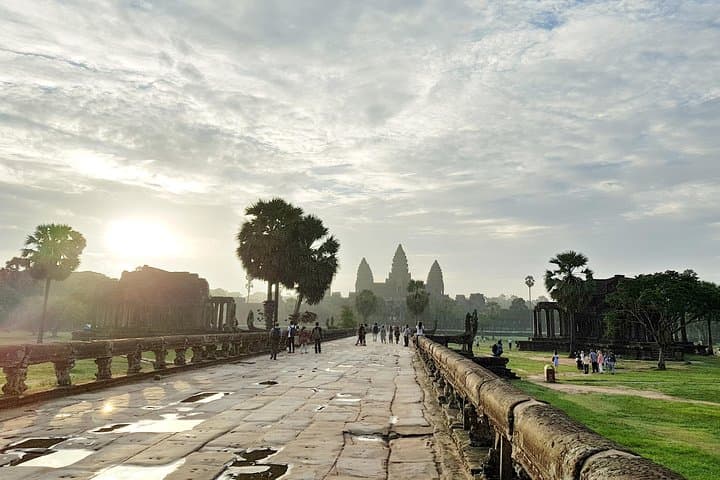
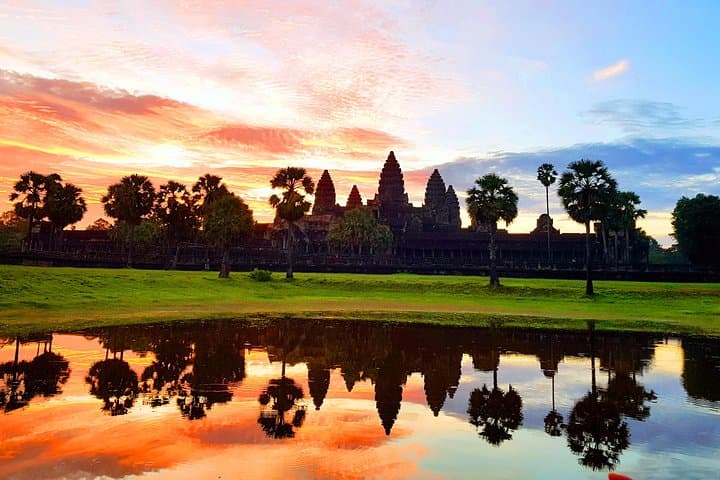
Before dawn a low mist sits in the moat and the spires of Angkor Wat pierce the paling sky. The tour begins with that brief hush—the temple’s silhouette pulling visitors forward as the first light washes bas-reliefs in gold.
Before dawn a low mist sits in the moat and the spires of Angkor Wat pierce the paling sky. The tour begins with that brief hush—the temple’s silhouette pulling visitors forward as the first light washes bas-reliefs in gold.
Over two days the itinerary moves from Angkor Wat’s monumental galleries to the intimate pink sandstone carvings of Banteay Srei, the face-carved towers of Bayon and the root-entwined corridors of Ta Prohm. Geologically, Angkor’s temples are hewn from sandstone and set atop laterite foundations; centuries of monsoon and root pressure have sculpted their surfaces into the weathered textures you’ll trace with your eyes.
Culturally the sites map the Khmer Empire’s high points—royal capitals, Jayavarman VII’s Buddhist monuments, and later Hindu overlays—so expect layered iconography and shifting religious meaning in the stone. Beng Mealea and Preah Khan feel more forest-reclaimed than curated, offering a wilder counterpoint to Angkor Wat’s ordered causeways.
Practically: the private guide meets before sunrise (around 4:45), and each day runs roughly eight hours with walks over uneven steps and packed-earth paths. Angkor Park admission is not included in many private tours—buy the pass in advance if possible. Bring sun protection, sturdy footwear, modest clothing for temple entry, and cash for lunches and tips. Hydrate early and stay with your guide on quieter ruins where trails can be overgrown.
This tour balances big-ticket vistas with quiet temple corners; plan for lots of standing, photographic pauses and the occasional scramble over collapsed masonry. Respect restricted zones, move deliberately on slick stone, and you’ll leave with a clearer sense of how jungle and empire shaped each other here.