THE ADVENTURE COLLECTIVE® · Independent discovery and booking for outdoor travel

Watch Angkor Wat’s sunrise from the temple pool, then move through Ta Prohm’s tree‑entwined galleries and Bayon’s carved faces on an efficient small-group tour. This eight-hour itinerary blends iconic light with local insight and practical logistics.
Watch Angkor Wat’s sunrise from the temple pool, then move through Ta Prohm’s tree‑entwined galleries and Bayon’s carved faces on an efficient small-group tour. This eight-hour itinerary blends iconic light with local insight and practical logistics.
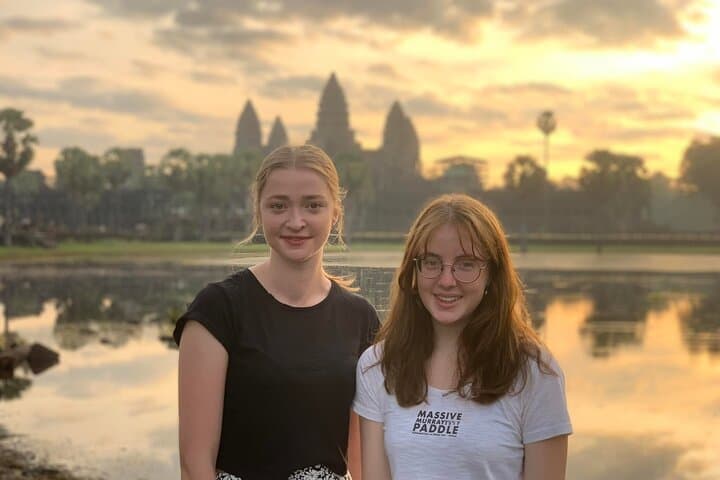
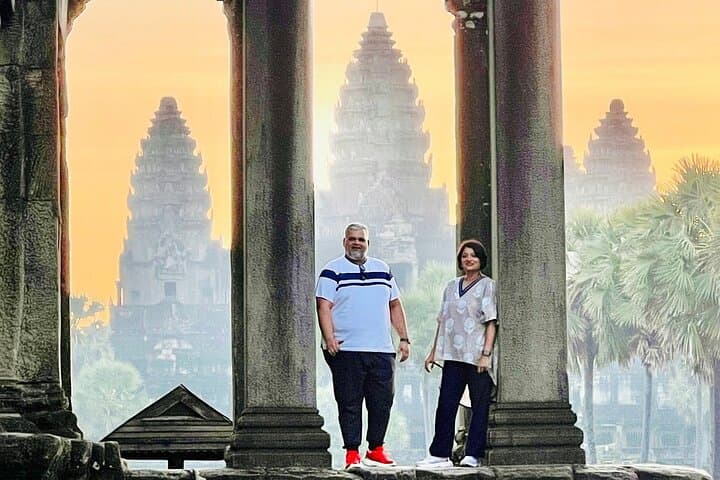
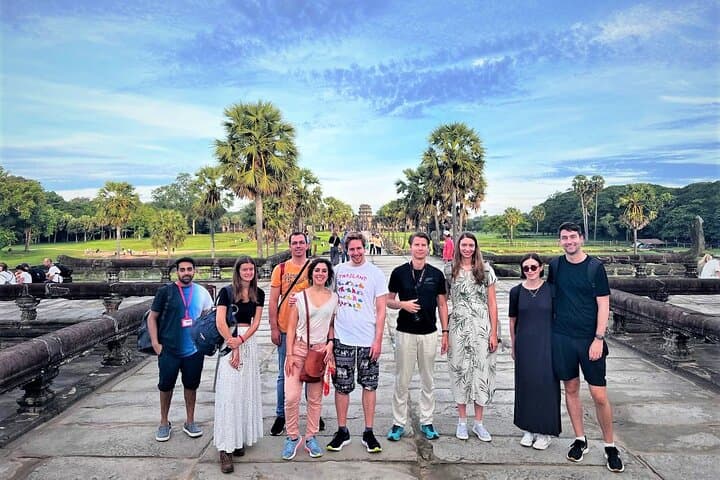
The sky is still a bruise of early blue when the first light edges across the pool in front of Angkor Wat. Lotus pads hold the reflection like a second temple; stone faces break the horizon and the ruined galleries breathe cool air. This small-group morning tour aims to capture that fragile hour—then moves through the dense, root-entwined corridors of Ta Prohm and the carved faces of Bayon before the heat and crowds close in.
Verified experiences and guided adventures in the surrounding area.
Operated by Tourme ANGKOR · Siem Reap, Siem Reap Province
The sky is still a bruise of early blue when the first light edges across the pool in front of Angkor Wat. Lotus pads hold the reflection like a second temple; stone faces break the horizon and the ruined galleries breathe cool air. This small-group morning tour aims to capture that fragile hour—then moves through the dense, root-entwined corridors of Ta Prohm and the carved faces of Bayon before the heat and crowds close in.
The stones here are sandstone and laterite hewn by an empire at its peak in the 12th century under King Suryavarman II. Angkor itself grew into a capital of canals, reservoirs and sculpted sanctuaries; French explorers in the 19th century brought the complex back into wider awareness, but local Khmer traditions have remained vital around these ruins.
Expect low, uneven steps, shaded galleries, carved bas-reliefs of myth and daily life, and fig trees that seem to be slowly reclaiming masonry. Cultural etiquette matters: shoulders and knees covered in temple interiors, quiet voices in sanctified spaces, and no climbing on fragile reliefs.
Practically, this is an 8-hour outing with hotel pickup in an air-conditioned minivan, licensed English guide, and bottled water provided. You’ll move quickly between sites—bring good walking shoes, sun protection, and a light layer for pre-dawn chill. Purchase an Angkor Archaeological Park pass before arrival, plan for early starts to beat the crowds, and keep valuables secure: pockets are easy to misplace in the maze-like corridors. The pacing balances memorable light with respectful, efficient exploration—ideal for travelers who want iconic temples and practical logistics in one day.
moderate.
8 hours.
Light to moderate fitness: you should be able to walk on uneven ground for several hours and climb steep stone steps.
No; the Angkor Archaeological Park pass is purchased separately at the park entry and is required for temple access.
Yes—this small-group option includes pickup and drop-off from hotels in Siem Reap city as stated in the itinerary.
Children under five are typically not allowed on this small-group tour; older children are welcome but must follow safety and etiquette rules.
The itinerary involves uneven ground and many steps; it is not recommended for travelers with significant spinal problems or for pregnant guests.
Angkor Wat was constructed in the early 12th century as a state temple for King Suryavarman II; the surrounding city grew into a vast hydraulic and religious complex for the Khmer Empire.
High visitor volume stresses fragile stone and carvings—stay on marked paths, avoid touching bas-reliefs, and follow guide directions to minimize impact.
Tourme ANGKOR operates guided outdoor trips and adventures with an emphasis on safety, stewardship, and memorable experiences.

The sky is still a bruise of early blue when the first light edges across the pool in front of Angkor Wat. Lotus pads hold the reflection like a second temple; stone faces break the horizon and the ruined galleries breathe cool air. This small-group morning tour aims to capture that fragile hour—then moves through the dense, root-entwined corridors of Ta Prohm and the carved faces of Bayon before the heat and crowds close in.
The sky is still a bruise of early blue when the first light edges across the pool in front of Angkor Wat. Lotus pads hold the reflection like a second temple; stone faces break the horizon and the ruined galleries breathe cool air. This small-group morning tour aims to capture that fragile hour—then moves through the dense, root-entwined corridors of Ta Prohm and the carved faces of Bayon before the heat and crowds close in.
The stones here are sandstone and laterite hewn by an empire at its peak in the 12th century under King Suryavarman II. Angkor itself grew into a capital of canals, reservoirs and sculpted sanctuaries; French explorers in the 19th century brought the complex back into wider awareness, but local Khmer traditions have remained vital around these ruins.
Expect low, uneven steps, shaded galleries, carved bas-reliefs of myth and daily life, and fig trees that seem to be slowly reclaiming masonry. Cultural etiquette matters: shoulders and knees covered in temple interiors, quiet voices in sanctified spaces, and no climbing on fragile reliefs.
Practically, this is an 8-hour outing with hotel pickup in an air-conditioned minivan, licensed English guide, and bottled water provided. You’ll move quickly between sites—bring good walking shoes, sun protection, and a light layer for pre-dawn chill. Purchase an Angkor Archaeological Park pass before arrival, plan for early starts to beat the crowds, and keep valuables secure: pockets are easy to misplace in the maze-like corridors. The pacing balances memorable light with respectful, efficient exploration—ideal for travelers who want iconic temples and practical logistics in one day.