THE ADVENTURE COLLECTIVE® · Independent discovery and booking for outdoor travel

Pedal into sunrise at Angkor Wat, then ride a curated loop through Angkor Thom, the Bayon and Ta Prohm with a private breakfast and Khmer lunch included. This mostly easy tour pairs quiet temple moments with light cycling on mixed park trails.
Pedal into sunrise at Angkor Wat, then ride a curated loop through Angkor Thom, the Bayon and Ta Prohm with a private breakfast and Khmer lunch included. This mostly easy tour pairs quiet temple moments with light cycling on mixed park trails.
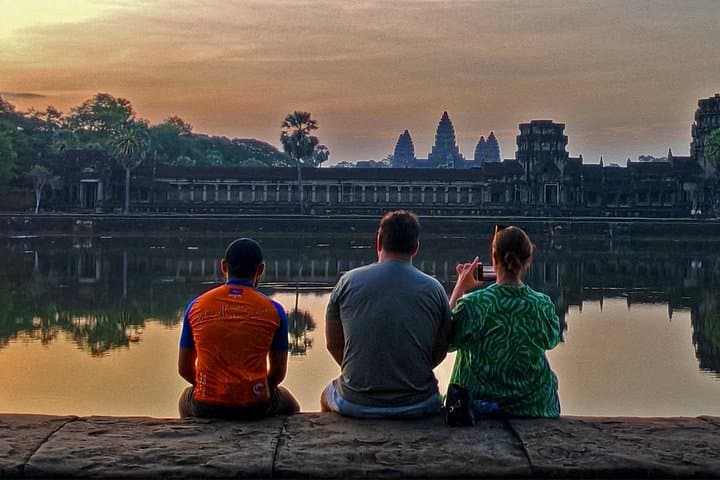
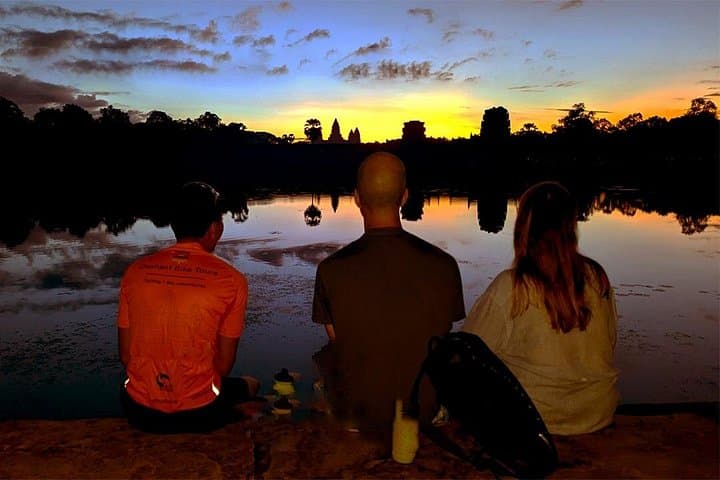
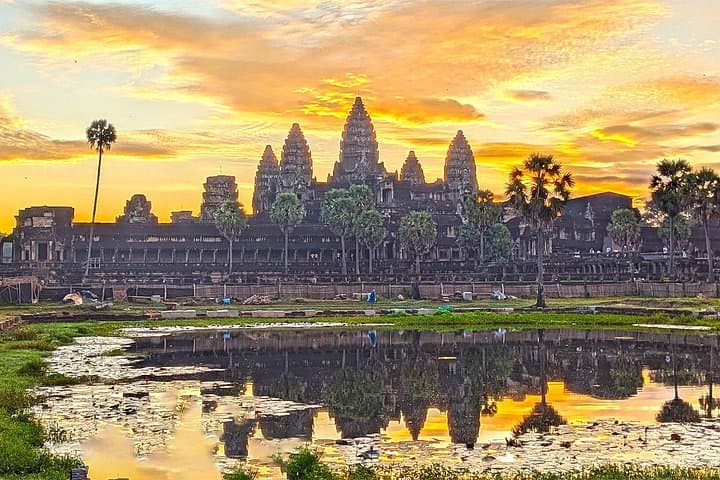
Bleary-eyed cyclists gather on quiet roads as dawn softens the silhouette of Angkor Wat; the first light slides across its lotus towers and the air smells of damp earth and distant wood smoke. The ride begins with a short transfer into the park, then a slow pedal along shaded tracks where cracked laterite and packed sand give way to stretches of leafy singletrack. A private picnic breakfast at the temple grounds lets riders stretch legs and watch the complex awaken.
Verified experiences and guided adventures in the surrounding area.
Operated by Elephant Bike Tours - Siem Reap Daily Tours · Siem Reap, Siem Reap Province
Bleary-eyed cyclists gather on quiet roads as dawn softens the silhouette of Angkor Wat; the first light slides across its lotus towers and the air smells of damp earth and distant wood smoke. The ride begins with a short transfer into the park, then a slow pedal along shaded tracks where cracked laterite and packed sand give way to stretches of leafy singletrack. A private picnic breakfast at the temple grounds lets riders stretch legs and watch the complex awaken.
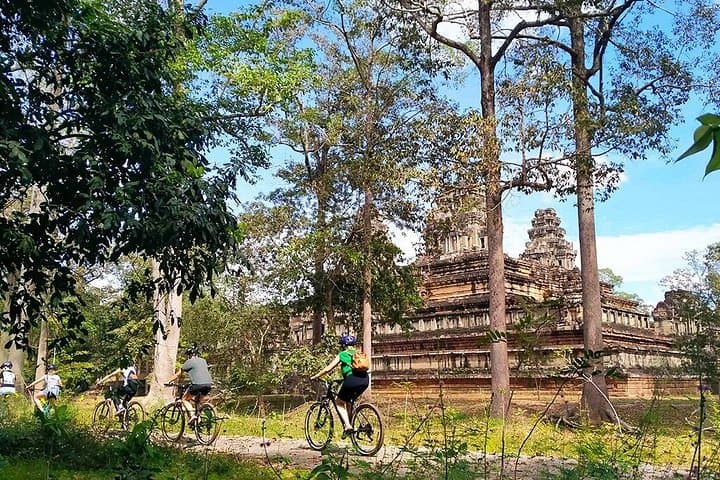
The route threads through Angkor Thom’s south gate, past the Bayon’s carved faces, then into Ta Prohm where strangler figs have taken the ruins as their own—roots wrapping and prying at centuries-old sandstone. Geologically the monuments are hewn from sandstone beds laid down millions of years ago and sculpted by human hands in the 12th century during the Khmer Empire under Suryavarman II. Riders pass rice paddies and reservoirs (barays) that speak to Khmer water engineering and stop for a local Khmer lunch near Srah Srang.
Practically, this is a mostly low-impact tour: expect 2–3 hours of actual cycling on mixed terrain with several photo stops, a support vehicle, and guide. Bring sun protection and lightweight layers for the cool morning, and respect temple etiquette—cover shoulders and knees. Admission to Angkor Archaeological Park is required separately; purchase your Angkor Pass in advance to avoid lines. Hydrate frequently, ride defensively on narrow paths, and leave time to soak in the quiet corners of less-visited ruins—where the place still feels like it’s remembering its past.
moderate.
10 hours.
Suitable for travelers in average fitness; requires sitting and pedaling for 2–3 hours with frequent stops.
No—Angkor Archaeological Park tickets are not included and must be purchased separately at the park entrance or online before arrival.
Approximately 2–3 hours of easy-to-moderate cycling on mixed terrain, with plenty of stops for sites and photos; a support vehicle is available.
Yes, the tour supplies a trek mountain bike and helmet, though guests may bring their own helmet if they prefer.
The operator notes it’s not recommended for children under five; infants must sit on laps during transfers.
Angkor Wat and surrounding complexes were built primarily in the 12th century during the Khmer Empire and represent monumental sandstone architecture and advanced hydraulic systems.
The park is a UNESCO World Heritage site; stick to official paths, avoid touching carvings, and use the support vehicle when trails are wet to reduce erosion.
Elephant Bike Tours - Siem Reap Daily Tours operates guided outdoor trips and adventures with an emphasis on safety, stewardship, and memorable experiences.
Bleary-eyed cyclists gather on quiet roads as dawn softens the silhouette of Angkor Wat; the first light slides across its lotus towers and the air smells of damp earth and distant wood smoke. The ride begins with a short transfer into the park, then a slow pedal along shaded tracks where cracked laterite and packed sand give way to stretches of leafy singletrack. A private picnic breakfast at the temple grounds lets riders stretch legs and watch the complex awaken.
Bleary-eyed cyclists gather on quiet roads as dawn softens the silhouette of Angkor Wat; the first light slides across its lotus towers and the air smells of damp earth and distant wood smoke. The ride begins with a short transfer into the park, then a slow pedal along shaded tracks where cracked laterite and packed sand give way to stretches of leafy singletrack. A private picnic breakfast at the temple grounds lets riders stretch legs and watch the complex awaken.
The route threads through Angkor Thom’s south gate, past the Bayon’s carved faces, then into Ta Prohm where strangler figs have taken the ruins as their own—roots wrapping and prying at centuries-old sandstone. Geologically the monuments are hewn from sandstone beds laid down millions of years ago and sculpted by human hands in the 12th century during the Khmer Empire under Suryavarman II. Riders pass rice paddies and reservoirs (barays) that speak to Khmer water engineering and stop for a local Khmer lunch near Srah Srang.
Practically, this is a mostly low-impact tour: expect 2–3 hours of actual cycling on mixed terrain with several photo stops, a support vehicle, and guide. Bring sun protection and lightweight layers for the cool morning, and respect temple etiquette—cover shoulders and knees. Admission to Angkor Archaeological Park is required separately; purchase your Angkor Pass in advance to avoid lines. Hydrate frequently, ride defensively on narrow paths, and leave time to soak in the quiet corners of less-visited ruins—where the place still feels like it’s remembering its past.