THE ADVENTURE COLLECTIVE® · Independent discovery and booking for outdoor travel

A full-day private circuit linking Angkor Wat, Bayon, Ta Prohm and the pink-sandstone jewel Banteay Srei, plus a look at freshwater floating houses — ideal for travelers wanting a packed cultural day with an efficient, guided pace.
A full-day private circuit linking Angkor Wat, Bayon, Ta Prohm and the pink-sandstone jewel Banteay Srei, plus a look at freshwater floating houses — ideal for travelers wanting a packed cultural day with an efficient, guided pace.
You arrive before the heat thickens: cracked laterite underfoot, prayer flags fluttering where tree roots have pulled mortar from stone. Morning light draws the carved faces of Bayon into relief; later, pink sandstone at Banteay Srei glows like a careful secret. This one-day circuit threads the high points of Angkor — Angkor Wat, Ta Prohm, Bayon — and pushes out to the smaller, exquisitely carved Banteay Srei, with a stop at local floating houses on the freshwater lake to watch fishermen mend nets.
Verified experiences and guided adventures in the surrounding area.
Operated by Hok Cambodia Journeys · Siem Reap, Siem Reap Province
You arrive before the heat thickens: cracked laterite underfoot, prayer flags fluttering where tree roots have pulled mortar from stone. Morning light draws the carved faces of Bayon into relief; later, pink sandstone at Banteay Srei glows like a careful secret. This one-day circuit threads the high points of Angkor — Angkor Wat, Ta Prohm, Bayon — and pushes out to the smaller, exquisitely carved Banteay Srei, with a stop at local floating houses on the freshwater lake to watch fishermen mend nets.
The route follows the sweep of the Khmer Empire: 12th-century quarries, Jayavarman VII’s Mahayana-Buddhist monuments, and earlier Hindu shrines layered with later restorations. Geologically the site sits on sandstone and laterite; roots and seasonal water have shaped how temples sit and decay. Culturally, these complexes remain active sites of devotion where monks and locals maintain rituals alongside tourism.
Practical guidance: plan for a 6–7 hour day with multiple short walks on uneven stone and dusty paths; bring a valid Angkor pass (sold separately), sun protection, and modest clothing that covers shoulders and knees for temple entry. Start early to avoid mid-day crowds and heat; Ta Prohm is most atmospheric in soft morning light, while Angkor Wat’s reliefs are easier to read later when shadows fall.
Hydrate frequently and pack a small towel — temple steps can be slippery from moss. Respect roped-off areas and local worship practices. With a private air-conditioned vehicle and an English-speaking guide, you’ll move efficiently between major sites while getting context that turns stone into story.
easy.
6–7 hours.
Suitable for most fitness levels; able to walk short distances on uneven terrain and climb temple steps.
Yes — entry to Angkor Archaeological Park requires a valid pass (1-day, 3-day, or 7-day); purchase at the ticket center or confirm your operator includes it before the tour.
The tour is family-friendly but involves climbing and uneven surfaces; mobility limitations may restrict access to some temple areas—ask for an adjusted pace or route.
This tour includes lunch, cool water and towels as described, but confirm dietary needs in advance and carry extra water if you need it.
Photography is generally allowed in most outdoor areas; avoid using flash on fragile bas-reliefs and respect any signs restricting access or photos at active worship sites.
The Angkor complex grew under the Khmer Empire (9th–15th centuries) with major expansion under Jayavarman VII in the 12th century; Banteay Srei dates to the 10th century and is famed for fine carvings.
Visitor pressure and vegetation growth threaten fragile stonework; stick to marked paths, avoid touching carvings, and support guides who follow park regulations.
Hok Cambodia Journeys operates guided outdoor trips and adventures with an emphasis on safety, stewardship, and memorable experiences.
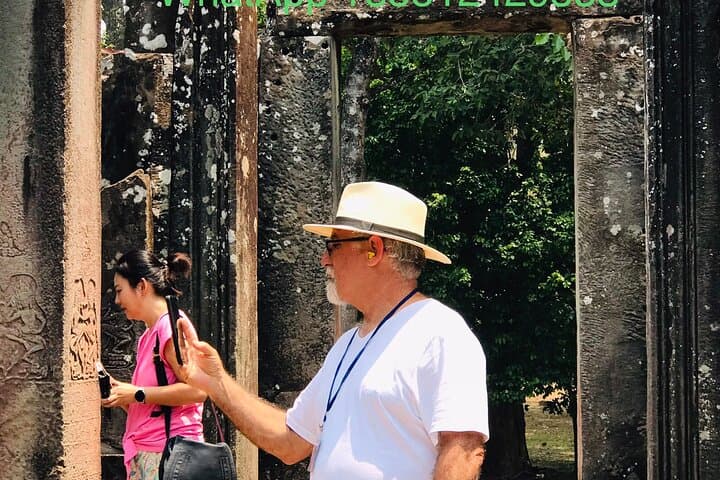
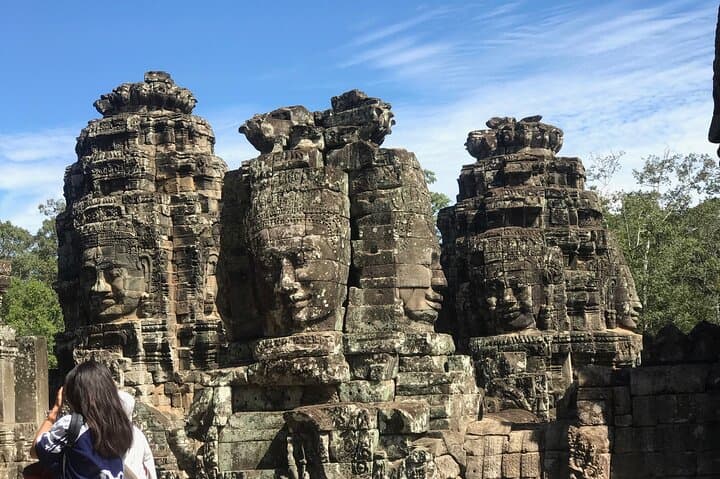
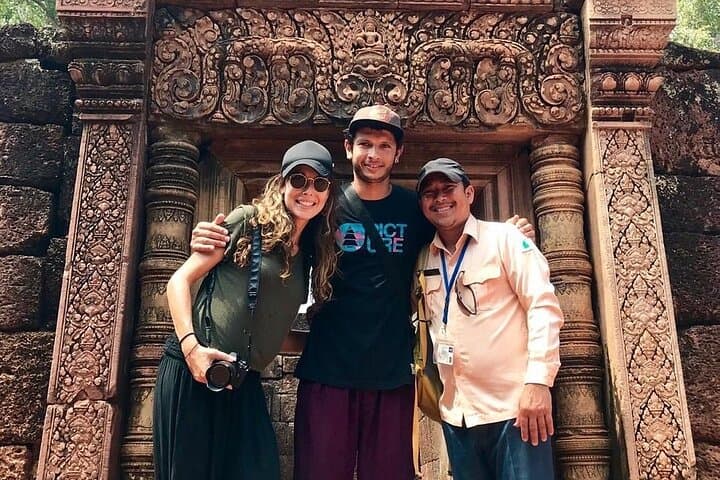
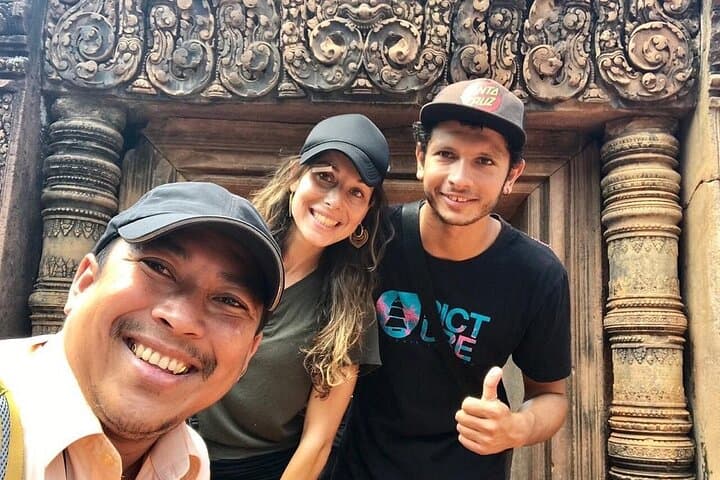
You arrive before the heat thickens: cracked laterite underfoot, prayer flags fluttering where tree roots have pulled mortar from stone. Morning light draws the carved faces of Bayon into relief; later, pink sandstone at Banteay Srei glows like a careful secret. This one-day circuit threads the high points of Angkor — Angkor Wat, Ta Prohm, Bayon — and pushes out to the smaller, exquisitely carved Banteay Srei, with a stop at local floating houses on the freshwater lake to watch fishermen mend nets.
You arrive before the heat thickens: cracked laterite underfoot, prayer flags fluttering where tree roots have pulled mortar from stone. Morning light draws the carved faces of Bayon into relief; later, pink sandstone at Banteay Srei glows like a careful secret. This one-day circuit threads the high points of Angkor — Angkor Wat, Ta Prohm, Bayon — and pushes out to the smaller, exquisitely carved Banteay Srei, with a stop at local floating houses on the freshwater lake to watch fishermen mend nets.
The route follows the sweep of the Khmer Empire: 12th-century quarries, Jayavarman VII’s Mahayana-Buddhist monuments, and earlier Hindu shrines layered with later restorations. Geologically the site sits on sandstone and laterite; roots and seasonal water have shaped how temples sit and decay. Culturally, these complexes remain active sites of devotion where monks and locals maintain rituals alongside tourism.
Practical guidance: plan for a 6–7 hour day with multiple short walks on uneven stone and dusty paths; bring a valid Angkor pass (sold separately), sun protection, and modest clothing that covers shoulders and knees for temple entry. Start early to avoid mid-day crowds and heat; Ta Prohm is most atmospheric in soft morning light, while Angkor Wat’s reliefs are easier to read later when shadows fall.
Hydrate frequently and pack a small towel — temple steps can be slippery from moss. Respect roped-off areas and local worship practices. With a private air-conditioned vehicle and an English-speaking guide, you’ll move efficiently between major sites while getting context that turns stone into story.