THE ADVENTURE COLLECTIVE® · Independent discovery and booking for outdoor travel

Skip the buses and explore Angkor’s quieter paths by electric mountain bike. This full‑day tour combines temple highlights like Bayon and Preah Khan with secret tracks through jungle and local villages.
Skip the buses and explore Angkor’s quieter paths by electric mountain bike. This full‑day tour combines temple highlights like Bayon and Preah Khan with secret tracks through jungle and local villages.
A morning mist lifts off the jungle as the electric motor hums and the trail pulls you away from the tourist buses. Pedals click, wheels crunch over laterite tracks, and the guide steers a narrow logging path that pushes into the shade—this is Angkor at a different pace, where temple stones peek through the canopy and village life unfolds along the roadside.
Verified experiences and guided adventures in the surrounding area.
Operated by Adventures Cambodia · Siem Reap, Siem Reap Province
A morning mist lifts off the jungle as the electric motor hums and the trail pulls you away from the tourist buses. Pedals click, wheels crunch over laterite tracks, and the guide steers a narrow logging path that pushes into the shade—this is Angkor at a different pace, where temple stones peek through the canopy and village life unfolds along the roadside.
The route threads through landmarks tied to the Khmer Empire: Angkor Thom’s South Gate with its carved faces, the enigmatic Bayon with its 12th‑century bas‑reliefs, and the sprawling Preah Khan, whose corridors carry the weight of Jayavarman VII’s ambition. Geologically the temples rise from stacked sandstone and laterite, now softened by lichen and roots; forest and monsoon have been constant partners in the site’s slow reclamation.
Culturally, villages alongside the park keep traditional crafts and rice‑field rhythms—cyclists pass rice barns, small markets, and artisans carving wood or lacquerware. The ebike lets riders cover long distances while conserving energy for short exploratory hikes into temple courtyards and quiet cloisters.
Practical guidance: bring the official Angkor Archaeological Park pass (sold at the park), wear respectful, lightweight clothing that covers shoulders and knees for temple entry, and carry water—the sun can be unforgiving. Helmets are provided, but basic bike handling and moderate fitness help: expect uneven tracks, occasional loose gravel, and seven to eight hours on tour. Charge devices before you go and plan for sticky humidity; the electric assist shortens climbs, but the day still demands steady attention and respect for fragile ruins.
moderate.
7–8 hours.
Moderate cardiovascular fitness and ability to ride 3–4 hours intermittently; should handle short hikes and uneven terrain.
Yes — the Angkor Archaeological Park requires a pass for entry. Confirm whether your operator supplies it or if you should buy it yourself at the park ticket center.
Electric assist reduces the physical demand, but riders should manage uneven trails, short hikes within temples, and a full‑day itinerary; moderate fitness is recommended.
Tours typically supply helmets and some drinks, but bring your own hydration pack and snacks for comfort and continuous electrolytes.
Dry season (November–March) offers cooler, less humid conditions and firmer trails, though early morning starts are good year‑round to avoid midday heat.
The Angkor complex was the heart of the Khmer Empire; many major structures date to the 12th century under King Jayavarman VII, reflecting a blend of religious and royal ambition.
Visitor management and staying on designated trails help protect fragile stonework and root systems; hiring local guides supports conservation through responsible tourism.
Adventures Cambodia operates guided outdoor trips and adventures with an emphasis on safety, stewardship, and memorable experiences.
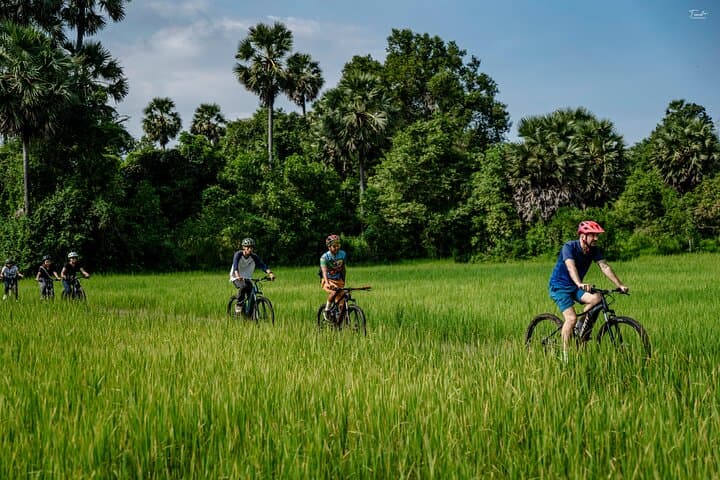
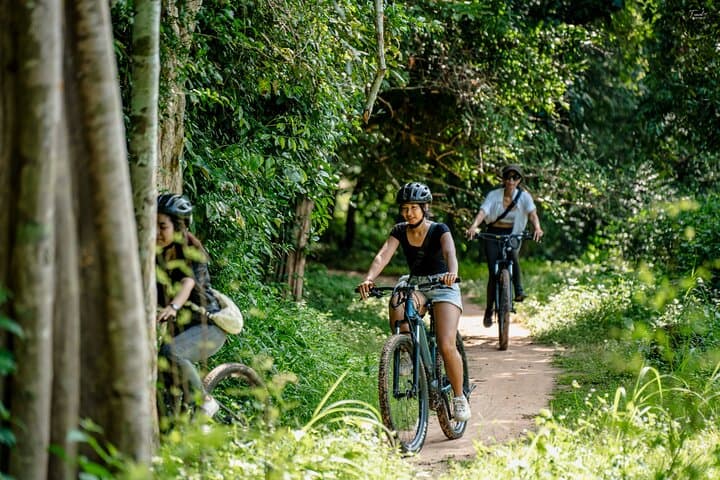
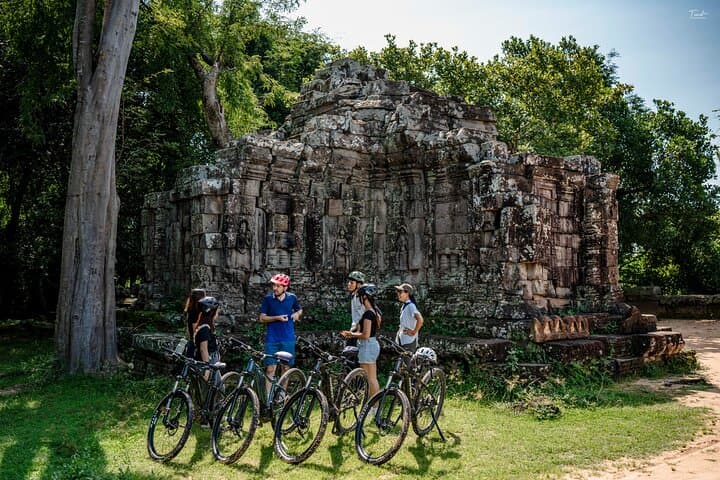
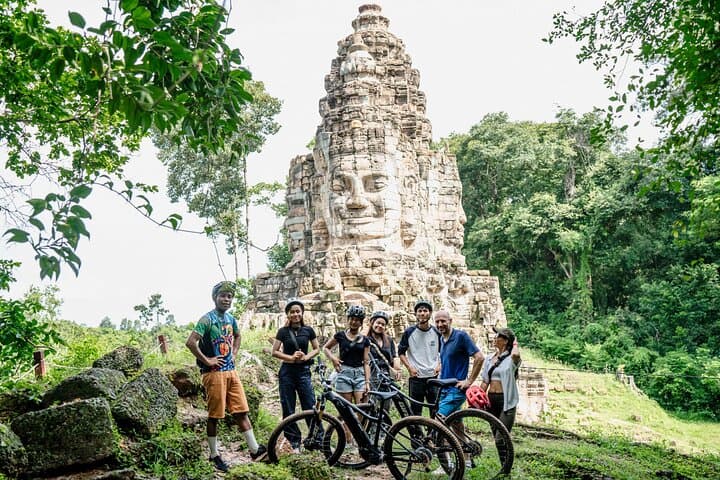
A morning mist lifts off the jungle as the electric motor hums and the trail pulls you away from the tourist buses. Pedals click, wheels crunch over laterite tracks, and the guide steers a narrow logging path that pushes into the shade—this is Angkor at a different pace, where temple stones peek through the canopy and village life unfolds along the roadside.
A morning mist lifts off the jungle as the electric motor hums and the trail pulls you away from the tourist buses. Pedals click, wheels crunch over laterite tracks, and the guide steers a narrow logging path that pushes into the shade—this is Angkor at a different pace, where temple stones peek through the canopy and village life unfolds along the roadside.
The route threads through landmarks tied to the Khmer Empire: Angkor Thom’s South Gate with its carved faces, the enigmatic Bayon with its 12th‑century bas‑reliefs, and the sprawling Preah Khan, whose corridors carry the weight of Jayavarman VII’s ambition. Geologically the temples rise from stacked sandstone and laterite, now softened by lichen and roots; forest and monsoon have been constant partners in the site’s slow reclamation.
Culturally, villages alongside the park keep traditional crafts and rice‑field rhythms—cyclists pass rice barns, small markets, and artisans carving wood or lacquerware. The ebike lets riders cover long distances while conserving energy for short exploratory hikes into temple courtyards and quiet cloisters.
Practical guidance: bring the official Angkor Archaeological Park pass (sold at the park), wear respectful, lightweight clothing that covers shoulders and knees for temple entry, and carry water—the sun can be unforgiving. Helmets are provided, but basic bike handling and moderate fitness help: expect uneven tracks, occasional loose gravel, and seven to eight hours on tour. Charge devices before you go and plan for sticky humidity; the electric assist shortens climbs, but the day still demands steady attention and respect for fragile ruins.