THE ADVENTURE COLLECTIVE® · Independent discovery and booking for outdoor travel

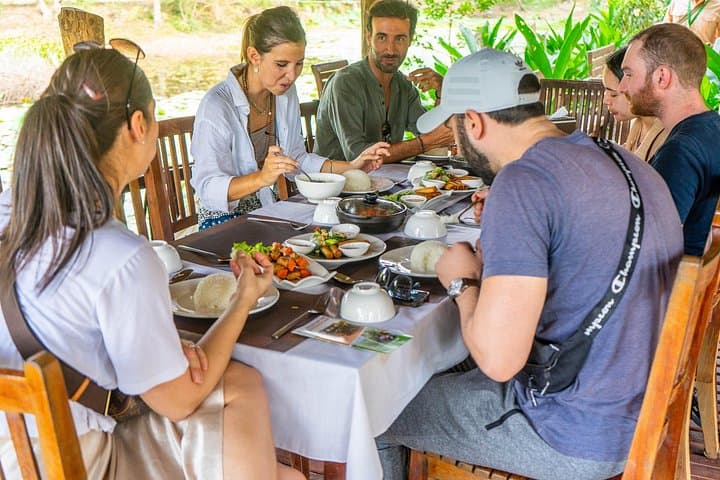
Ride an army jeep through jungle tracks to the great temples of Angkor—Angkor Wat, Bayon and Ta Prohm—while a local guide threads history into the landscape. This full-day tour pairs access to quieter ruins with a Cambodian lunch and practical support for a hot, active day.
Ride an army jeep through jungle tracks to the great temples of Angkor—Angkor Wat, Bayon and Ta Prohm—while a local guide threads history into the landscape. This full-day tour pairs access to quieter ruins with a Cambodian lunch and practical support for a hot, active day.
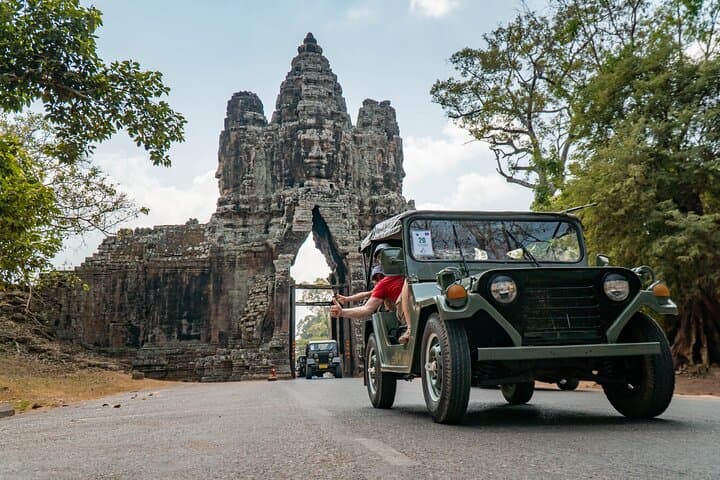
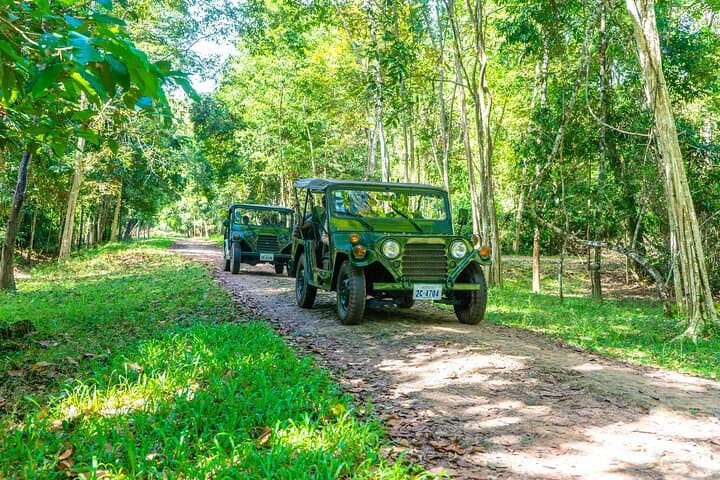
You ease into an open-sided army jeep at dawn and the jungle breathes around you—humid air threaded with frangipani and diesel as the track pushes toward stone. By the time Angkor Wat’s silhouette catches the light, the complex feels like a living map: galleries, bas-reliefs and causeways that have survived monsoon and empire.
Verified experiences and guided adventures in the surrounding area.
Operated by Tours By Jeeps · Siem Reap, Siem Reap
You ease into an open-sided army jeep at dawn and the jungle breathes around you—humid air threaded with frangipani and diesel as the track pushes toward stone. By the time Angkor Wat’s silhouette catches the light, the complex feels like a living map: galleries, bas-reliefs and causeways that have survived monsoon and empire.
This full-day loop follows the arc of the Khmer Empire. Angkor Wat, built in the 12th century from carved sandstone, anchors the site; nearby Angkor Thom and the Bayon wear a later king’s imprint with towers of grinning faces. Ta Prohm lets the forest take the lead—roots and strangling figs hold collapsed galleries together, giving a raw sense of archaeology in progress. Geologically, the monuments sit on compacted laterite and sandstone quarried from nearby ridges; drainage and water management were as important to the builders as the stone itself.
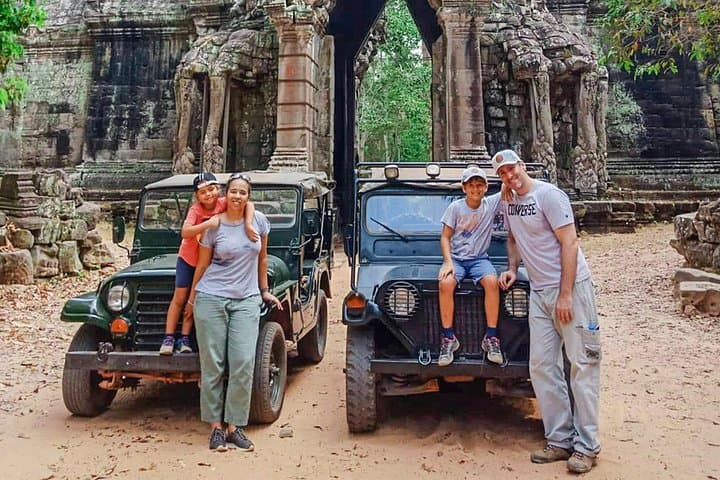
Local life threads through the ruins: monks in saffron robes, vendors selling iced sugarcane, and guides whose explanations condense centuries into clear, visual stories. The jeep opens access to quieter tracks and lesser-known temples where crowds thin and details reappear.
Practical edge: expect intermittent walking on uneven stone, sun exposure, and humid heat—bring a hat, sunscreen, and a refillable water bottle. Dress respectfully (covered shoulders and knees) and purchase the Angkor Pass before arrival. Pickup, lunch, water and a professional English-speaking guide are included; plan for an 8-hour day with regular rests. Travel off-peak early or late in the day for softer light and thinner crowds.
moderate.
8 hours.
Suitable for travelers in average fitness; involves several hours of walking on uneven stone and some climbing of temple steps.
Admission (Angkor Pass) is not included; you must purchase the pass separately at the official ticket center or online prior to entry.
Round-trip transfer by army jeep and temple site visits are included in the tour price; confirm pickup location when booking.
Children aged 4 and older are permitted; the tour includes walking and sun exposure, so plan accordingly.
Covered shoulders, chest and knees are required for entry to many temple areas—carry a sarong or lightweight cover if needed.
Angkor was the heart of the Khmer Empire from the 9th to 15th centuries; its hydraulic systems and monumental temples reflect a sophisticated, centralized society.
Visitor numbers strain fragile sandstone and laterite; follow paths, avoid touching bas-reliefs and hire certified guides to support conservation-aware tourism.
Tours By Jeeps operates guided outdoor trips and adventures with an emphasis on safety, stewardship, and memorable experiences.
You ease into an open-sided army jeep at dawn and the jungle breathes around you—humid air threaded with frangipani and diesel as the track pushes toward stone. By the time Angkor Wat’s silhouette catches the light, the complex feels like a living map: galleries, bas-reliefs and causeways that have survived monsoon and empire.
You ease into an open-sided army jeep at dawn and the jungle breathes around you—humid air threaded with frangipani and diesel as the track pushes toward stone. By the time Angkor Wat’s silhouette catches the light, the complex feels like a living map: galleries, bas-reliefs and causeways that have survived monsoon and empire.
This full-day loop follows the arc of the Khmer Empire. Angkor Wat, built in the 12th century from carved sandstone, anchors the site; nearby Angkor Thom and the Bayon wear a later king’s imprint with towers of grinning faces. Ta Prohm lets the forest take the lead—roots and strangling figs hold collapsed galleries together, giving a raw sense of archaeology in progress. Geologically, the monuments sit on compacted laterite and sandstone quarried from nearby ridges; drainage and water management were as important to the builders as the stone itself.
Local life threads through the ruins: monks in saffron robes, vendors selling iced sugarcane, and guides whose explanations condense centuries into clear, visual stories. The jeep opens access to quieter tracks and lesser-known temples where crowds thin and details reappear.
Practical edge: expect intermittent walking on uneven stone, sun exposure, and humid heat—bring a hat, sunscreen, and a refillable water bottle. Dress respectfully (covered shoulders and knees) and purchase the Angkor Pass before arrival. Pickup, lunch, water and a professional English-speaking guide are included; plan for an 8-hour day with regular rests. Travel off-peak early or late in the day for softer light and thinner crowds.