THE ADVENTURE COLLECTIVE® · Independent discovery and booking for outdoor travel

Spend five days exploring Angkor’s major temples, Phnom Kulen and the Roluos group with an English-speaking guide and private transport. This itinerary balances deep historical context with practical pacing and daily comfort stops.
Spend five days exploring Angkor’s major temples, Phnom Kulen and the Roluos group with an English-speaking guide and private transport. This itinerary balances deep historical context with practical pacing and daily comfort stops.
You step from the air-conditioned car into a wash of heat and the sound of temple bells and distant market calls. Palm fronds lean like watchful hands over dusty lanes as your guide unfolds the first map: five days through the Angkor complex, Phnom Kulen’s waterfalls and the quieter Roluos ruins. The day-to-day moves with a steady rhythm—early starts at stone gateways, mid-day pauses for shade and cold water, evenings back at a hotel to sort photos and mud-slick carvings.
Verified experiences and guided adventures in the surrounding area.
Operated by Tour East Cambodia · Siem Reap, Siem Reap Province
You step from the air-conditioned car into a wash of heat and the sound of temple bells and distant market calls. Palm fronds lean like watchful hands over dusty lanes as your guide unfolds the first map: five days through the Angkor complex, Phnom Kulen’s waterfalls and the quieter Roluos ruins. The day-to-day moves with a steady rhythm—early starts at stone gateways, mid-day pauses for shade and cold water, evenings back at a hotel to sort photos and mud-slick carvings.
Angkor’s stones date from the 9th–14th centuries, built during the Khmer Empire. Angkor Wat’s bas-reliefs record cosmology and conquest; Banteay Srei’s red sandstone shows intricate carving at a more intimate scale. Phnom Kulen’s river of carved lingas and reclining Buddha recall pilgrimage practices still observed today, while villages around the park preserve rice-growing rhythms and boat life on the Tonle Sap.
Practical planning matters: temples require covered shoulders and knees, comfortable shoes for uneven stone and steep steps, and sunscreen for long exposures. The itinerary averages several hours of walking each day with vehicle transfers between sites; most stops include short hikes or stair climbs. Bring a refillable water bottle—the heat will press at you—and schedule the biggest temples for morning light to avoid the crowds and midday heat. Mobility needs vary by site; ask about elevator access if required. With steady pacing and simple preparation, five days here converts stone and history into a layered, approachable adventure.
easy.
5 days (approx. 8–10 hours/day).
Suitable for travelers in average fitness able to walk several hours per day and climb temple steps.
Yes—the itinerary notes an Angkor Ticket for 3 days; confirm which days you'll redeem it with your guide.
This tour is listed as a private tour with private air-conditioned transport and an English-speaking guide included.
Private format generally allows customization—discuss desired pace and any mobility limits with the operator in advance.
Breakfast is included each day; lunch and dinner are at your own expense, though two cold water bottles per person per day are provided on tours.
The Angkor site was the political and religious capital of the Khmer Empire from the 9th to 15th centuries, with Angkor Wat constructed in the early 12th century under Suryavarman II.
Visitor pressure requires strict temple dress codes and park management; travel sustainably by using refillable bottles, staying on paths and supporting local guides.
Tour East Cambodia operates guided outdoor trips and adventures with an emphasis on safety, stewardship, and memorable experiences.
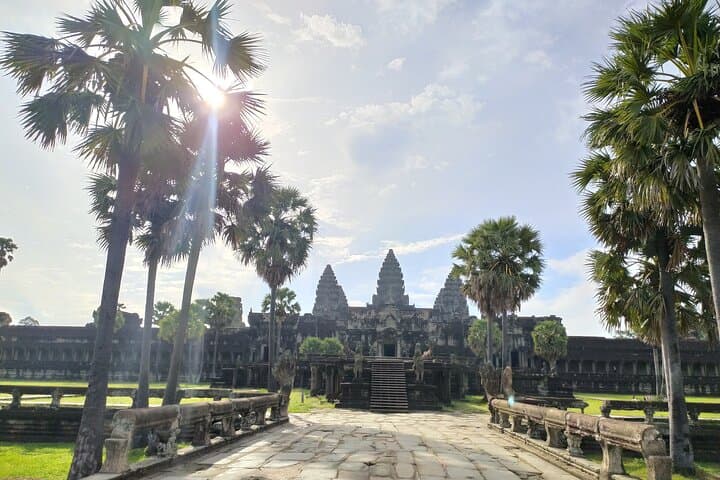
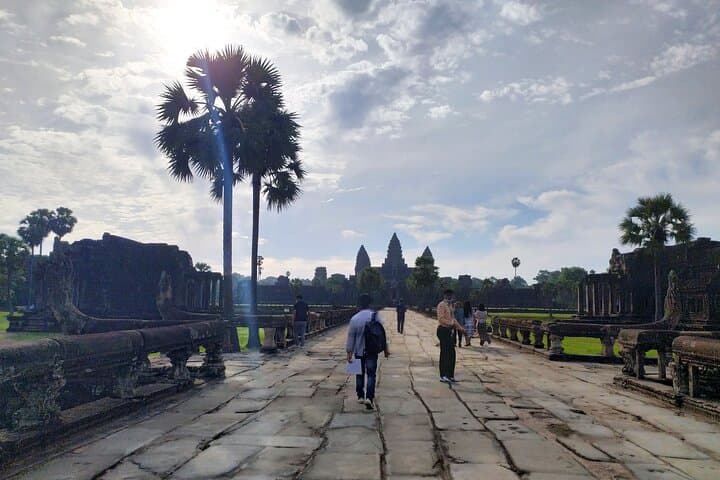
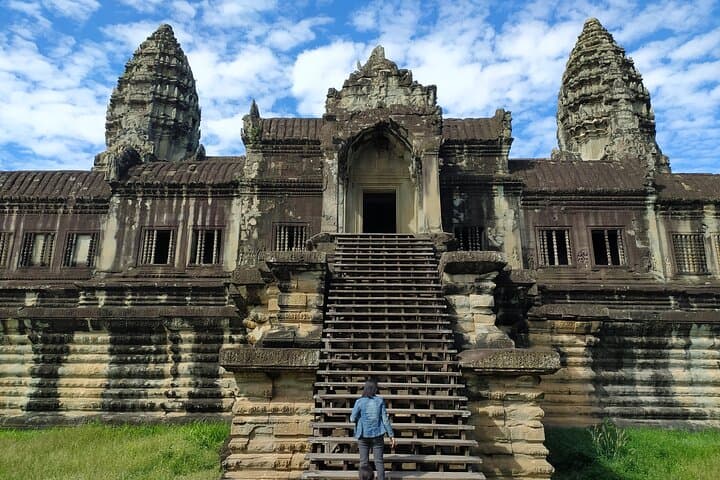

You step from the air-conditioned car into a wash of heat and the sound of temple bells and distant market calls. Palm fronds lean like watchful hands over dusty lanes as your guide unfolds the first map: five days through the Angkor complex, Phnom Kulen’s waterfalls and the quieter Roluos ruins. The day-to-day moves with a steady rhythm—early starts at stone gateways, mid-day pauses for shade and cold water, evenings back at a hotel to sort photos and mud-slick carvings.
You step from the air-conditioned car into a wash of heat and the sound of temple bells and distant market calls. Palm fronds lean like watchful hands over dusty lanes as your guide unfolds the first map: five days through the Angkor complex, Phnom Kulen’s waterfalls and the quieter Roluos ruins. The day-to-day moves with a steady rhythm—early starts at stone gateways, mid-day pauses for shade and cold water, evenings back at a hotel to sort photos and mud-slick carvings.
Angkor’s stones date from the 9th–14th centuries, built during the Khmer Empire. Angkor Wat’s bas-reliefs record cosmology and conquest; Banteay Srei’s red sandstone shows intricate carving at a more intimate scale. Phnom Kulen’s river of carved lingas and reclining Buddha recall pilgrimage practices still observed today, while villages around the park preserve rice-growing rhythms and boat life on the Tonle Sap.
Practical planning matters: temples require covered shoulders and knees, comfortable shoes for uneven stone and steep steps, and sunscreen for long exposures. The itinerary averages several hours of walking each day with vehicle transfers between sites; most stops include short hikes or stair climbs. Bring a refillable water bottle—the heat will press at you—and schedule the biggest temples for morning light to avoid the crowds and midday heat. Mobility needs vary by site; ask about elevator access if required. With steady pacing and simple preparation, five days here converts stone and history into a layered, approachable adventure.