THE ADVENTURE COLLECTIVE® · Independent discovery and booking for outdoor travel

Explore Angkor’s quieter side on a private Grand Circuit tour that includes Preah Khan, Neak Pean, Ta Som, East Mebon and the carved jewel of Banteay Srei. Expect 6–8 hours of culturally rich, mostly flat walking and comfortable transfers from Siem Reap.
Explore Angkor’s quieter side on a private Grand Circuit tour that includes Preah Khan, Neak Pean, Ta Som, East Mebon and the carved jewel of Banteay Srei. Expect 6–8 hours of culturally rich, mostly flat walking and comfortable transfers from Siem Reap.
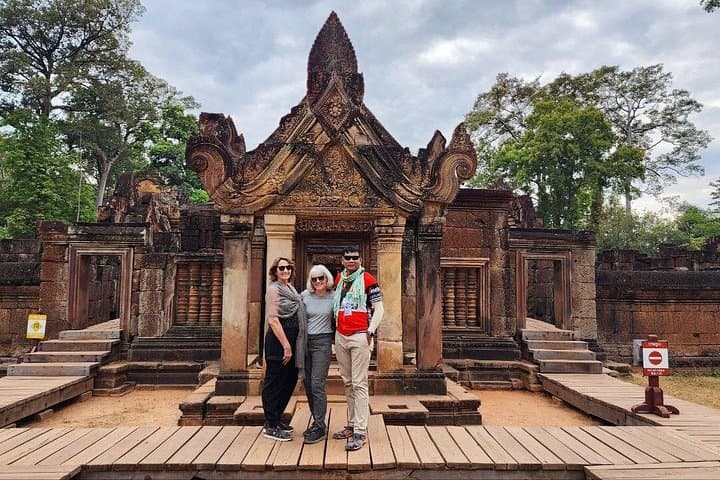
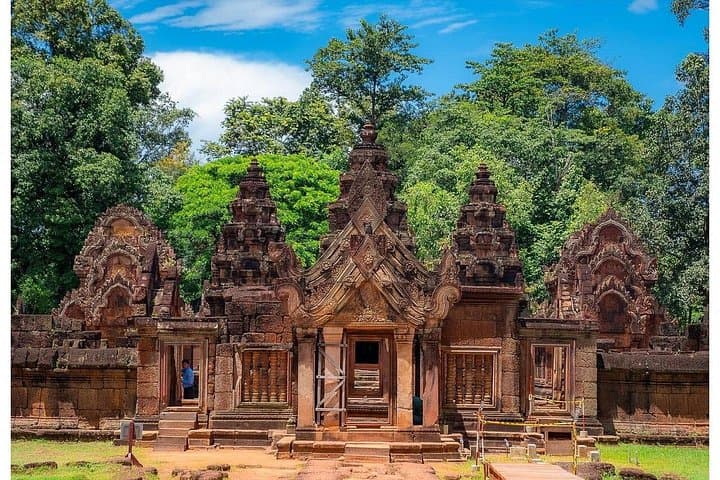
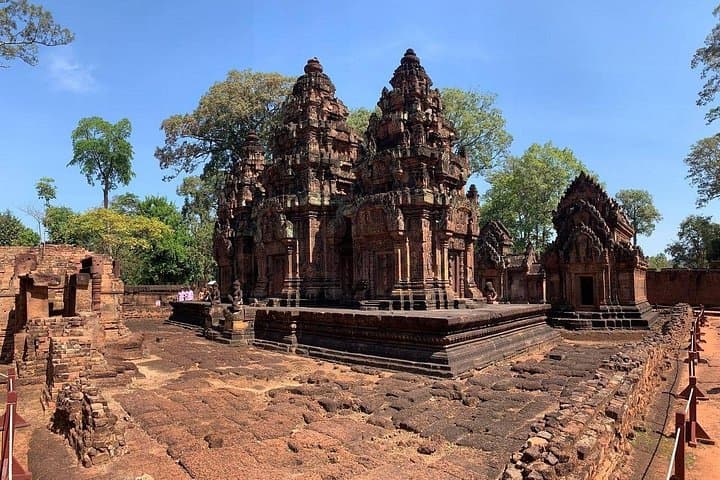
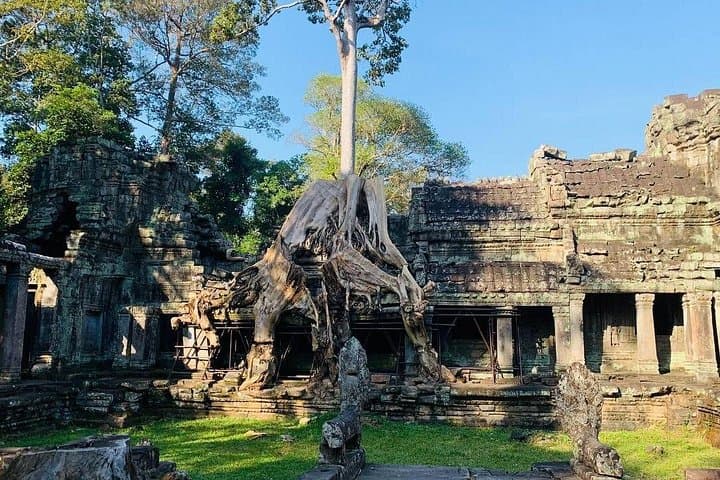
Dawn light slides across the shallow barays as you roll away from Siem Reap, the air already warmed by the day. Stone corridors appear through mist; figs and strangler roots lift and press against ruined lintels as if testing their resolve. This Grand Circuit route threads quieter temples — Preah Khan’s forested galleries, the circular calm of Neak Pean, Ta Som’s famous tree-entwined gate — and finishes at Banteay Srei, whose pink sandstone carvings seem to leap from the walls.
Verified experiences and guided adventures in the surrounding area.
Operated by Easy Angkor Trip · Siem Reap, Siem Reap Province
Dawn light slides across the shallow barays as you roll away from Siem Reap, the air already warmed by the day. Stone corridors appear through mist; figs and strangler roots lift and press against ruined lintels as if testing their resolve. This Grand Circuit route threads quieter temples — Preah Khan’s forested galleries, the circular calm of Neak Pean, Ta Som’s famous tree-entwined gate — and finishes at Banteay Srei, whose pink sandstone carvings seem to leap from the walls.
These monuments span the height of the Khmer empire, with many renovated under Jayavarman VII (12th–13th centuries). Geologically they’re built from laterite foundations and soft sandstone that holds deep, three-dimensional reliefs; that material is why Banteay Srei’s carving is so delicate and well preserved. Culturally you’ll see layers of Hindu and Buddhist iconography — an empire negotiating religion, royalty, and the irrigation systems (barays) that made Angkor possible.
Practically, expect a 6–8 hour private tour with pick-up and drop-off in an air-conditioned vehicle, an English guide, and water included. The circuit covers up to 25–30 km of driving between sites; walking at each temple is mostly flat but with uneven stones and steps. Start early to avoid heat and crowds, carry sun protection and insect repellent, and buy or show your Angkor Pass at entry points. Respect dress codes, keep to marked paths, and bring small local currency for snacks or donations. The Grand Circuit rewards patient explorers: quieter courtyards, carved details at eye level, and afternoons when the jungle dares the stones to hold their ground.
easy.
6–8 hours.
Suitable for most fitness levels; requires standing and short walks on uneven ground but no sustained elevation gain.
Yes — the Angkor Archaeological Park requires a valid pass (day or multi-day); the guide or driver can advise where to purchase it on arrival.
Walking at each site typically ranges from 20–60 minutes, with short uphill steps and uneven ground but no sustained climbs.
Banteay Srei is about 25 km northeast of central Angkor sites; expect a longer drive but fewer crowds and finer carvings.
Yes — the tour is rated easy and private vehicles reduce strain; however, mobility limits can make steps and uneven surfaces challenging without assistance.
Many Grand Circuit temples were expanded or restored under Jayavarman VII in the 12th century; Banteay Srei, carved in the 10th century, was commissioned by a Brahman courtier rather than a king.
High visitor numbers and soft sandstone make staying on marked paths and avoiding touching reliefs essential; support local conservation by using licensed guides and respecting no‑entry zones.
Easy Angkor Trip operates guided outdoor trips and adventures with an emphasis on safety, stewardship, and memorable experiences.
Dawn light slides across the shallow barays as you roll away from Siem Reap, the air already warmed by the day. Stone corridors appear through mist; figs and strangler roots lift and press against ruined lintels as if testing their resolve. This Grand Circuit route threads quieter temples — Preah Khan’s forested galleries, the circular calm of Neak Pean, Ta Som’s famous tree-entwined gate — and finishes at Banteay Srei, whose pink sandstone carvings seem to leap from the walls.
Dawn light slides across the shallow barays as you roll away from Siem Reap, the air already warmed by the day. Stone corridors appear through mist; figs and strangler roots lift and press against ruined lintels as if testing their resolve. This Grand Circuit route threads quieter temples — Preah Khan’s forested galleries, the circular calm of Neak Pean, Ta Som’s famous tree-entwined gate — and finishes at Banteay Srei, whose pink sandstone carvings seem to leap from the walls.
These monuments span the height of the Khmer empire, with many renovated under Jayavarman VII (12th–13th centuries). Geologically they’re built from laterite foundations and soft sandstone that holds deep, three-dimensional reliefs; that material is why Banteay Srei’s carving is so delicate and well preserved. Culturally you’ll see layers of Hindu and Buddhist iconography — an empire negotiating religion, royalty, and the irrigation systems (barays) that made Angkor possible.
Practically, expect a 6–8 hour private tour with pick-up and drop-off in an air-conditioned vehicle, an English guide, and water included. The circuit covers up to 25–30 km of driving between sites; walking at each temple is mostly flat but with uneven stones and steps. Start early to avoid heat and crowds, carry sun protection and insect repellent, and buy or show your Angkor Pass at entry points. Respect dress codes, keep to marked paths, and bring small local currency for snacks or donations. The Grand Circuit rewards patient explorers: quieter courtyards, carved details at eye level, and afternoons when the jungle dares the stones to hold their ground.