THE ADVENTURE COLLECTIVE® · Independent discovery and booking for outdoor travel

Spend a full day exploring Angkor’s greatest temples with a certified private guide. This tour times visits to beat the crowds and includes hotel pickup, bottled water, and an air-conditioned vehicle.
Spend a full day exploring Angkor’s greatest temples with a certified private guide. This tour times visits to beat the crowds and includes hotel pickup, bottled water, and an air-conditioned vehicle.
You step from an air-conditioned vehicle into the heat of the Angkor Archaeological Park at first light, sandal straps whispering against flagstone as the sun burns through morning mist. The air smells of hot stone, dust, and the resinous sap of tropical trees; stone faces at Bayon regard you with an unreadable calm while roots braid themselves through ancient masonry at Ta Prohm.
Verified experiences and guided adventures in the surrounding area.
Operated by Asia Private Guide Service · Siem Reap, Siem Reap Province
You step from an air-conditioned vehicle into the heat of the Angkor Archaeological Park at first light, sandal straps whispering against flagstone as the sun burns through morning mist. The air smells of hot stone, dust, and the resinous sap of tropical trees; stone faces at Bayon regard you with an unreadable calm while roots braid themselves through ancient masonry at Ta Prohm.
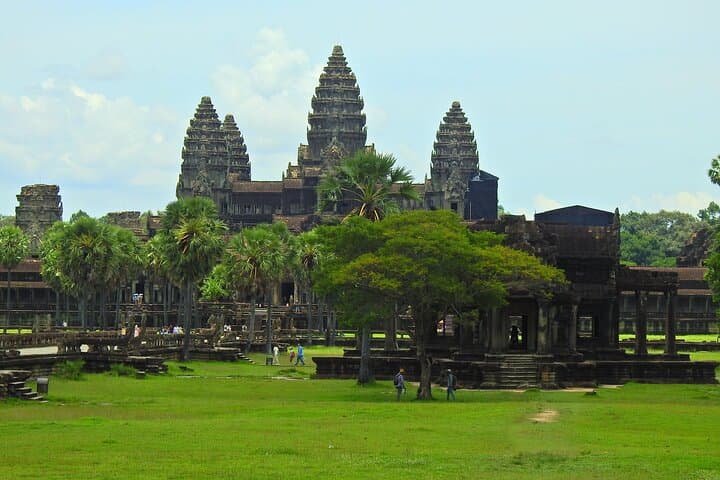
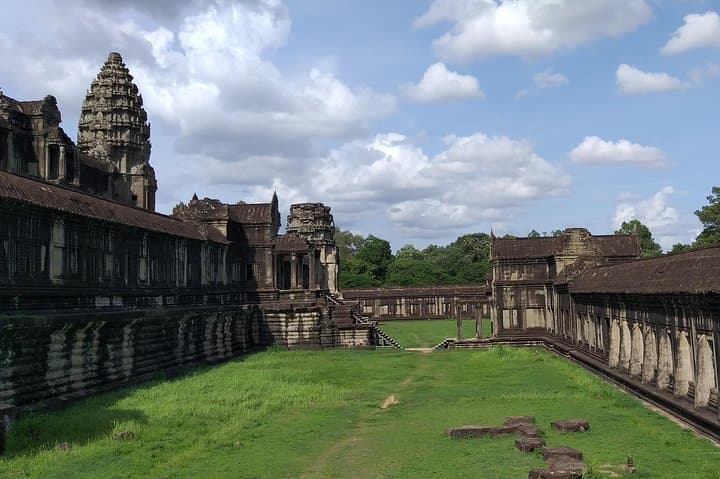
Built and reworked across centuries, Angkor’s monumental stones tell the story of the Khmer Empire — Angkor Wat raised by Suryavarman II in the 12th century as a Hindu state temple and later a Buddhist sanctuary, Angkor Thom’s gates guarded by carved devas and asuras, and Ta Nei’s quiet galleries reclaimed by forest. Geologically the park sits on sandstone and laterite that sculptors chiselled into bas-reliefs; centuries of monsoon weather and jungle growth have given the ruins their present, dramatic character.
Culturally, guides bring inscriptions and iconography to life: shifting religious practices, royal rituals, and the city-planning that once supported hundreds of thousands. Local life remains nearby in Siem Reap’s markets and rice paddies — a useful pivot point after a long day of exploration.
Practical notes: this private, full-day itinerary runs 6–9 hours with hotel pickup and bottled water provided. Start early to avoid heat and crowds, wear lightweight modest clothing that covers shoulders and knees for temple entry, use good walking shoes for uneven stone, and carry sunscreen plus a refillable bottle. Book an Angkor Park pass in advance, move at a steady pace, and give extra time at quieter temples like Ta Nei where the silence lets the place speak for itself.
easy.
6–9 hours.
Suitable for most fitness levels; requires sustained walking on uneven ground and short stair climbs.
Yes — entry to the Angkor Archaeological Park requires a pass; buy a one-day or multi-day pass at the official ticket center or online before your visit.
Yes — the tour is listed as suitable for all fitness levels, but expect considerable walking and some stair climbing; request a gentler pace if needed.
Bottled water is included; meals are not usually included on a standard full-day itinerary so plan for lunch or ask your operator for restaurant recommendations.
Angkor Wat sunrise viewing is popular and possible, but it may require an earlier start than the standard full-day schedule; discuss timing with your guide to prioritize sunrise at a specific temple.
Angkor was the political and religious center of the Khmer Empire from roughly the 9th to 15th centuries; temples like Angkor Wat were repurposed across religious shifts from Hinduism to Buddhism.
The Angkor Park is managed to balance tourism and preservation—stay on marked paths, avoid touching bas-reliefs, and minimize single-use plastics to reduce damage and cultural wear.
Asia Private Guide Service operates guided outdoor trips and adventures with an emphasis on safety, stewardship, and memorable experiences.
You step from an air-conditioned vehicle into the heat of the Angkor Archaeological Park at first light, sandal straps whispering against flagstone as the sun burns through morning mist. The air smells of hot stone, dust, and the resinous sap of tropical trees; stone faces at Bayon regard you with an unreadable calm while roots braid themselves through ancient masonry at Ta Prohm.
You step from an air-conditioned vehicle into the heat of the Angkor Archaeological Park at first light, sandal straps whispering against flagstone as the sun burns through morning mist. The air smells of hot stone, dust, and the resinous sap of tropical trees; stone faces at Bayon regard you with an unreadable calm while roots braid themselves through ancient masonry at Ta Prohm.
Built and reworked across centuries, Angkor’s monumental stones tell the story of the Khmer Empire — Angkor Wat raised by Suryavarman II in the 12th century as a Hindu state temple and later a Buddhist sanctuary, Angkor Thom’s gates guarded by carved devas and asuras, and Ta Nei’s quiet galleries reclaimed by forest. Geologically the park sits on sandstone and laterite that sculptors chiselled into bas-reliefs; centuries of monsoon weather and jungle growth have given the ruins their present, dramatic character.
Culturally, guides bring inscriptions and iconography to life: shifting religious practices, royal rituals, and the city-planning that once supported hundreds of thousands. Local life remains nearby in Siem Reap’s markets and rice paddies — a useful pivot point after a long day of exploration.
Practical notes: this private, full-day itinerary runs 6–9 hours with hotel pickup and bottled water provided. Start early to avoid heat and crowds, wear lightweight modest clothing that covers shoulders and knees for temple entry, use good walking shoes for uneven stone, and carry sunscreen plus a refillable bottle. Book an Angkor Park pass in advance, move at a steady pace, and give extra time at quieter temples like Ta Nei where the silence lets the place speak for itself.