
Angkor Bakeng Sunset Bike Tour: Pedal Through Jungle Temples to a Legendary Sunset
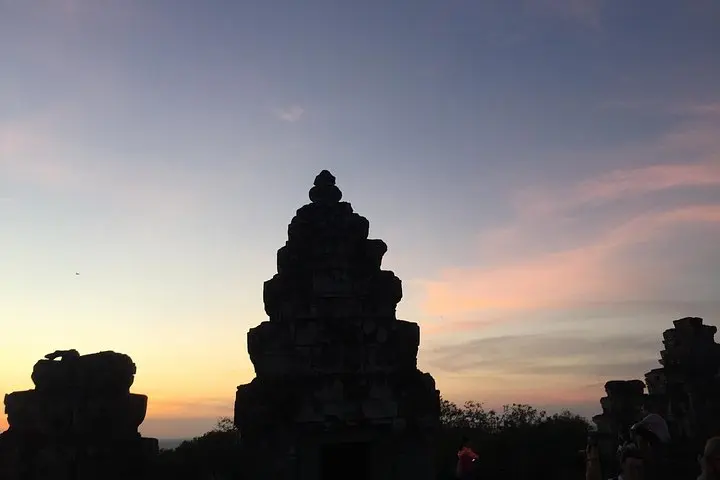
Cycle from Angkor Wat’s carved galleries through jungle traces and Tomb Raider‑famous roots to a sunrise—wait, sunset—view from Phnom Bakheng. This private day tour combines iconic temples, quiet forest shrines, and a tuk‑tuk support vehicle for a full‑day cultural ride.
An Adventure In Siem Reap.
Cycle from Angkor Wat’s carved galleries through jungle traces and Tomb Raider‑famous roots to a sunrise—wait, sunset—view from Phnom Bakheng. This private day tour combines iconic temples, quiet forest shrines, and a tuk‑tuk support vehicle for a full‑day cultural ride.
Read the full experience
You arrive in the late afternoon light, pedals tapping as tuk-tuk support pulls away and the jungle reclaims the edges of the road. The first view is Angkor Wat’s silhouette—flat tiers of sandstone against a sky already leaning toward gold. The air is warm, the path alternates between packed dirt and shaded forest trace, and the ruins feel less like ruins and more like an inhabited memory.
You arrive in the late afternoon light, pedals tapping as tuk-tuk support pulls away and the jungle reclaims the edges of the road. The first view is Angkor Wat’s silhouette—flat tiers of sandstone against a sky already leaning toward gold. The air is warm, the path alternates between packed dirt and shaded forest trace, and the ruins feel less like ruins and more like an inhabited memory.
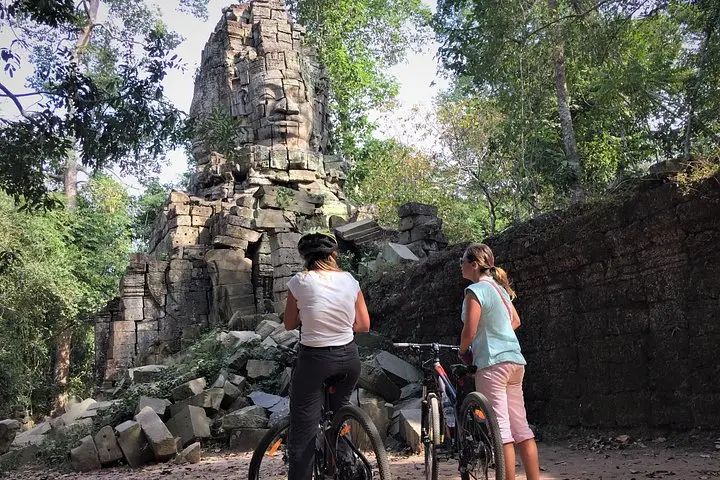
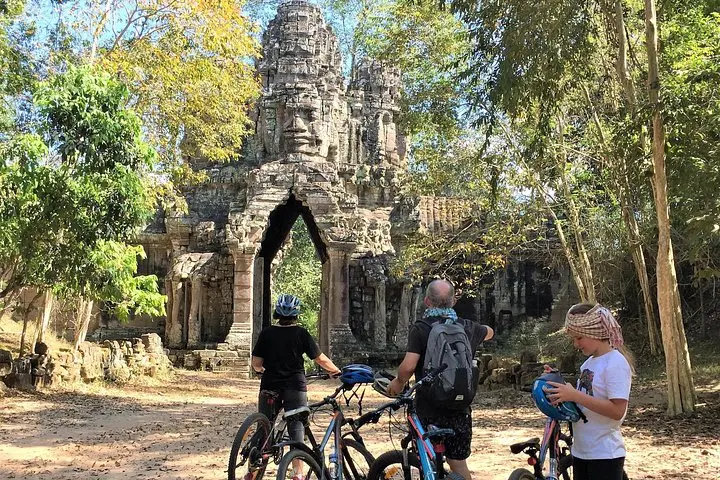
Angkor Archaeological Park was the heart of the Khmer Empire from the 9th to 15th centuries. Angkor Wat’s galleries record myths in bas‑relief; Bayon’s many-faced towers reflect a later, more intimate royal vision. Ta Prohm’s roots and Ta Nei’s quiet debris shrines show how tropical growth and stone have negotiated ownership for centuries. Geologically the temples are built of sandstone and laterite—soft in places, sharply carved in others—so wear on carvings is visible and fragile.
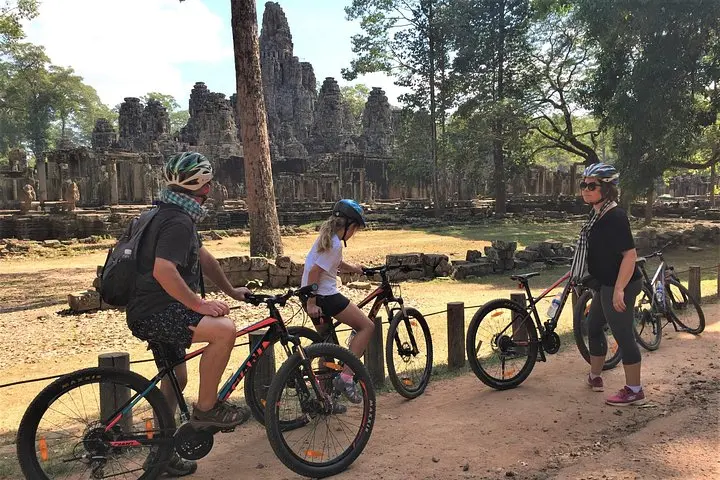
Practicalities are straightforward: the tour begins at the ticket booth (Angkor passes required), uses a standard bike and helmet, and includes tuk‑tuk follow support, water and snacks. Expect roughly 10 hours moving between sites with plenty of stops—Angkor Wat, Ta Prohm, Ta Nei, Bayon, and Phnom Bakheng at sunset. Terrain is mostly flat with short, steep approaches to hilltops and some uneven jungle tracks; a basic level of cycling fitness and sun‑management will make the day comfortable.
Bring sunscreen, insect repellent, lightweight long sleeves, and a rain cover in monsoon months. Respect the monuments—stay on paths, avoid touching fragile carvings, and leave no trace as you chase the sunset over centuries-old stone.
Frequently asked questions
Yes—entry to Angkor Archaeological Park requires a park pass; the tour starts at the ticket office where passes are checked.
The ride is moderate: mostly flat with some uneven jungle tracks and short climbs; basic cycling ability is sufficient.
Yes—standard bikes and helmets are provided, and a tuk‑tuk follows the group for support and luggage.
Children can join but those under 12 do not require an Angkor pass; consider age, bike skill, and heat tolerance before booking.
About This Experience
Naga Angkor Tour operates guided outdoor trips and adventures with an emphasis on safety, stewardship, and memorable experiences.
Adventure tips
Recommended gear
- Reusable water bottle or hydration pack: Keeps you hydrated across long sunny stretches and between tuk‑tuk stops.
- Lightweight sun‑protective clothing and hat: Protects skin from strong tropical sun while keeping you cool.
- Sturdy closed‑toe shoes: Better for uneven temple paths and short hikes around ruins than sandals.
- Compact rain jacket or poncho: Useful in sudden downpours during the monsoon season.
Photos of the experience
Related adventures & guides
Read the full experience
You arrive in the late afternoon light, pedals tapping as tuk-tuk support pulls away and the jungle reclaims the edges of the road. The first view is Angkor Wat’s silhouette—flat tiers of sandstone against a sky already leaning toward gold. The air is warm, the path alternates between packed dirt and shaded forest trace, and the ruins feel less like ruins and more like an inhabited memory.
You arrive in the late afternoon light, pedals tapping as tuk-tuk support pulls away and the jungle reclaims the edges of the road. The first view is Angkor Wat’s silhouette—flat tiers of sandstone against a sky already leaning toward gold. The air is warm, the path alternates between packed dirt and shaded forest trace, and the ruins feel less like ruins and more like an inhabited memory.
Angkor Archaeological Park was the heart of the Khmer Empire from the 9th to 15th centuries. Angkor Wat’s galleries record myths in bas‑relief; Bayon’s many-faced towers reflect a later, more intimate royal vision. Ta Prohm’s roots and Ta Nei’s quiet debris shrines show how tropical growth and stone have negotiated ownership for centuries. Geologically the temples are built of sandstone and laterite—soft in places, sharply carved in others—so wear on carvings is visible and fragile.
Practicalities are straightforward: the tour begins at the ticket booth (Angkor passes required), uses a standard bike and helmet, and includes tuk‑tuk follow support, water and snacks. Expect roughly 10 hours moving between sites with plenty of stops—Angkor Wat, Ta Prohm, Ta Nei, Bayon, and Phnom Bakheng at sunset. Terrain is mostly flat with short, steep approaches to hilltops and some uneven jungle tracks; a basic level of cycling fitness and sun‑management will make the day comfortable.
Bring sunscreen, insect repellent, lightweight long sleeves, and a rain cover in monsoon months. Respect the monuments—stay on paths, avoid touching fragile carvings, and leave no trace as you chase the sunset over centuries-old stone.
Make a day of it nearby.
Verified experiences and guided adventures in the surrounding area.