THE ADVENTURE COLLECTIVE® · Independent discovery and booking for outdoor travel

Three days moving through Angkor’s iconic temples, jungle-overgrown ruins and the floating communities of Tonle Sap. This private tour pairs early starts and guided interpretation with practical tips for heat, crowds, and temple etiquette.
Three days moving through Angkor’s iconic temples, jungle-overgrown ruins and the floating communities of Tonle Sap. This private tour pairs early starts and guided interpretation with practical tips for heat, crowds, and temple etiquette.
Dawn pulls a cool blue over the face of Angkor Wat as your driver slips through quiet park roads. Stone galleries yawn open, roots braid the walls at Ta Prohm, and the jungle seems to test your pace as it reclaims man-made order at Beng Mealea.
Verified experiences and guided adventures in the surrounding area.
Operated by Tours by Local Hosts · Siem Reap, Siem Reap Province
Dawn pulls a cool blue over the face of Angkor Wat as your driver slips through quiet park roads. Stone galleries yawn open, roots braid the walls at Ta Prohm, and the jungle seems to test your pace as it reclaims man-made order at Beng Mealea.
This private three-day circuit moves from the grand axis of Angkor — Angkor Wat’s rising towers and Bayon’s carved faces — to the pink sandstone finesse of Banteay Srey and the overgrown, cinematic corridors of Beng Mealea. You’ll cross the open water of Tonle Sap, where stilt villages float with the lake’s mood and water birds mark the horizons. The region sits on soft alluvial plains; the temples date to the Khmer Empire (9th–15th centuries) and display sandstone masonry, hydraulic engineering, and bas-reliefs that narrate court life and cosmology.
Expect uneven stones, steep temple steps, and dusty paths; the itinerary includes long days by vehicle with walking segments at each site. A licensed local guide interprets inscriptions and points out architectural details often missed in a quick pass. Culture here is shaped by rice cycles, fishing on the Great Lake, and decades of conservation work focused on visitor management and temple stabilization.
Practical guidance: start early to avoid heat and crowds; carry refillable water, sun protection, and respectful clothing that covers shoulders and knees. Angkor Park passes are required separately; exchanges of cash for small purchases at village stops are common. Moderate fitness and steady footing make the trip more enjoyable — the sites reward patience with intimate viewpoints and unexpected wildlife encounters.
moderate.
3 days (approx. 7–9 hours of touring per day).
Moderate fitness: able to walk several kilometers over uneven terrain and climb temple steps repeatedly.
No — this tour does not include the Angkor Archaeological Park pass; purchase a 1-, 3-, or 7-day pass at the ticket center or online before arrival.
Temples require walking on uneven stone, climbing steep, narrow steps, and standing for extended explanation—moderate fitness is recommended.
The operator lists wheelchair-accessible transportation, but many temple areas have steps and uneven ground; contact the provider to plan accessible routes and assistance.
Cool, dry months (November–February) offer the most comfortable conditions; the wet season (May–Oct) brings dramatic skies but can make some dirt tracks slippery.
These temples are products of the Khmer Empire (9th–15th centuries) and reflect advanced stone carving and hydraulic systems developed to manage monsoon-fed water.
Visitor management and restoration projects aim to limit wear on fragile carvings; stick to marked paths, avoid touching bas-reliefs, and support community-run crafts and services.
Tours by Local Hosts operates guided outdoor trips and adventures with an emphasis on safety, stewardship, and memorable experiences.
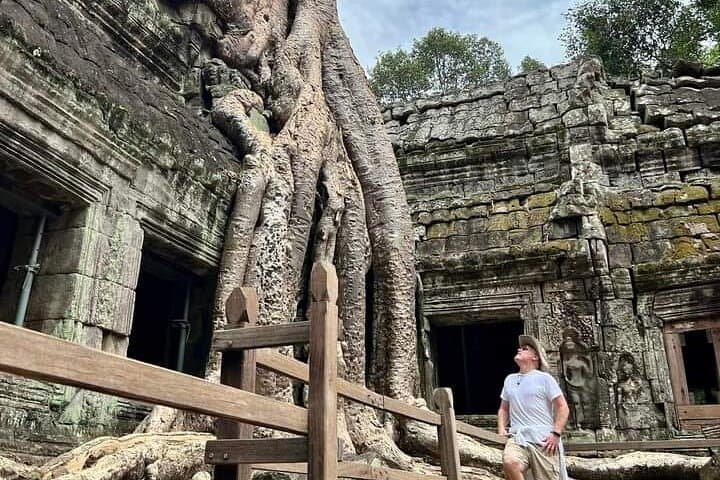
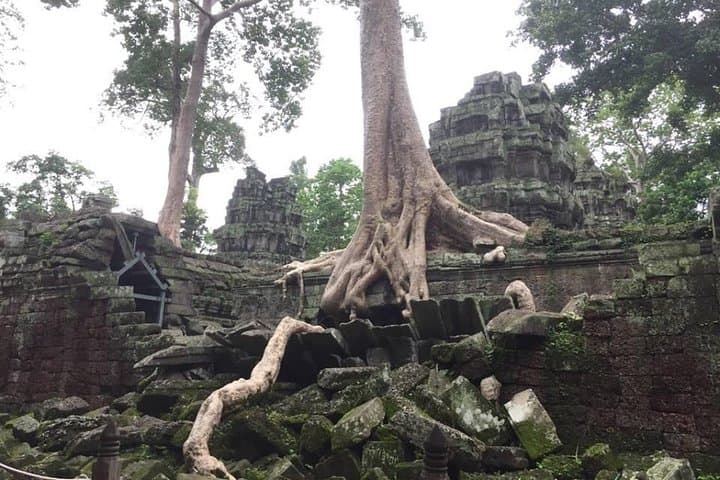
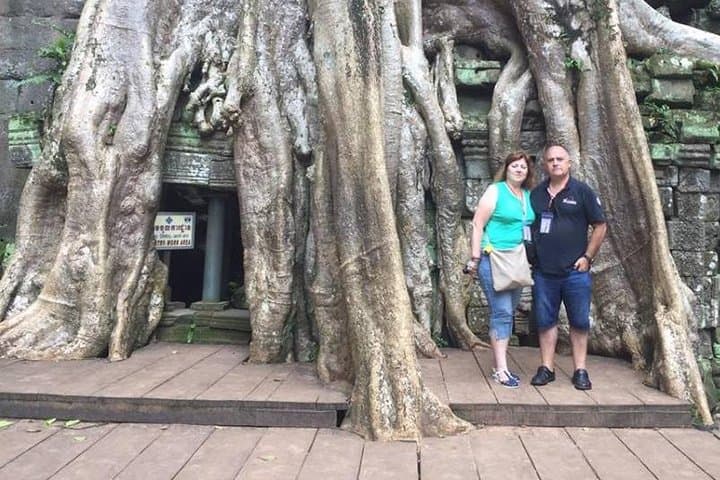
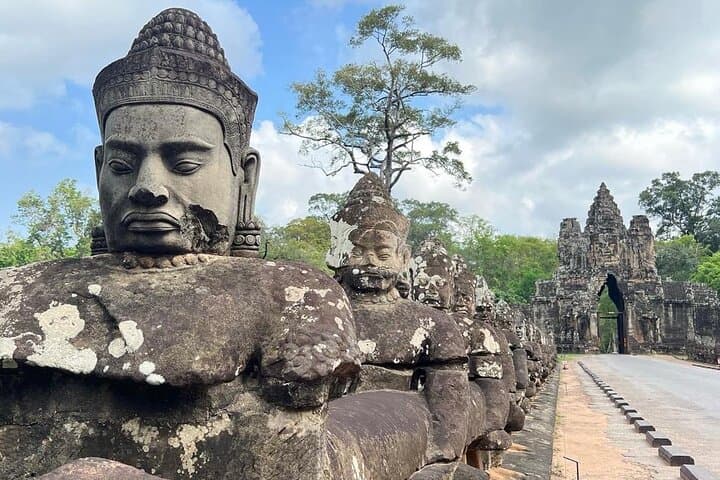
Dawn pulls a cool blue over the face of Angkor Wat as your driver slips through quiet park roads. Stone galleries yawn open, roots braid the walls at Ta Prohm, and the jungle seems to test your pace as it reclaims man-made order at Beng Mealea.
Dawn pulls a cool blue over the face of Angkor Wat as your driver slips through quiet park roads. Stone galleries yawn open, roots braid the walls at Ta Prohm, and the jungle seems to test your pace as it reclaims man-made order at Beng Mealea.
This private three-day circuit moves from the grand axis of Angkor — Angkor Wat’s rising towers and Bayon’s carved faces — to the pink sandstone finesse of Banteay Srey and the overgrown, cinematic corridors of Beng Mealea. You’ll cross the open water of Tonle Sap, where stilt villages float with the lake’s mood and water birds mark the horizons. The region sits on soft alluvial plains; the temples date to the Khmer Empire (9th–15th centuries) and display sandstone masonry, hydraulic engineering, and bas-reliefs that narrate court life and cosmology.
Expect uneven stones, steep temple steps, and dusty paths; the itinerary includes long days by vehicle with walking segments at each site. A licensed local guide interprets inscriptions and points out architectural details often missed in a quick pass. Culture here is shaped by rice cycles, fishing on the Great Lake, and decades of conservation work focused on visitor management and temple stabilization.
Practical guidance: start early to avoid heat and crowds; carry refillable water, sun protection, and respectful clothing that covers shoulders and knees. Angkor Park passes are required separately; exchanges of cash for small purchases at village stops are common. Moderate fitness and steady footing make the trip more enjoyable — the sites reward patience with intimate viewpoints and unexpected wildlife encounters.