THE ADVENTURE COLLECTIVE® · Independent discovery and booking for outdoor travel

Witness sunrise at Angkor Wat and a sunset from Pre Rup during a guided two-day small-group tour that also visits Banteay Srei and Ta Prohm. Ideal for travelers wanting concentrated time at the key Angkor sites with local insight.
Witness sunrise at Angkor Wat and a sunset from Pre Rup during a guided two-day small-group tour that also visits Banteay Srei and Ta Prohm. Ideal for travelers wanting concentrated time at the key Angkor sites with local insight.
You step out before dawn into a humid Siem Reap morning, the van idling as headlights carve through mist. By the moat of Angkor Wat, shadowed towers rise like stone ribs against pale light; the first sun ignites the bas-reliefs and the world seems to inhale.
Verified experiences and guided adventures in the surrounding area.
Operated by Journey Cambodia · Siem Reap, Siem Reap
You step out before dawn into a humid Siem Reap morning, the van idling as headlights carve through mist. By the moat of Angkor Wat, shadowed towers rise like stone ribs against pale light; the first sun ignites the bas-reliefs and the world seems to inhale.
Over two days this small-group tour threads together the high points of the Angkor complex: a sunset at Pre Rup or Phnom Bakheng, a pre-dawn entrance into Angkor Wat, the carved delicacy of Banteay Srei and the root-entangled corridors of Ta Prohm. These monuments were carved from sandstone during the Khmer empire (9th–13th centuries), reflecting Hindu and Buddhist cosmology and an engineering mastery that rerouted rivers and shaped huge reservoirs—barays—to sustain a dense population.
Culture here is tactile: locals maintain temple rituals, vendors sell sticky rice, and guides interpret myths etched into stone. The geology is soft sandstone over laterite—beautiful, weathered and vulnerable—so pathways are uneven and many carvings are fragile.
Practical guidance: hotel pickup is included and departure is pre-dawn for sunrise at Angkor Wat; expect long days with extensive walking and many steps. Bring a valid Angkor Pass (payable on the day), lightweight long sleeves or a sarong to cover shoulders and knees (required), plenty of water, insect repellent and sun protection. Comfortable, grippy shoes are essential because surfaces are broken and slippery when wet. Be prepared to follow your guide’s pacing—temples can be crowded at sunrise and sunset—so patience and respect for religious sites keeps the experience rewarding for everyone.
easy.
2 days (approx. 8–10 hours per day).
Suitable for most fitness levels; you'll walk several kilometers each day and climb uneven temple steps.
No—an Angkor Pass (2–3 day) is payable on the day at the ticket center; bring cash and your passport for purchase.
Yes—the itinerary includes a pre-dawn entry to witness sunrise from the eastern approach and exterior pools before exploring the interior.
Yes for older children, but those under 5 are not allowed on this tour; expect early mornings and long walking sessions.
Breakfast near Angkor is provided as a takeaway after the sunrise visit; other meals are usually not included—check the booking details.
Angkor’s temples were built and expanded by Khmer kings between the 9th and 13th centuries; Angkor Wat itself dates to the early 12th century and was converted from a Hindu to Buddhist temple over time.
Sandstone carvings are sensitive to touch and water; follow signage, avoid climbing on fragile reliefs, and support local guides and community-run conservation efforts.
Journey Cambodia operates guided outdoor trips and adventures with an emphasis on safety, stewardship, and memorable experiences.
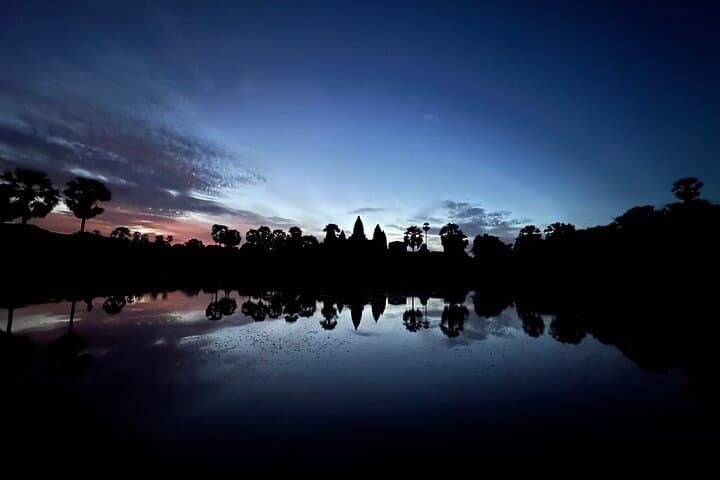
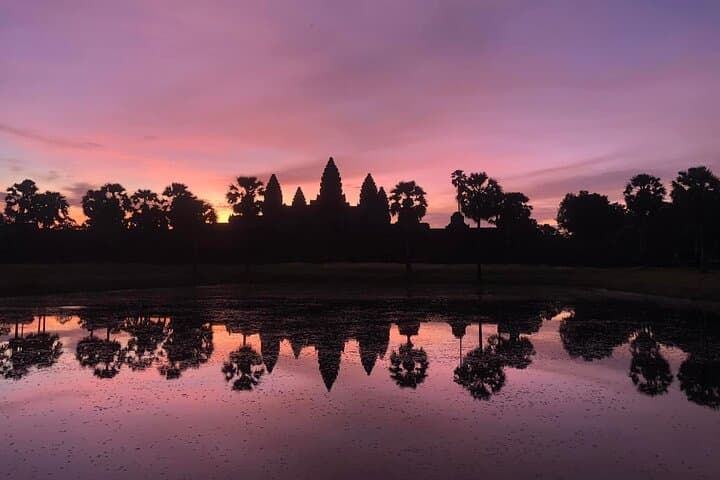
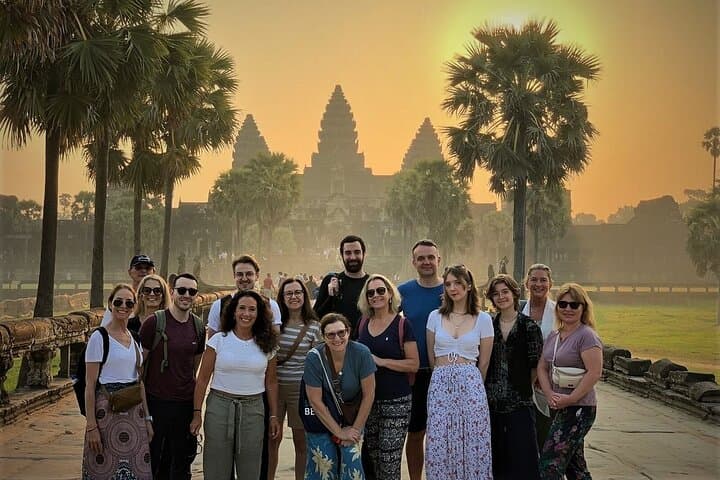
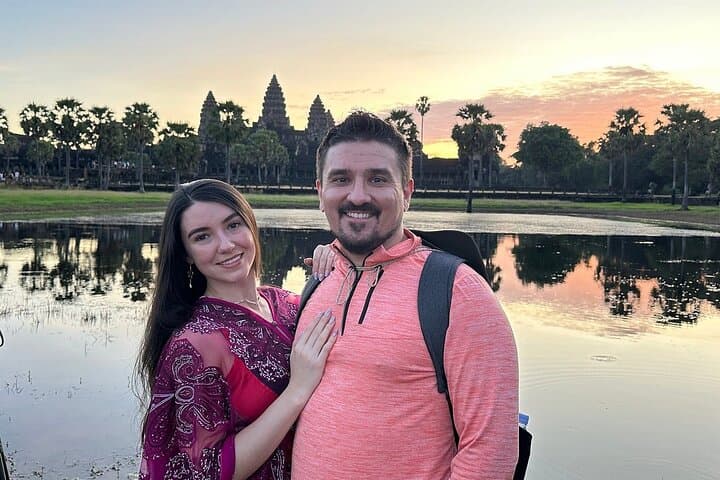
You step out before dawn into a humid Siem Reap morning, the van idling as headlights carve through mist. By the moat of Angkor Wat, shadowed towers rise like stone ribs against pale light; the first sun ignites the bas-reliefs and the world seems to inhale.
You step out before dawn into a humid Siem Reap morning, the van idling as headlights carve through mist. By the moat of Angkor Wat, shadowed towers rise like stone ribs against pale light; the first sun ignites the bas-reliefs and the world seems to inhale.
Over two days this small-group tour threads together the high points of the Angkor complex: a sunset at Pre Rup or Phnom Bakheng, a pre-dawn entrance into Angkor Wat, the carved delicacy of Banteay Srei and the root-entangled corridors of Ta Prohm. These monuments were carved from sandstone during the Khmer empire (9th–13th centuries), reflecting Hindu and Buddhist cosmology and an engineering mastery that rerouted rivers and shaped huge reservoirs—barays—to sustain a dense population.
Culture here is tactile: locals maintain temple rituals, vendors sell sticky rice, and guides interpret myths etched into stone. The geology is soft sandstone over laterite—beautiful, weathered and vulnerable—so pathways are uneven and many carvings are fragile.
Practical guidance: hotel pickup is included and departure is pre-dawn for sunrise at Angkor Wat; expect long days with extensive walking and many steps. Bring a valid Angkor Pass (payable on the day), lightweight long sleeves or a sarong to cover shoulders and knees (required), plenty of water, insect repellent and sun protection. Comfortable, grippy shoes are essential because surfaces are broken and slippery when wet. Be prepared to follow your guide’s pacing—temples can be crowded at sunrise and sunset—so patience and respect for religious sites keeps the experience rewarding for everyone.