THE ADVENTURE COLLECTIVE® · Independent discovery and booking for outdoor travel

Discover the Memorial to Heroic Self-Sacrifice and the overlooked streets where Victorian lives and sacrifices changed the city. This private, three-hour walking tour pairs intimate storytelling with on-foot exploration of Postman’s Park and surrounding historic quarters.
Discover the Memorial to Heroic Self-Sacrifice and the overlooked streets where Victorian lives and sacrifices changed the city. This private, three-hour walking tour pairs intimate storytelling with on-foot exploration of Postman’s Park and surrounding historic quarters.
Step through the green gate and the city noise thins. A wall of ceramic plaques meets you — names, dates, short acts of courage carved into quiet squares of tile — and for a few minutes the traffic and glass towers feel like a different age.
Verified experiences and guided adventures in the surrounding area.
Operated by Ye Olde England Tours · London, England
Step through the green gate and the city noise thins. A wall of ceramic plaques meets you — names, dates, short acts of courage carved into quiet squares of tile — and for a few minutes the traffic and glass towers feel like a different age.
This private three-hour walk threads Postman's Park with adjacent alleys and markets to tell a London story of loss, courage and change. The wall itself was created by artist G.F. Watts to honor ordinary people who died saving others; one of the best-known stories is Alice Ayres, whose sacrifice captured Victorian headlines. As you move from the park into streets once marked by poverty and trade, the route crosses Farringdon, Smithfield’s old meat market, the Barbican’s concrete geometry and river-side approaches that have shifted since Roman and medieval times. The Thames, always present nearby, drags the city’s history forward — docks, mills and executions have shaped these lanes.
Expect a blend of social history and urban archaeology: gatehouses, churchyards, quiet market passages and forgotten backstreets that reveal how reform and public sorrow reshaped civic life. The guide concentrates on storytelling and context rather than museum entry, and much of the route is outdoors.
Practical notes: it’s a private tour with wheelchair-accessible options; wear comfortable walking shoes, carry a compact rain layer, and allow three hours including short stops. Bring an Oyster/contactless card for easy arrival by Tube. Keep voices low at the memorial and leave flowers or tokens respectfully — the plaques reward attention, not noise.
easy.
3 hours.
Light-moderate — suitable for people who can walk short distances and stand for periods; some short uphill/steps may be encountered.
Yes — the operator lists wheelchair accessibility for main surfaces and transportation; notify special requirements when booking to confirm the route chosen.
No — the tour is primarily outdoors and passes attractions without paid admission; any museum entry would be noted in advance and charged separately.
This is offered as a private guided experience; bookers should check with the operator for their maximum group size and whether multiple tickets are required.
Yes — infants and small children may use strollers on accessible paths; however the guide recommends that children be able to walk or be prepared for a stroller for parts of the route.
The Memorial to Heroic Self-Sacrifice was conceived by artist G.F. Watts to recognize ordinary people who died saving others; many plaques commemorate Victorian-era incidents linked to nearby streets and markets.
Keep to paths, avoid attaching items to plaques, and dispose of floral tributes responsibly; minimal impact helps preserve fragile ceramic tiles and historic stonework.
Ye Olde England Tours operates guided outdoor trips and adventures with an emphasis on safety, stewardship, and memorable experiences.
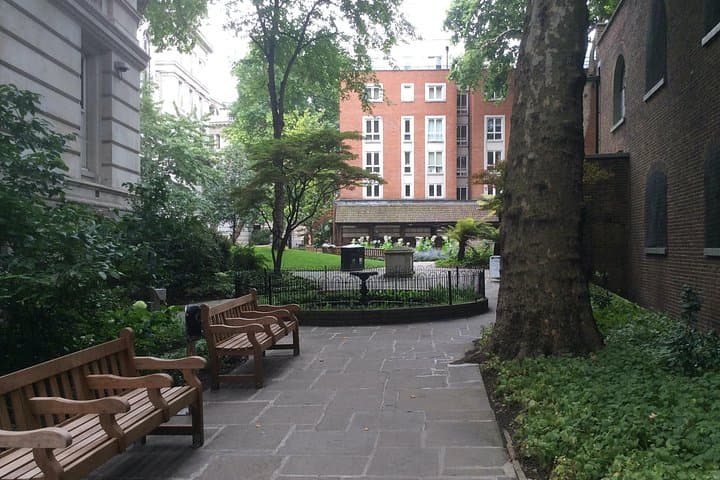
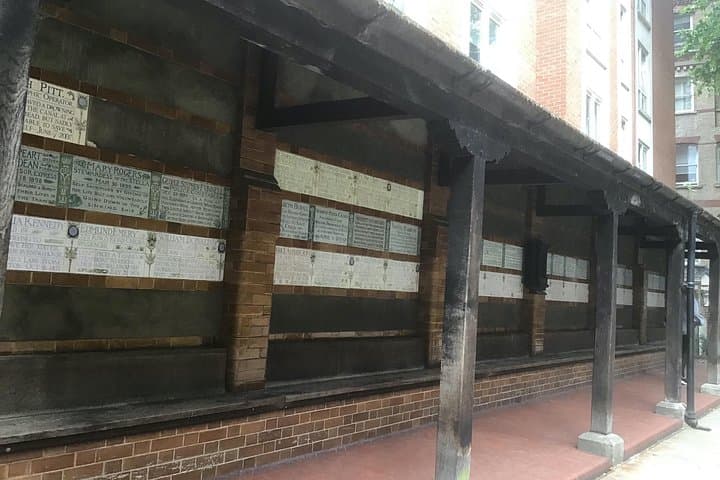
Step through the green gate and the city noise thins. A wall of ceramic plaques meets you — names, dates, short acts of courage carved into quiet squares of tile — and for a few minutes the traffic and glass towers feel like a different age.
Step through the green gate and the city noise thins. A wall of ceramic plaques meets you — names, dates, short acts of courage carved into quiet squares of tile — and for a few minutes the traffic and glass towers feel like a different age.
This private three-hour walk threads Postman's Park with adjacent alleys and markets to tell a London story of loss, courage and change. The wall itself was created by artist G.F. Watts to honor ordinary people who died saving others; one of the best-known stories is Alice Ayres, whose sacrifice captured Victorian headlines. As you move from the park into streets once marked by poverty and trade, the route crosses Farringdon, Smithfield’s old meat market, the Barbican’s concrete geometry and river-side approaches that have shifted since Roman and medieval times. The Thames, always present nearby, drags the city’s history forward — docks, mills and executions have shaped these lanes.
Expect a blend of social history and urban archaeology: gatehouses, churchyards, quiet market passages and forgotten backstreets that reveal how reform and public sorrow reshaped civic life. The guide concentrates on storytelling and context rather than museum entry, and much of the route is outdoors.
Practical notes: it’s a private tour with wheelchair-accessible options; wear comfortable walking shoes, carry a compact rain layer, and allow three hours including short stops. Bring an Oyster/contactless card for easy arrival by Tube. Keep voices low at the memorial and leave flowers or tokens respectfully — the plaques reward attention, not noise.