THE ADVENTURE COLLECTIVE® · Independent discovery and booking for outdoor travel

Spend a day in the Sacred Valley combining a llama-guided walk, an ancestral Andean ceremony and a hands-on textiles workshop. Learn traditional weaving, take part in ritual chants, and enjoy a regional lunch with sweeping mountain views.
Spend a day in the Sacred Valley combining a llama-guided walk, an ancestral Andean ceremony and a hands-on textiles workshop. Learn traditional weaving, take part in ritual chants, and enjoy a regional lunch with sweeping mountain views.
You step onto a windswept terrace above the Sacred Valley and the Andes open like an old map: terraces, stone walls and peaks that seem to watch every footstep. Llamas browse nearby while a guide invites you into a slow, focused walk—breath matching altitude, eyes on wide, mineral horizons. The landscape here is both raw geology and cultivated history, high plateaus carved by glacial action and generations of farmers.
Verified experiences and guided adventures in the surrounding area.
Operated by Andean Colors · Cusco, Cusco Region
You step onto a windswept terrace above the Sacred Valley and the Andes open like an old map: terraces, stone walls and peaks that seem to watch every footstep. Llamas browse nearby while a guide invites you into a slow, focused walk—breath matching altitude, eyes on wide, mineral horizons. The landscape here is both raw geology and cultivated history, high plateaus carved by glacial action and generations of farmers.
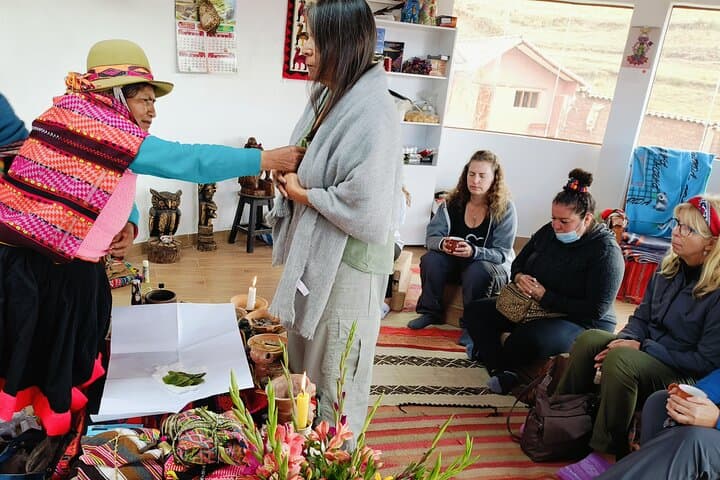
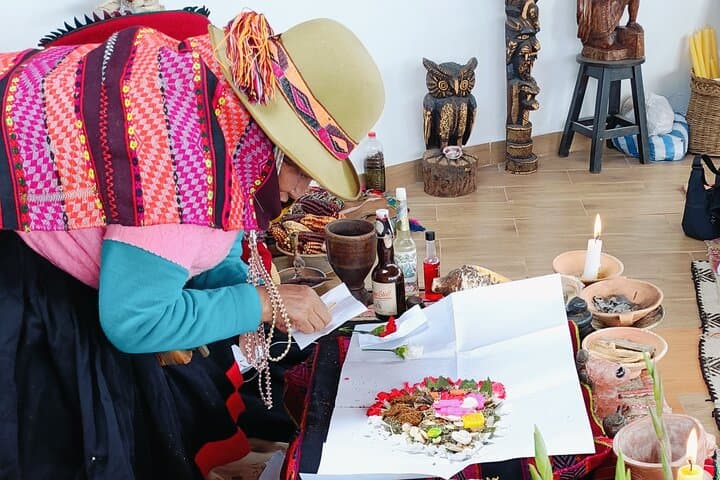
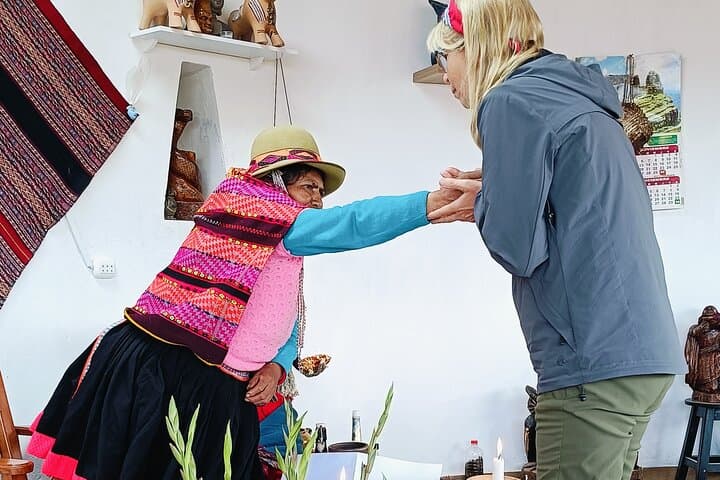
This experience threads culture and place. The ceremony borrows from Quechua practices honoring Pachamama, blending gratitude rituals, guided meditation and traditional chants. Textiles are treated as living records: natural dyes, backstrap weaving methods and patterns that encode community stories. The Sacred Valley itself formed as Andean uplift pushed rock skyward; settlements and textile traditions developed in response to microclimates that favor quinoa, corn and alpaca herds.
Expect a moderate day: a guided spiritual walk (a few kilometers on dirt and terraces), a two-hour ceremonial session, time for journaling, a hands-on textiles workshop and a regional lunch. Altitude matters—this is high country, often around 3,000–3,600 meters. Practical notes: wear sturdy shoes with grip, layer for sun and cold, and bring water, sun protection and small local currency for the boutique. Morning departures avoid afternoon cloud build-up during the wet season. The program also supports local single mothers through training and sales, so purchases here double as direct community support.
For travelers seeking cultural immersion with light physical engagement, this is a day that pairs quiet reflection with tactile craft skills and clear views of the Andean spine.
moderate.
6–7 hours.
Moderately fit: able to walk several kilometers on uneven terrain at altitude and stand during ceremonies and workshops
The spiritual ceremony and guided meditations are approximately two hours, woven into a full-day program of about six to seven hours.
The program is private and can accommodate many ages, but participants should be able to walk short distances on uneven ground and tolerate high altitude; check with the operator for mobility concerns.
Yes—ANDEAN COLORS emphasizes support for single Peruvian mothers and local weavers; buying from the boutique directly benefits those programs.
No—workshops are hands-on and designed for beginners; you'll learn basic backstrap weaving techniques and make a small bracelet or sample.
Textile patterns in the Sacred Valley record family and community identities; weaving and ceremony both date to pre-Inca and Inca-era practices central to Andean social life.
The program partners with local artisans to create income and reduce urban migration; visitors are encouraged to buy intentionally and avoid single-use plastics to limit impact.
Andean Colors operates guided outdoor trips and adventures with an emphasis on safety, stewardship, and memorable experiences.
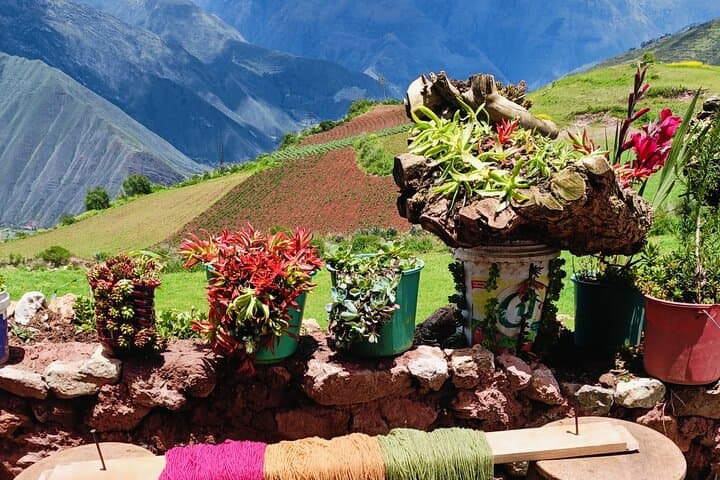
You step onto a windswept terrace above the Sacred Valley and the Andes open like an old map: terraces, stone walls and peaks that seem to watch every footstep. Llamas browse nearby while a guide invites you into a slow, focused walk—breath matching altitude, eyes on wide, mineral horizons. The landscape here is both raw geology and cultivated history, high plateaus carved by glacial action and generations of farmers.
You step onto a windswept terrace above the Sacred Valley and the Andes open like an old map: terraces, stone walls and peaks that seem to watch every footstep. Llamas browse nearby while a guide invites you into a slow, focused walk—breath matching altitude, eyes on wide, mineral horizons. The landscape here is both raw geology and cultivated history, high plateaus carved by glacial action and generations of farmers.
This experience threads culture and place. The ceremony borrows from Quechua practices honoring Pachamama, blending gratitude rituals, guided meditation and traditional chants. Textiles are treated as living records: natural dyes, backstrap weaving methods and patterns that encode community stories. The Sacred Valley itself formed as Andean uplift pushed rock skyward; settlements and textile traditions developed in response to microclimates that favor quinoa, corn and alpaca herds.
Expect a moderate day: a guided spiritual walk (a few kilometers on dirt and terraces), a two-hour ceremonial session, time for journaling, a hands-on textiles workshop and a regional lunch. Altitude matters—this is high country, often around 3,000–3,600 meters. Practical notes: wear sturdy shoes with grip, layer for sun and cold, and bring water, sun protection and small local currency for the boutique. Morning departures avoid afternoon cloud build-up during the wet season. The program also supports local single mothers through training and sales, so purchases here double as direct community support.
For travelers seeking cultural immersion with light physical engagement, this is a day that pairs quiet reflection with tactile craft skills and clear views of the Andean spine.