THE ADVENTURE COLLECTIVE® · Independent discovery and booking for outdoor travel

Trade city streets for a clean ridge line above Cacheuta, where a steady climb delivers big views of Lake Potrerillos and the Cordon del Plata—then cap it with a soak in mineral-rich hot springs. Small groups, private transport, and a flexible route make this one of Mendoza’s most rewarding day adventures.
Trade city streets for a clean ridge line above Cacheuta, where a steady climb delivers big views of Lake Potrerillos and the Cordon del Plata—then cap it with a soak in mineral-rich hot springs. Small groups, private transport, and a flexible route make this one of Mendoza’s most rewarding day adventures.
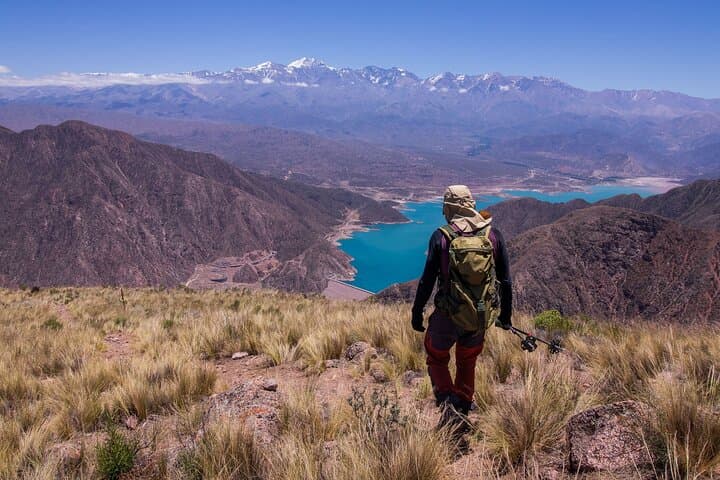
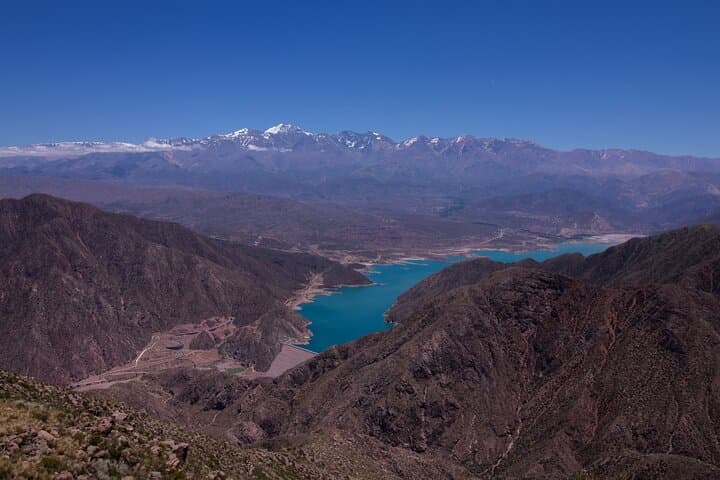
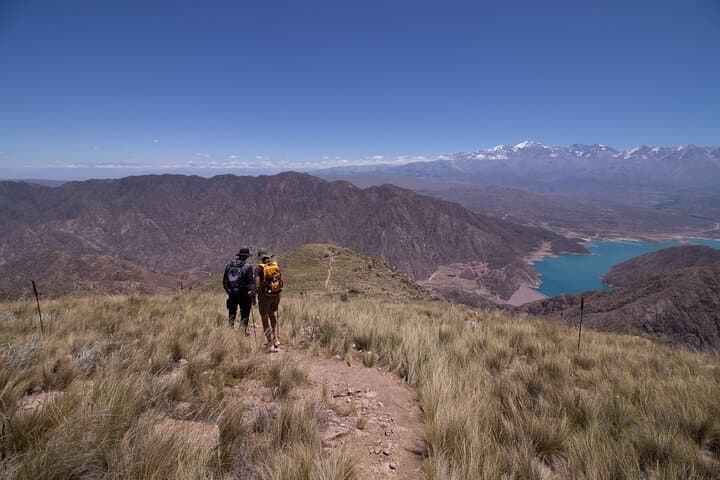
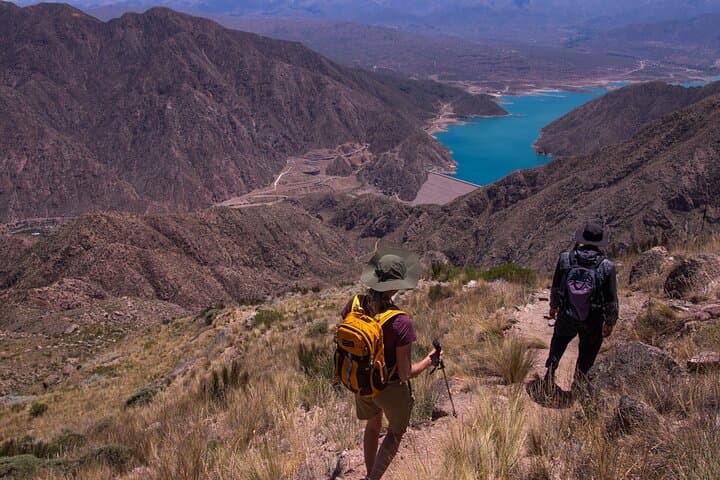
Dawn draws a thin line over the Andes as Mendoza’s vineyards slip into the rearview and the Mendoza River begins to muscle through a canyon of rust and ash. Forty-five minutes later, the road bends into Cacheuta and the mountains step closer, shouldering the sky. The trail rises almost immediately—rocky singletrack that winds through scrubby jarilla and thorny algarrobo as the river chatters below, daring you to keep pace. With each switchback the reservoir of Potrerillos spreads wider, a turquoise sheet pinned by concrete at one end and granite at the other.
Verified experiences and guided adventures in the surrounding area.
Operated by Malbec Transfer · Cacheuta, Mendoza
Dawn draws a thin line over the Andes as Mendoza’s vineyards slip into the rearview and the Mendoza River begins to muscle through a canyon of rust and ash. Forty-five minutes later, the road bends into Cacheuta and the mountains step closer, shouldering the sky. The trail rises almost immediately—rocky singletrack that winds through scrubby jarilla and thorny algarrobo as the river chatters below, daring you to keep pace. With each switchback the reservoir of Potrerillos spreads wider, a turquoise sheet pinned by concrete at one end and granite at the other.
This is a straightforward but sustained climb: roughly 8 km round-trip with about 1,100 meters of elevation gain to 2,220 meters. Expect 3–4 hours up, quicker down, with a few playful sections of easy scrambling. Underfoot, the Precordillera shows its layers—crumbly shale that asks for careful footwork and red siltstone stained by iron. The ridge rewards the grind with a panorama of the Cordon del Plata and the lake, the kind of view that hushes chatter. Above, condors often ride thermals like seasoned guides pointing the way.
Cacheuta’s story runs along the tracks of the long-gone Transandine Railway that once linked Argentina and Chile through these same folds. Remnants—tunnels and bridge abutments—still cling to the canyon, reminders of an era when steam and grit threaded this corridor until floods in the 1930s took big bites from the line. Today, hikers trace quieter routes, and the energy here flows underfoot: mineral-rich hot springs that built the area’s fame.
After the descent, warmth waits a five-minute walk from the car. The stone pools at the Termas de Cacheuta hold steady, mineral-sweet water that soothes calves, quads, and pride. Steam lifts in soft tendrils, nudging muscles to unclench. An hour in the pools is enough to reset the legs and settle the day.
Conditions are high-desert: strong sun, dry air, and the occasional Zonda wind gusting down-canyon in the afternoon. Start early, carry ample water, and move at a steady, honest pace. Grippy footwear matters on the shale, and a light layer helps when the breeze tests the ridge. Cafés by the springs offer simple fuel; snacks are smart insurance on the trail.
Logistically it’s easy: hotel pickup in Mendoza, a compact group (max six), and a guide who sets the cadence and keeps route-finding on autopilot. For those wanting a lighter outing, the first major viewpoint trims the effort to about four hours total without sacrificing scenery. For everyone else, the summit ridge is a clean, satisfying line—climb, gaze, soak, and coast back to the city with the Andes still moving through you.
challenging.
4–7 hours.
Active hikers comfortable with sustained uphill at altitude and 6–7 hours on trail; a shorter 4-hour option is available.
It’s a sustained climb with about 1,100 m of gain over roughly 8 km; most active travelers manage it well. A shorter option to the first viewpoint trims the outing to about 4 hours.
The high point is around 2,220 m—moderate elevation. Pace yourself, hydrate, and eat snacks; most people adjust quickly.
Yes, entrance to the Termas de Cacheuta is included on this tour, with about an hour to relax in the pools.
Wear breathable layers, grippy hiking shoes, a hat and sunscreen, and bring 2 liters of water, snacks, a swimsuit, small towel, and sandals for the springs.
It’s not recommended for children under 12 due to the elevation gain and length of the hike.
Yes. Your guide is a photographer and can capture images—and when conditions allow, drone footage—to share after the trip.
Cacheuta grew around thermal waters and the Transandine Railway, which once linked Mendoza to Chile through this canyon until floods in the 1930s damaged long stretches of the line.
Stay on established paths to protect fragile desert plants and reduce erosion on the shale slopes. Pack out all trash—winds can scatter litter into the river corridor.
Malbec Transfer operates guided outdoor trips and adventures with an emphasis on safety, stewardship, and memorable experiences.
Dawn draws a thin line over the Andes as Mendoza’s vineyards slip into the rearview and the Mendoza River begins to muscle through a canyon of rust and ash. Forty-five minutes later, the road bends into Cacheuta and the mountains step closer, shouldering the sky. The trail rises almost immediately—rocky singletrack that winds through scrubby jarilla and thorny algarrobo as the river chatters below, daring you to keep pace. With each switchback the reservoir of Potrerillos spreads wider, a turquoise sheet pinned by concrete at one end and granite at the other.
Dawn draws a thin line over the Andes as Mendoza’s vineyards slip into the rearview and the Mendoza River begins to muscle through a canyon of rust and ash. Forty-five minutes later, the road bends into Cacheuta and the mountains step closer, shouldering the sky. The trail rises almost immediately—rocky singletrack that winds through scrubby jarilla and thorny algarrobo as the river chatters below, daring you to keep pace. With each switchback the reservoir of Potrerillos spreads wider, a turquoise sheet pinned by concrete at one end and granite at the other.
This is a straightforward but sustained climb: roughly 8 km round-trip with about 1,100 meters of elevation gain to 2,220 meters. Expect 3–4 hours up, quicker down, with a few playful sections of easy scrambling. Underfoot, the Precordillera shows its layers—crumbly shale that asks for careful footwork and red siltstone stained by iron. The ridge rewards the grind with a panorama of the Cordon del Plata and the lake, the kind of view that hushes chatter. Above, condors often ride thermals like seasoned guides pointing the way.
Cacheuta’s story runs along the tracks of the long-gone Transandine Railway that once linked Argentina and Chile through these same folds. Remnants—tunnels and bridge abutments—still cling to the canyon, reminders of an era when steam and grit threaded this corridor until floods in the 1930s took big bites from the line. Today, hikers trace quieter routes, and the energy here flows underfoot: mineral-rich hot springs that built the area’s fame.
After the descent, warmth waits a five-minute walk from the car. The stone pools at the Termas de Cacheuta hold steady, mineral-sweet water that soothes calves, quads, and pride. Steam lifts in soft tendrils, nudging muscles to unclench. An hour in the pools is enough to reset the legs and settle the day.
Conditions are high-desert: strong sun, dry air, and the occasional Zonda wind gusting down-canyon in the afternoon. Start early, carry ample water, and move at a steady, honest pace. Grippy footwear matters on the shale, and a light layer helps when the breeze tests the ridge. Cafés by the springs offer simple fuel; snacks are smart insurance on the trail.
Logistically it’s easy: hotel pickup in Mendoza, a compact group (max six), and a guide who sets the cadence and keeps route-finding on autopilot. For those wanting a lighter outing, the first major viewpoint trims the effort to about four hours total without sacrificing scenery. For everyone else, the summit ridge is a clean, satisfying line—climb, gaze, soak, and coast back to the city with the Andes still moving through you.