THE ADVENTURE COLLECTIVE® · Independent discovery and booking for outdoor travel

Four days of Egypt’s greatest temple sites: Karnak, Luxor Temple, Dendera’s Hathor sanctuary and Abydos’ Temple of Seti I. This guided route balances in-depth archaeology with practical logistics for comfortable exploration.
Four days of Egypt’s greatest temple sites: Karnak, Luxor Temple, Dendera’s Hathor sanctuary and Abydos’ Temple of Seti I. This guided route balances in-depth archaeology with practical logistics for comfortable exploration.
Morning light spills across the Nile as the tour departs Luxor — sandstone turning gold, ibis threading the river edge. Over four days travelers move between monumental temple courts and quiet desert roads, moving at the steady pace of guided exploration rather than a hurried checklist.
Verified experiences and guided adventures in the surrounding area.
Operated by Odysseys Voyage · Luxor, Luxor Governorate
Morning light spills across the Nile as the tour departs Luxor — sandstone turning gold, ibis threading the river edge. Over four days travelers move between monumental temple courts and quiet desert roads, moving at the steady pace of guided exploration rather than a hurried checklist.
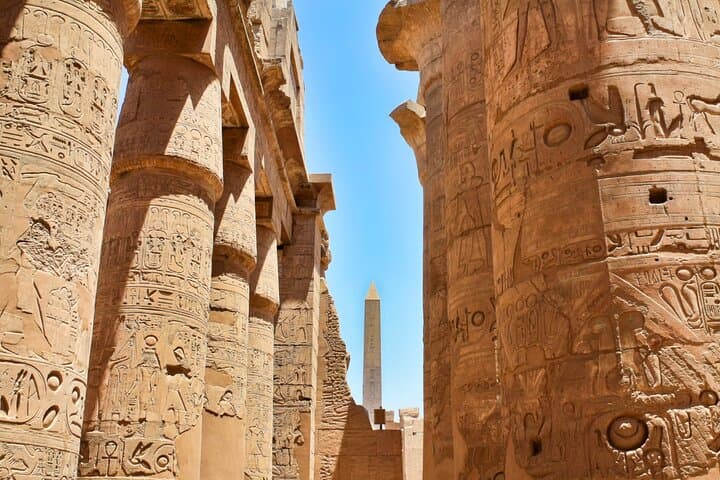
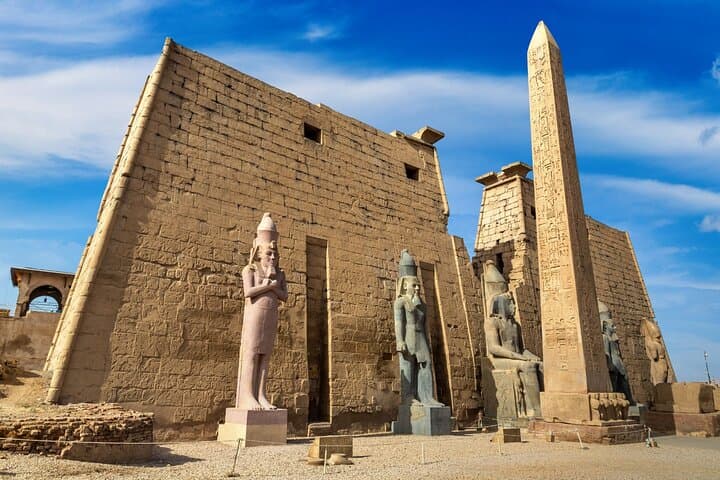
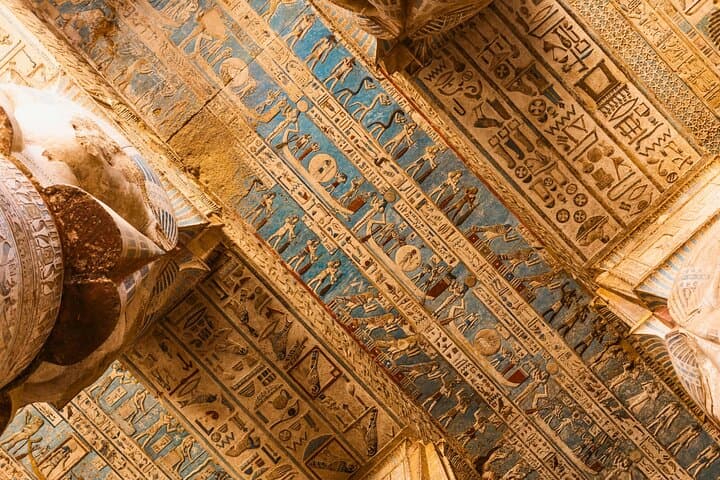
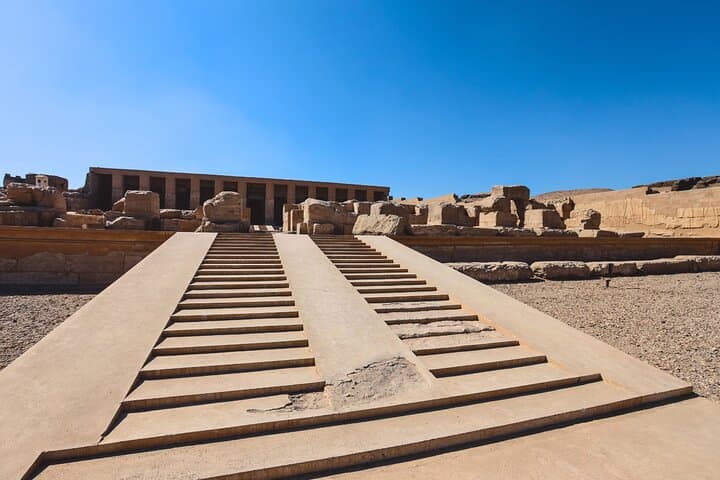
Day one walks the East Bank’s great axis: Karnak’s hypostyle forest and Luxor Temple’s riverfront steps, where carved sphinxes seem to watch the current pull visitors along the Avenue of Sphinxes. The second day is a road journey through Upper Egypt to Dendera (about 1.5 hours) to study Hathor’s celestial ceiling, then onward to Abydos (another ~2 hours), whose Temple of Seti I preserves the famous Abydos King List. The return to Luxor visits the Valley of the Kings and Hatshepsut’s cliff-side mortuary temple; expect an additional ticket for Tutankhamun’s chamber.
Geology here is terse: soft limestone and Nile-alluvial sands sculpted by millennia of wind and water, the very matrix that preserved hyperspecific carvings. Culturally, these sites map ancient religious practice — Abydos as a cult center for Osiris, Luxor as a living ceremonial axis.
Practical guidance: bring a refillable water bottle, sun protection, comfortable walking shoes, and a scarf for temple respect. Photography is generally allowed but watch for tomb restrictions and no-flash rules. Mornings are cooler and least crowded; afternoons grow hot and bring dust. The tour is wheelchair-accessible in many sites, but check individual tomb access before booking.
easy.
4 days.
Suitable for most fitness levels; requires walking on uneven stone, short stair sections, and standing during guided talks.
No — the tour price excludes domestic flights and hotel accommodations; those are arranged and paid for by travelers.
Many sites and the provided transportation are wheelchair accessible, but some tombs and uneven surfaces may limit access to specific interiors.
Photography is usually allowed in open areas; flash and cameras may be restricted inside certain tombs and sanctuaries — follow your guide’s instructions.
Lunch is included on each tour day; other meals and personal expenses are not.
Luxor’s monuments span New Kingdom power and ritual, while Abydos preserves earlier cultic memory — Seti I’s temple contains the Abydos King List, an important royal record.
Sites are fragile: avoid touching reliefs, stay on marked paths, and minimize single-use plastics; support licensed local guides to encourage sustainable heritage tourism.
Odysseys Voyage operates guided outdoor trips and adventures with an emphasis on safety, stewardship, and memorable experiences.
Morning light spills across the Nile as the tour departs Luxor — sandstone turning gold, ibis threading the river edge. Over four days travelers move between monumental temple courts and quiet desert roads, moving at the steady pace of guided exploration rather than a hurried checklist.
Morning light spills across the Nile as the tour departs Luxor — sandstone turning gold, ibis threading the river edge. Over four days travelers move between monumental temple courts and quiet desert roads, moving at the steady pace of guided exploration rather than a hurried checklist.
Day one walks the East Bank’s great axis: Karnak’s hypostyle forest and Luxor Temple’s riverfront steps, where carved sphinxes seem to watch the current pull visitors along the Avenue of Sphinxes. The second day is a road journey through Upper Egypt to Dendera (about 1.5 hours) to study Hathor’s celestial ceiling, then onward to Abydos (another ~2 hours), whose Temple of Seti I preserves the famous Abydos King List. The return to Luxor visits the Valley of the Kings and Hatshepsut’s cliff-side mortuary temple; expect an additional ticket for Tutankhamun’s chamber.
Geology here is terse: soft limestone and Nile-alluvial sands sculpted by millennia of wind and water, the very matrix that preserved hyperspecific carvings. Culturally, these sites map ancient religious practice — Abydos as a cult center for Osiris, Luxor as a living ceremonial axis.
Practical guidance: bring a refillable water bottle, sun protection, comfortable walking shoes, and a scarf for temple respect. Photography is generally allowed but watch for tomb restrictions and no-flash rules. Mornings are cooler and least crowded; afternoons grow hot and bring dust. The tour is wheelchair-accessible in many sites, but check individual tomb access before booking.