THE ADVENTURE COLLECTIVE® · Independent discovery and booking for outdoor travel

Walk the hidden green routes between the Acropolis and Plaka on a two-hour guided stroll that pairs classical monuments with neighborhood life. This compact tour balances sweeping views, archaeological context and practical local tips for a relaxed urban hike.
Walk the hidden green routes between the Acropolis and Plaka on a two-hour guided stroll that pairs classical monuments with neighborhood life. This compact tour balances sweeping views, archaeological context and practical local tips for a relaxed urban hike.
Sunlight slides over pale marble as the group steps off a narrow lane and into the living ruins below the Acropolis. Trees crowd the slopes, their roots threading through stone and shadow; birds flit between old walls while the city hums beyond. This two-hour walk threads natural paths and archaeological sites, moving from the Acropolis rim toward the quieter hills of Pnyka and Philopappou, then down through Thisio, Monastiraki and the maze-like lanes of Plaka.
Verified experiences and guided adventures in the surrounding area.
Operated by Giorgos · Athens, Attica
Sunlight slides over pale marble as the group steps off a narrow lane and into the living ruins below the Acropolis. Trees crowd the slopes, their roots threading through stone and shadow; birds flit between old walls while the city hums beyond. This two-hour walk threads natural paths and archaeological sites, moving from the Acropolis rim toward the quieter hills of Pnyka and Philopappou, then down through Thisio, Monastiraki and the maze-like lanes of Plaka.
Athens' geology—limestone ridges carved by millennia of wind and rain—forms the backbone of these routes. The Acropolis hill is the city's most visible geological and cultural marker, crowned by Classical temples built in the fifth century BCE. Plaka grew beneath it as a living neighborhood, absorbing Byzantine, Ottoman and modern Greek layers; its narrow streets preserve vernacular houses and local life.
Expect a steady, primarily paved walk with short dirt sections and modest elevation changes (mostly under 100–150 m total ascent). Guides weave architectural context with on-the-ground anecdotes: temple layouts, ancient marketplaces and how modern Athenians reinterpret civic spaces. Photogenic vantage points at Philopappou and Thisio offer sweeping views of the Parthenon and the Athenian plain.
Practical notes: wear supportive shoes for cobbles and uneven trail sections; bring water, sun protection and a compact map or offline directions. Morning or late-afternoon departures reduce heat and crowds. The route is suitable for most fitness levels and requires only basic mobility—strollers and light accessibility are accommodated on many sections. Stay on marked paths near ruins and be ready to pause often for explanations and photos.
easy.
2 hours.
Suitable for most fitness levels; participants should be comfortable standing and walking over cobbles and short inclines.
Yes—many sections accommodate strollers and the pace is family friendly, though some cobbled and stepped segments may require carrying a stroller briefly.
This walking route emphasizes external viewpoints and neighborhood sites; entrance to the Acropolis or paid museums is typically not included—confirm with your provider if you want skip-the-line access.
Guides take you to authorized viewpoints and archaeological edges; direct access to certain monuments is restricted to protect the sites.
Private tours are often adjustable—ask at booking if you prefer a deeper archaeological focus or extended photo stops.
The Acropolis and surrounding neighborhoods reflect continuous habitation from Classical Athens through Byzantine and Ottoman periods; Plaka retains a street pattern shaped by centuries of local crafts and markets.
Heavy foot traffic threatens exposed stone and archaeological deposits—stay on designated paths, avoid touching carved surfaces, and support local conservation by respecting site signage and local businesses.
Giorgos operates guided outdoor trips and adventures with an emphasis on safety, stewardship, and memorable experiences.


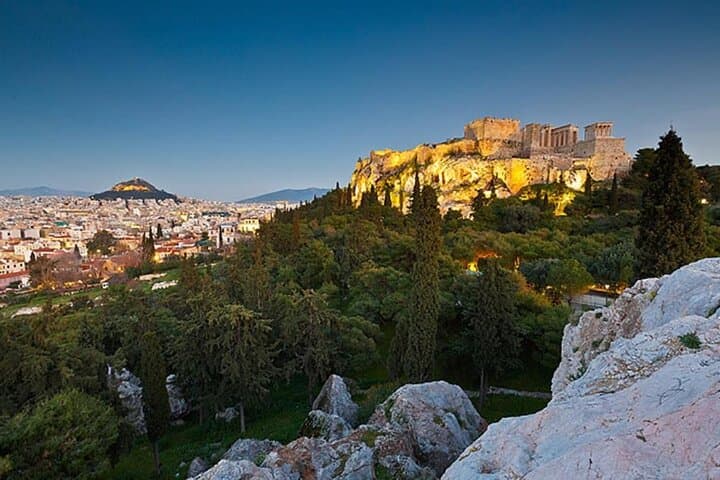

Sunlight slides over pale marble as the group steps off a narrow lane and into the living ruins below the Acropolis. Trees crowd the slopes, their roots threading through stone and shadow; birds flit between old walls while the city hums beyond. This two-hour walk threads natural paths and archaeological sites, moving from the Acropolis rim toward the quieter hills of Pnyka and Philopappou, then down through Thisio, Monastiraki and the maze-like lanes of Plaka.
Sunlight slides over pale marble as the group steps off a narrow lane and into the living ruins below the Acropolis. Trees crowd the slopes, their roots threading through stone and shadow; birds flit between old walls while the city hums beyond. This two-hour walk threads natural paths and archaeological sites, moving from the Acropolis rim toward the quieter hills of Pnyka and Philopappou, then down through Thisio, Monastiraki and the maze-like lanes of Plaka.
Athens' geology—limestone ridges carved by millennia of wind and rain—forms the backbone of these routes. The Acropolis hill is the city's most visible geological and cultural marker, crowned by Classical temples built in the fifth century BCE. Plaka grew beneath it as a living neighborhood, absorbing Byzantine, Ottoman and modern Greek layers; its narrow streets preserve vernacular houses and local life.
Expect a steady, primarily paved walk with short dirt sections and modest elevation changes (mostly under 100–150 m total ascent). Guides weave architectural context with on-the-ground anecdotes: temple layouts, ancient marketplaces and how modern Athenians reinterpret civic spaces. Photogenic vantage points at Philopappou and Thisio offer sweeping views of the Parthenon and the Athenian plain.
Practical notes: wear supportive shoes for cobbles and uneven trail sections; bring water, sun protection and a compact map or offline directions. Morning or late-afternoon departures reduce heat and crowds. The route is suitable for most fitness levels and requires only basic mobility—strollers and light accessibility are accommodated on many sections. Stay on marked paths near ruins and be ready to pause often for explanations and photos.