THE ADVENTURE COLLECTIVE® · Independent discovery and booking for outdoor travel

Step from ship to shore for a guided, small-group visit to Ancient Olympia: roam the stadium, explore the Archaeological Museum, and sample local olive oil and wine in a nearby market.
Step from ship to shore for a guided, small-group visit to Ancient Olympia: roam the stadium, explore the Archaeological Museum, and sample local olive oil and wine in a nearby market.
You step off the gangway in Katakolo with a sea-salt wind at your back and a Mercedes minibus waiting to carry you inland toward ruins that still command the landscape.
Verified experiences and guided adventures in the surrounding area.
Operated by Private Tours Greece · Olympia, West Greece
You step off the gangway in Katakolo with a sea-salt wind at your back and a Mercedes minibus waiting to carry you inland toward ruins that still command the landscape.
Driving past low hills and silver-green olive groves, the guide sketches the arc of the day: the stadium where the first recorded Olympic Games were staged, the ruins of monumental temples, and a compact museum that keeps fragments of those lost masterpieces. The light on the limestone and terracotta brings chiseled marble into sharp relief; small breezes through the olive branches sound like muted applause.
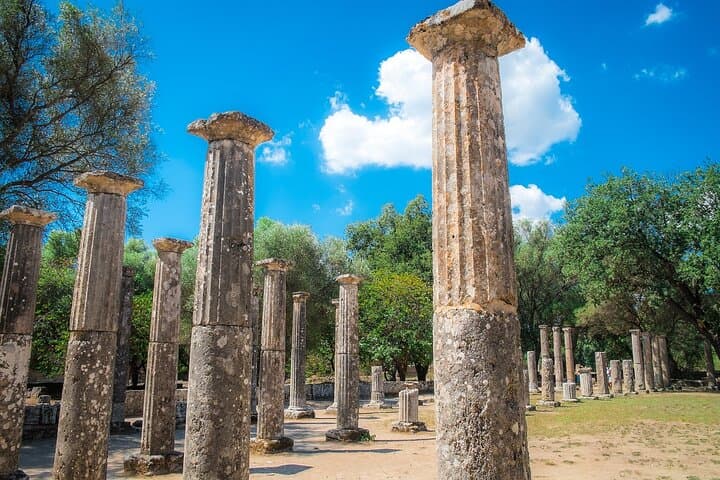
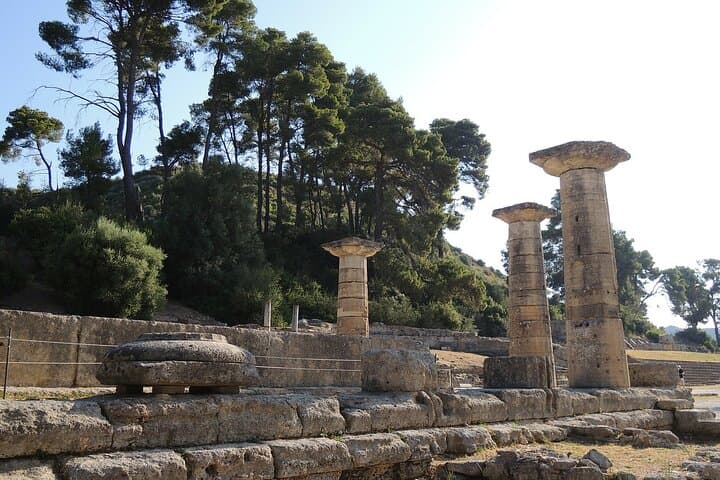
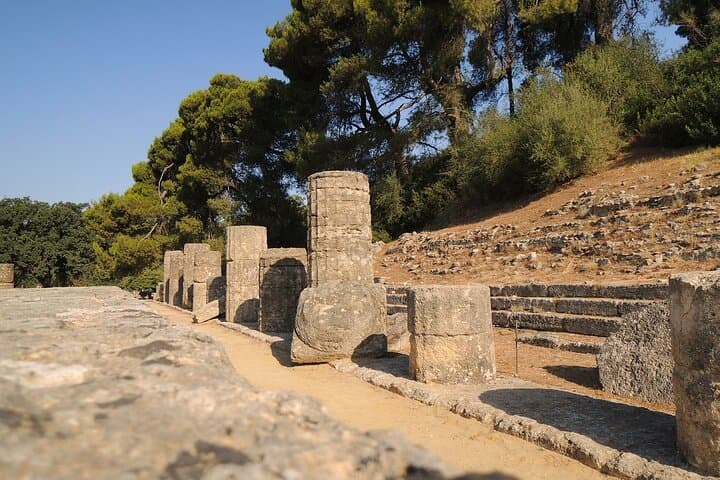
Ancient Olympia is where athletics, religion, and civic identity met—athletes from across the Greek world competed here from 776 BC, and the site once housed the colossal Statue of Zeus, one of the ancient Seven Wonders. The surrounding plain sits on alluvial soils deposited by coastal rivers, and the region’s low, dry hills support long-cultivated olive groves that shaped local life for millennia.
Practicalities: this is a five-hour, small-group shore excursion with port pickup and an English-speaking certified guide. Expect 1–2 hours walking across mostly flat archaeological surfaces with uneven stone and gravel underfoot; the museum includes indoor floors and displays. Bring plenty of water, sun protection, comfortable walking shoes, and modest clothing for archaeological sites.
Finish at a local market where producers offer olive oil and wine tastings—an immediate, flavorful introduction to the crops that supported Olympia through the ages. The tour balances close-up history, readable geology, and practical logistics for a clear, memorable half-day ashore.
easy.
5 hours.
Suitable for most fitness levels—expect 1–2 hours of walking on uneven ground; minimal elevation change.
No, standard admissions are not included; you will be directed on how to purchase tickets or the guide can advise on combined entry options.
The tour includes round-trip transfer from Katakolo port via Mercedes bus with pick-up and drop-off services as listed.
Yes—the operator notes stroller access and infant seats are available, though some paths are uneven so a carrier may be easier on narrow sections.
Yes—there’s a stop at a local market for free olive oil and wine tastings and small purchases; full meal options are available in nearby Olympia town after the tour.
Ancient Olympia was the religious and athletic center where the Olympic Games began in 776 BC; the Temple of Zeus once housed Phidias' celebrated Statue of Zeus.
The archaeological site is protected and managed to limit visitor impact—stay on marked paths, avoid climbing ruins, and support local conservation by buying sustainably produced olive oil.
Private Tours Greece operates guided outdoor trips and adventures with an emphasis on safety, stewardship, and memorable experiences.
You step off the gangway in Katakolo with a sea-salt wind at your back and a Mercedes minibus waiting to carry you inland toward ruins that still command the landscape.
You step off the gangway in Katakolo with a sea-salt wind at your back and a Mercedes minibus waiting to carry you inland toward ruins that still command the landscape.
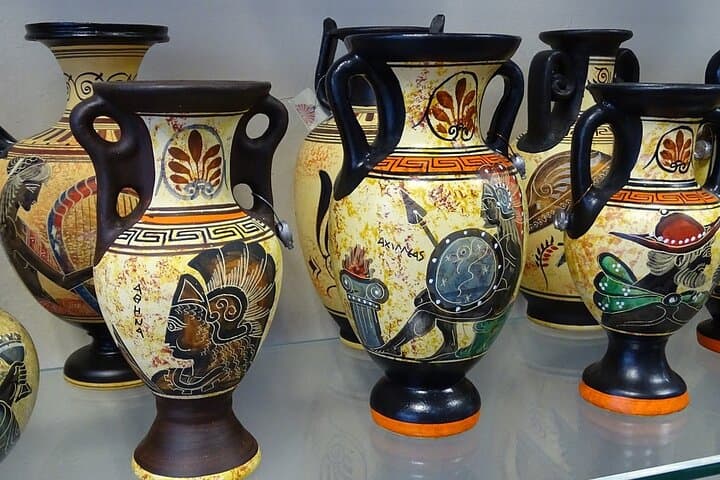
Driving past low hills and silver-green olive groves, the guide sketches the arc of the day: the stadium where the first recorded Olympic Games were staged, the ruins of monumental temples, and a compact museum that keeps fragments of those lost masterpieces. The light on the limestone and terracotta brings chiseled marble into sharp relief; small breezes through the olive branches sound like muted applause.
Ancient Olympia is where athletics, religion, and civic identity met—athletes from across the Greek world competed here from 776 BC, and the site once housed the colossal Statue of Zeus, one of the ancient Seven Wonders. The surrounding plain sits on alluvial soils deposited by coastal rivers, and the region’s low, dry hills support long-cultivated olive groves that shaped local life for millennia.
Practicalities: this is a five-hour, small-group shore excursion with port pickup and an English-speaking certified guide. Expect 1–2 hours walking across mostly flat archaeological surfaces with uneven stone and gravel underfoot; the museum includes indoor floors and displays. Bring plenty of water, sun protection, comfortable walking shoes, and modest clothing for archaeological sites.
Finish at a local market where producers offer olive oil and wine tastings—an immediate, flavorful introduction to the crops that supported Olympia through the ages. The tour balances close-up history, readable geology, and practical logistics for a clear, memorable half-day ashore.