THE ADVENTURE COLLECTIVE® · Independent discovery and booking for outdoor travel

A compact, four-day circuit linking Aswan, Abu Simbel, Kom Ombo, Edfu and Luxor—this private tour pairs an Egyptologist guide with air-conditioned transfers to visit iconic temples, the High Dam and the Valley of the Kings. Early starts and short walks on ancient stone are balanced by free time to explore each site.
A compact, four-day circuit linking Aswan, Abu Simbel, Kom Ombo, Edfu and Luxor—this private tour pairs an Egyptologist guide with air-conditioned transfers to visit iconic temples, the High Dam and the Valley of the Kings. Early starts and short walks on ancient stone are balanced by free time to explore each site.
The morning light in Aswan scrapes across the Nile and turns mud-brick facades gold—this is where the four-day circuit begins. Travelers are met by an Egyptologist, climb into an air-conditioned vehicle and move through river towns where the Nile dares you to slow down; feluccas drift, and islands rise with stone temples like chapters in a living history book.
Verified experiences and guided adventures in the surrounding area.
Operated by Best Of Egypt Tours · Aswan, Aswan Governorate
The morning light in Aswan scrapes across the Nile and turns mud-brick facades gold—this is where the four-day circuit begins. Travelers are met by an Egyptologist, climb into an air-conditioned vehicle and move through river towns where the Nile dares you to slow down; feluccas drift, and islands rise with stone temples like chapters in a living history book.
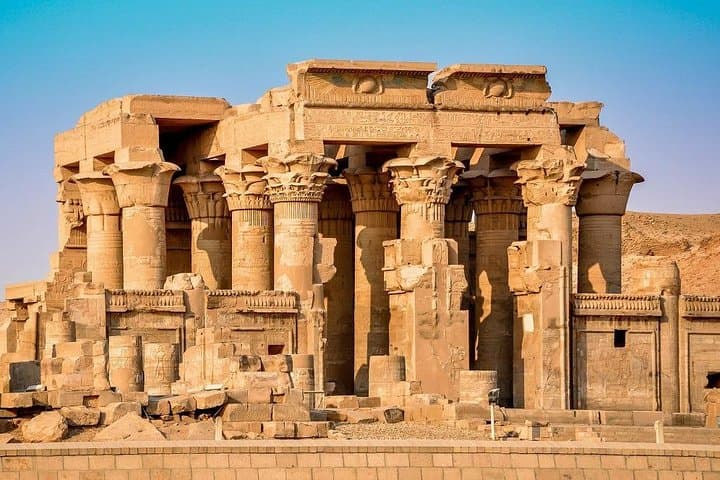
The route threads modern Aswan’s High Dam and Philae’s island temple to the engineered majesty of Abu Simbel—relocated in the 1960s to dodge Lake Nasser—then north along the river to Kom Ombo’s dual sanctuary and Edfu’s well-preserved Temple of Horus, before finishing among Luxor’s Valley of the Kings, Hatshepsut’s terraces and Karnak’s avenues of columns. Geology matters here: sandstone and limestone quarried and shaped into colossal statuary, the slow work of river transport and desert caravans. Culture is immediate—Nubian villages, souks and the daily rhythm of the Nile.
Practicalities are folded into the story: expect several short walks on uneven ancient stones, an overnight in Aswan and a very early 4:30 a.m. drive to Abu Simbel (about 3.5 hours one way). Entrance fees are often separate; bring small local currency for tips and site purchases. Sun protection and layered clothing are essential—mornings can be cool and afternoons hot. Photography is welcome, but avoid touching reliefs and follow guide directions to protect fragile surfaces.
This trip balances slow river-side moments with concentrated archaeological highlights—compact, intense and rich with context for anyone who wants the Nile’s past and present in four well-paced days.
easy.
4 days.
Suitable for travelers of average fitness; involves short to moderate walks on uneven ground and stairs
Entrance fees are typically not included in the base tour price—pay locally at each site unless your booking states otherwise; ask your provider in advance.
The tour lists wheelchair-accessible transport and areas, but some ancient sites have steps and uneven surfaces—notify the operator of specific mobility needs when booking.
Expect about a 3.5-hour one-way drive from Aswan; pickups are very early to reach the site in comfortable light and avoid midday heat.
Photography is generally allowed in many external temple areas; rules for tomb interiors vary—follow site signage and guide instructions, and avoid flash where prohibited.
This itinerary crosses millennia of pharaonic power—Abu Simbel’s temples were cut and relocated in the 1960s to save them from Lake Nasser after the High Dam was built.
Visitor numbers are managed at key sites and touching reliefs is prohibited; using local guides and following site rules helps protect fragile monuments.
Best Of Egypt Tours operates guided outdoor trips and adventures with an emphasis on safety, stewardship, and memorable experiences.


The morning light in Aswan scrapes across the Nile and turns mud-brick facades gold—this is where the four-day circuit begins. Travelers are met by an Egyptologist, climb into an air-conditioned vehicle and move through river towns where the Nile dares you to slow down; feluccas drift, and islands rise with stone temples like chapters in a living history book.
The morning light in Aswan scrapes across the Nile and turns mud-brick facades gold—this is where the four-day circuit begins. Travelers are met by an Egyptologist, climb into an air-conditioned vehicle and move through river towns where the Nile dares you to slow down; feluccas drift, and islands rise with stone temples like chapters in a living history book.
The route threads modern Aswan’s High Dam and Philae’s island temple to the engineered majesty of Abu Simbel—relocated in the 1960s to dodge Lake Nasser—then north along the river to Kom Ombo’s dual sanctuary and Edfu’s well-preserved Temple of Horus, before finishing among Luxor’s Valley of the Kings, Hatshepsut’s terraces and Karnak’s avenues of columns. Geology matters here: sandstone and limestone quarried and shaped into colossal statuary, the slow work of river transport and desert caravans. Culture is immediate—Nubian villages, souks and the daily rhythm of the Nile.
Practicalities are folded into the story: expect several short walks on uneven ancient stones, an overnight in Aswan and a very early 4:30 a.m. drive to Abu Simbel (about 3.5 hours one way). Entrance fees are often separate; bring small local currency for tips and site purchases. Sun protection and layered clothing are essential—mornings can be cool and afternoons hot. Photography is welcome, but avoid touching reliefs and follow guide directions to protect fragile surfaces.
This trip balances slow river-side moments with concentrated archaeological highlights—compact, intense and rich with context for anyone who wants the Nile’s past and present in four well-paced days.