THE ADVENTURE COLLECTIVE® · Independent discovery and booking for outdoor travel

Wade from areca plantations into a humid, mossy forest and follow an ancient lava flow to a freshwater stream on Havelock Island. This 2–3 hour trek mixes slippery rock scrambles, rope-assisted sections, and close-up encounters with island flora and fauna.
Wade from areca plantations into a humid, mossy forest and follow an ancient lava flow to a freshwater stream on Havelock Island. This 2–3 hour trek mixes slippery rock scrambles, rope-assisted sections, and close-up encounters with island flora and fauna.
You step off the sandy track and into a living furnace of green: humidity wraps around your shoulders, leaves slap a rhythm at ankle height, and a narrow trail threads between black, sculpted rock where old lava once ran. The path winds from coastal scrub through areca (betel) nut plantations into dense tropical forest, ending at a freshwater stream that moves like a low, daring voice through the trees.
Verified experiences and guided adventures in the surrounding area.
Operated by Seashell Habitat Institute Activity Centre · Havelock Island, Andaman and Nicobar Islands
You step off the sandy track and into a living furnace of green: humidity wraps around your shoulders, leaves slap a rhythm at ankle height, and a narrow trail threads between black, sculpted rock where old lava once ran. The path winds from coastal scrub through areca (betel) nut plantations into dense tropical forest, ending at a freshwater stream that moves like a low, daring voice through the trees.
Geology and human story arrive together here—these isles owe much of their shape to tectonic uplift and past volcanic activity; the black rock you pick your way over is evidence of lava that reached the surface long before people farmed the shore. Local plantations of areca nut are part of daily life: workers maintain raised rows and dry fronds while ancestral fishing and small-scale farming persist in nearby settlements. Wildlife adapted to this humidity—small endemic birds and crabs—use the forest and stream as corridors.
Practically, expect roughly a 2–3 hour outing covering about 4–6 km round-trip with modest elevation change (roughly 100–150 m cumulative gain) and sections of slippery rock and mud. Rope-assisted scrambles and short rappels are part of the route; guides provide gear and route-finding for tricky sections. Go early to avoid heat and the afternoon rains, wear grippy footwear, bring at least 1–1.5 liters of water, and be ready to get wet at the stream crossings. Respect plantation boundaries, follow your guide’s instructions on rope sections, and leave no trace—this coastline’s ecology is resilient but easily disturbed.
challenging.
2–3 hours.
Participants should have moderate to good cardiovascular fitness, steady balance, and no serious back or knee conditions.
The tour runs about 2–3 hours covering roughly 4–6 km round-trip with rope-assisted scrambles; it’s rated challenging due to slippery rock and short rappels.
Not recommended for young children, pregnant travelers, or anyone with significant back, knee, or cardiovascular problems—route includes uneven terrain and rope sections.
Operators often cancel in heavy rain or rough conditions because the lava rock and stream crossings become hazardous; check the cancellation policy and rebooking options.
No advanced climbing skills are required, but you should be comfortable with basic scrambling and following guide instructions for rope-assisted moves.
The Andaman islands are shaped by tectonic uplift and past volcanic activity; the black rock along the trail is remnant lava from those geological processes, and local areca nut cultivation has been part of island livelihoods for generations.
Coastal forests and freshwater pockets are ecologically sensitive—stay on trails, avoid damaging vegetation, and pack out all trash to limit impacts.
Seashell Habitat Institute Activity Centre operates guided outdoor trips and adventures with an emphasis on safety, stewardship, and memorable experiences.
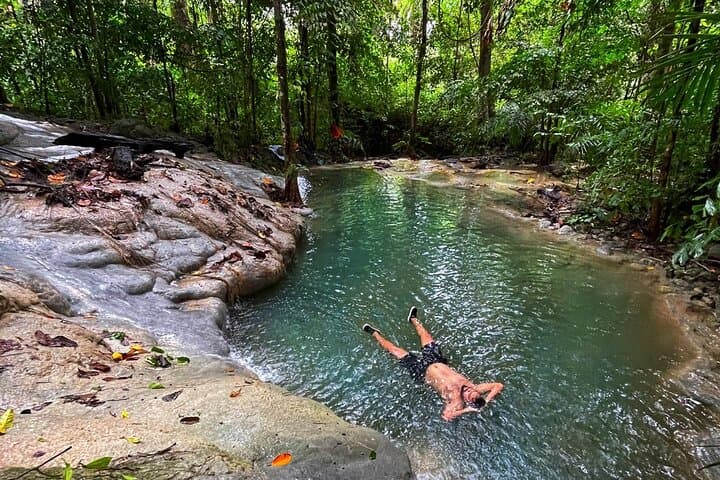
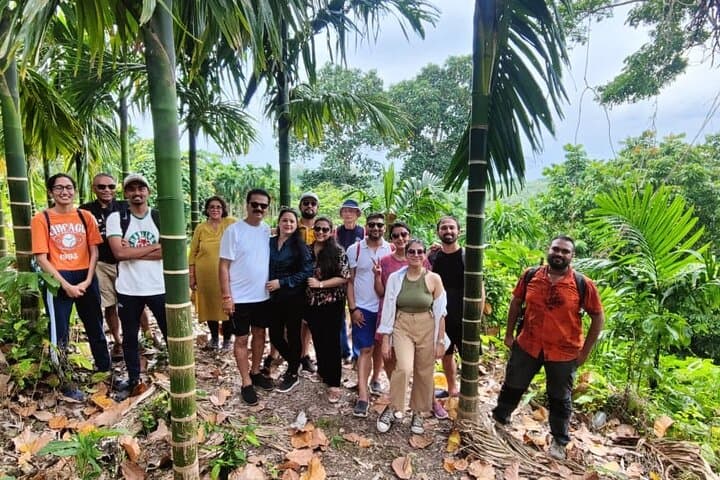
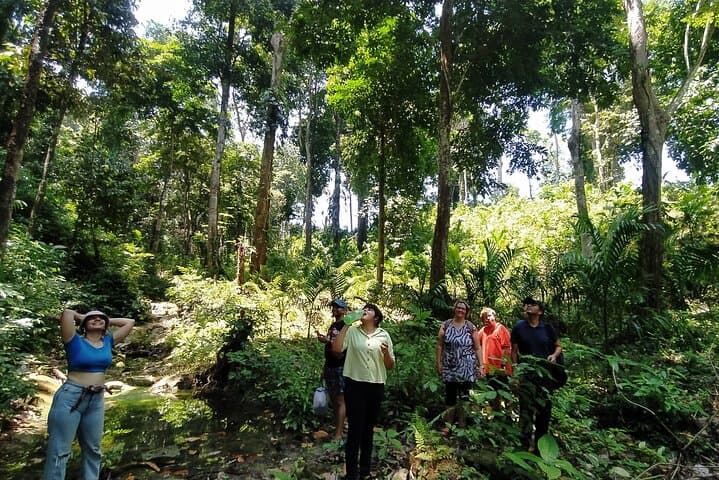
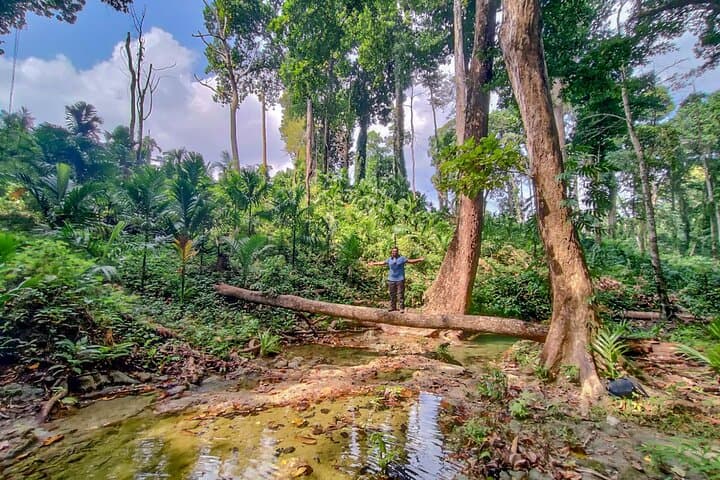
You step off the sandy track and into a living furnace of green: humidity wraps around your shoulders, leaves slap a rhythm at ankle height, and a narrow trail threads between black, sculpted rock where old lava once ran. The path winds from coastal scrub through areca (betel) nut plantations into dense tropical forest, ending at a freshwater stream that moves like a low, daring voice through the trees.
You step off the sandy track and into a living furnace of green: humidity wraps around your shoulders, leaves slap a rhythm at ankle height, and a narrow trail threads between black, sculpted rock where old lava once ran. The path winds from coastal scrub through areca (betel) nut plantations into dense tropical forest, ending at a freshwater stream that moves like a low, daring voice through the trees.
Geology and human story arrive together here—these isles owe much of their shape to tectonic uplift and past volcanic activity; the black rock you pick your way over is evidence of lava that reached the surface long before people farmed the shore. Local plantations of areca nut are part of daily life: workers maintain raised rows and dry fronds while ancestral fishing and small-scale farming persist in nearby settlements. Wildlife adapted to this humidity—small endemic birds and crabs—use the forest and stream as corridors.
Practically, expect roughly a 2–3 hour outing covering about 4–6 km round-trip with modest elevation change (roughly 100–150 m cumulative gain) and sections of slippery rock and mud. Rope-assisted scrambles and short rappels are part of the route; guides provide gear and route-finding for tricky sections. Go early to avoid heat and the afternoon rains, wear grippy footwear, bring at least 1–1.5 liters of water, and be ready to get wet at the stream crossings. Respect plantation boundaries, follow your guide’s instructions on rope sections, and leave no trace—this coastline’s ecology is resilient but easily disturbed.