THE ADVENTURE COLLECTIVE® · Independent discovery and booking for outdoor travel

Explore cliff‑side Roman theatre, a compact crusader castle and mountain village lanes before tasting centuries‑old Commandaria wine. This eight‑hour guided loop from Limassol pairs archaeology, rural Cyprus and a family winery visit.
Explore cliff‑side Roman theatre, a compact crusader castle and mountain village lanes before tasting centuries‑old Commandaria wine. This eight‑hour guided loop from Limassol pairs archaeology, rural Cyprus and a family winery visit.
You step off the coach where the cliff meets the sea and the air tastes faintly of salt and thyme. The Greco‑Roman theatre at Kourion opens like a stone lung—rows of marble curving toward a cliff-top view that still swallows sound during evening concerts. Mosaics underfoot chart quieter histories: gladiators frozen mid-strike, domestic scenes that have survived earthquakes and empires.
Verified experiences and guided adventures in the surrounding area.
Operated by Destination Services Cyprus · Limassol, Limassol District
You step off the coach where the cliff meets the sea and the air tastes faintly of salt and thyme. The Greco‑Roman theatre at Kourion opens like a stone lung—rows of marble curving toward a cliff-top view that still swallows sound during evening concerts. Mosaics underfoot chart quieter histories: gladiators frozen mid-strike, domestic scenes that have survived earthquakes and empires.
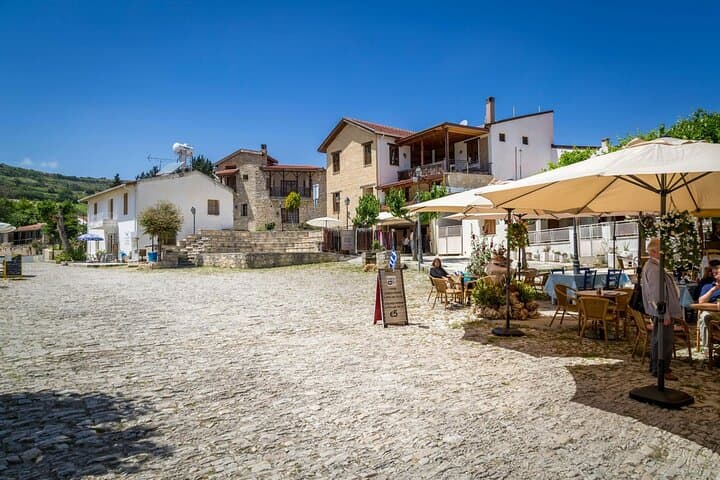
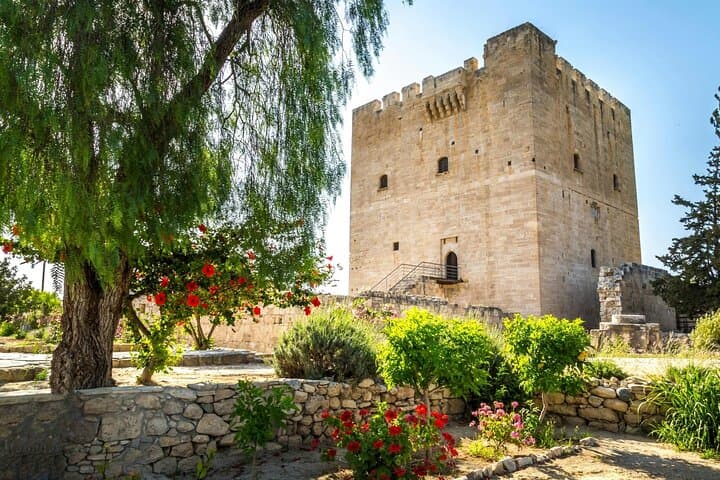
By midmorning the route folds inland to Kolossi Castle, a compact crusader keep whose squared silhouette throws a short, stubborn shadow on the plain. Stones here remember cavalry and sugarcane; later you'll pass terraces where Commandaria grapes have been grown for centuries. The day finishes in Omodos, where cobbled alleys and a working 17th‑century monastery feel alive rather than staged, and a family winery opens a bottle of sweet, amber commandaria—one of the world’s oldest named wines.
History and geology are close companions on this loop: coastal limestone shelves at Kourion give way to richer soils as you climb toward Limassol’s foothills, and the cultural layers—Phoenician, Hellenistic, Roman, Byzantine, Frankish—are readable in architecture and vineyard practice. Local guides frame stories with practical detail: why the theatre was sited where it is, how commandaria is produced, and where to find the best view at sunset.
Practical notes: expect roughly an eight‑hour day with light walking on uneven archaeological paths and cobbles; bring sturdy shoes, sun protection and a refillable bottle; pace wine tastings with water and a solid lunch that’s included. Pickup and drop‑off are typically arranged from Limassol-area points; confirm pickup time ahead of the day.
easy.
8 hours.
Suitable for most travelers; expect several short walks on uneven ground and some standing during site visits and tastings.
Pickup is offered from selected Limassol-area locations; the local operator confirms your exact pickup point and time after booking—check email 48 hours before departure.
This specific departure is adults‑only; verify other operator dates if traveling with minors.
Yes—admission fees to sites and a family‑run taverna lunch are included, as well as the winery tasting described in the itinerary.
Tastings are for adults only and servers will follow legal ID policies; non‑alcoholic options are usually available if requested.
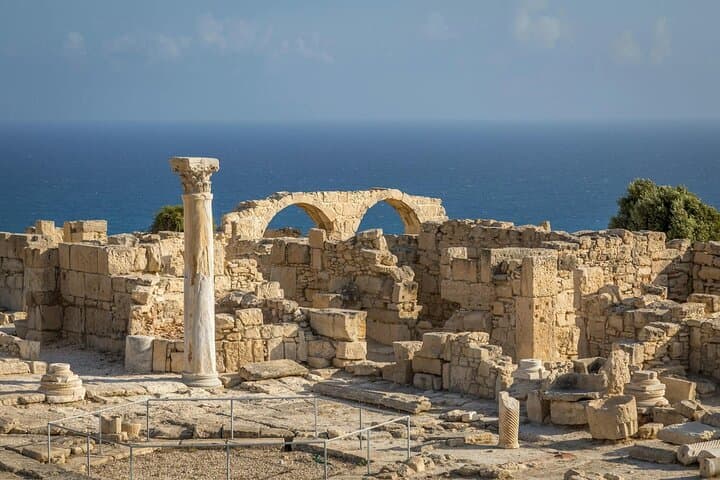
Kourion’s theatre and Roman houses reflect centuries of habitation from the Hellenistic through the Byzantine periods; Kolossi Castle later anchored Frankish military and sugar trade activity. Commandaria wine has a documented history dating back to medieval crusader times.
Sites are actively managed to protect mosaics and ruins—stay on marked paths, avoid touching mosaics, and support local businesses to promote sustainable tourism.
Destination Services Cyprus operates guided outdoor trips and adventures with an emphasis on safety, stewardship, and memorable experiences.
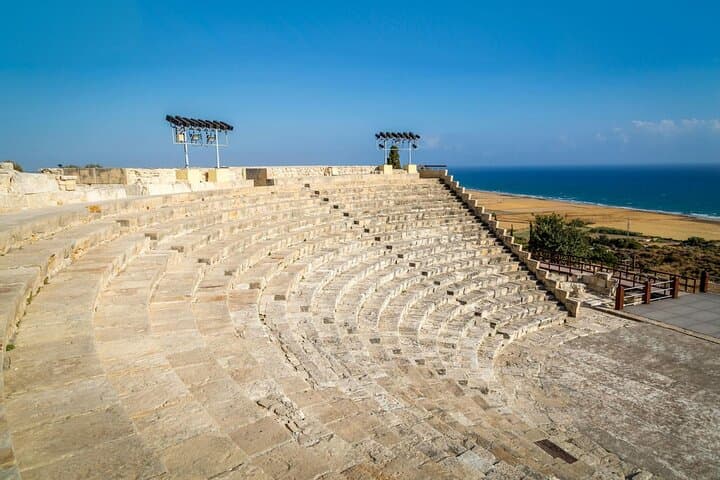
You step off the coach where the cliff meets the sea and the air tastes faintly of salt and thyme. The Greco‑Roman theatre at Kourion opens like a stone lung—rows of marble curving toward a cliff-top view that still swallows sound during evening concerts. Mosaics underfoot chart quieter histories: gladiators frozen mid-strike, domestic scenes that have survived earthquakes and empires.
You step off the coach where the cliff meets the sea and the air tastes faintly of salt and thyme. The Greco‑Roman theatre at Kourion opens like a stone lung—rows of marble curving toward a cliff-top view that still swallows sound during evening concerts. Mosaics underfoot chart quieter histories: gladiators frozen mid-strike, domestic scenes that have survived earthquakes and empires.
By midmorning the route folds inland to Kolossi Castle, a compact crusader keep whose squared silhouette throws a short, stubborn shadow on the plain. Stones here remember cavalry and sugarcane; later you'll pass terraces where Commandaria grapes have been grown for centuries. The day finishes in Omodos, where cobbled alleys and a working 17th‑century monastery feel alive rather than staged, and a family winery opens a bottle of sweet, amber commandaria—one of the world’s oldest named wines.
History and geology are close companions on this loop: coastal limestone shelves at Kourion give way to richer soils as you climb toward Limassol’s foothills, and the cultural layers—Phoenician, Hellenistic, Roman, Byzantine, Frankish—are readable in architecture and vineyard practice. Local guides frame stories with practical detail: why the theatre was sited where it is, how commandaria is produced, and where to find the best view at sunset.
Practical notes: expect roughly an eight‑hour day with light walking on uneven archaeological paths and cobbles; bring sturdy shoes, sun protection and a refillable bottle; pace wine tastings with water and a solid lunch that’s included. Pickup and drop‑off are typically arranged from Limassol-area points; confirm pickup time ahead of the day.