THE ADVENTURE COLLECTIVE® · Independent discovery and booking for outdoor travel

Trace Aphrodite’s coastline, sit in a Roman theater that still faces the sea, and walk among marble mosaics that mapped ancient lives. This full‑day tour from Ayia Napa and Protaras packs Kourion, Petra tou Romiou and the Tombs of the Kings into a single, history-rich loop.
Trace Aphrodite’s coastline, sit in a Roman theater that still faces the sea, and walk among marble mosaics that mapped ancient lives. This full‑day tour from Ayia Napa and Protaras packs Kourion, Petra tou Romiou and the Tombs of the Kings into a single, history-rich loop.
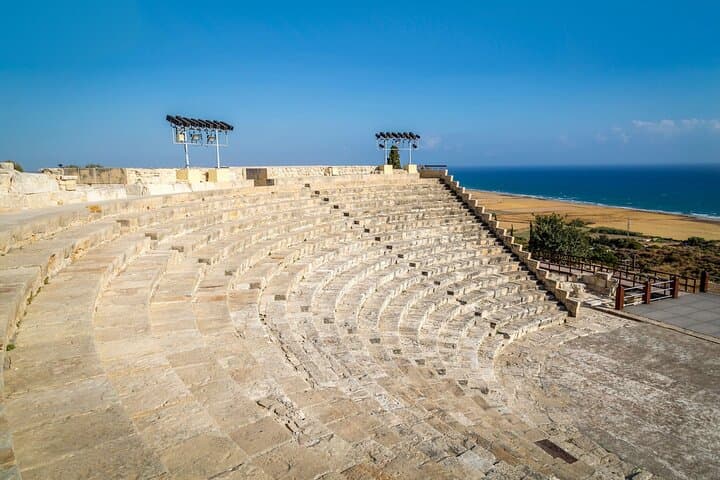
You step onto the coach before dawn, the inland road folding away as the sea reappears on your left. By the time the group disembarks at Kourion the air tastes of salt and stone; the amphitheater faces the Mediterranean like an old audience watching the horizon. Sunlight slices across the Greco‑Roman mosaics inside the Villa of Dionysos, and the cliff-edge views make the half-moon seating feel less like ruins and more like a place that still judges the present.
Verified experiences and guided adventures in the surrounding area.
Operated by Destination Services Cyprus · Paphos, Paphos District
You step onto the coach before dawn, the inland road folding away as the sea reappears on your left. By the time the group disembarks at Kourion the air tastes of salt and stone; the amphitheater faces the Mediterranean like an old audience watching the horizon. Sunlight slices across the Greco‑Roman mosaics inside the Villa of Dionysos, and the cliff-edge views make the half-moon seating feel less like ruins and more like a place that still judges the present.
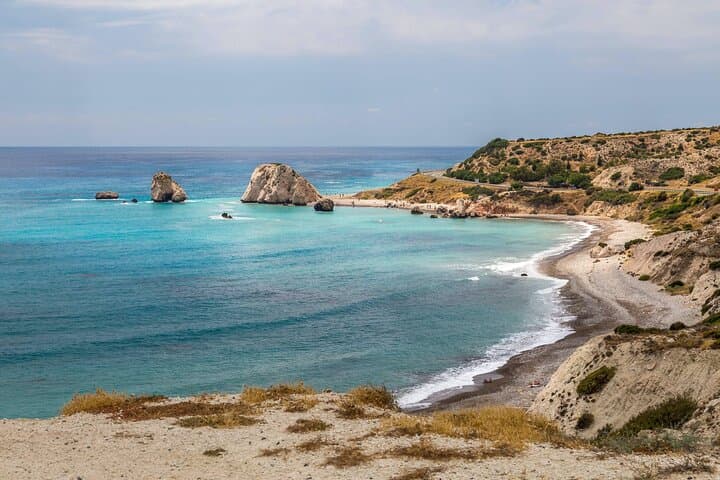
Kourion is one of Cyprus’s major archaeological sites: a patchwork of Roman baths, a restored theater, and homes whose mosaics record daily life, trade and myth. The island’s layered history—Mycenaean traders, Hellenistic city-states, Roman governors—shows in the stones and in the placement of sites along coastal promontories that once controlled sea lanes between East and West. A short drive west brings you to Petra tou Romiou, Aphrodite’s reputed emergence point, a raw sea stack that the waves perpetually polish; locals will tell you to dip your toes here for luck, while the rock simply challenges the sea to keep shaping it.
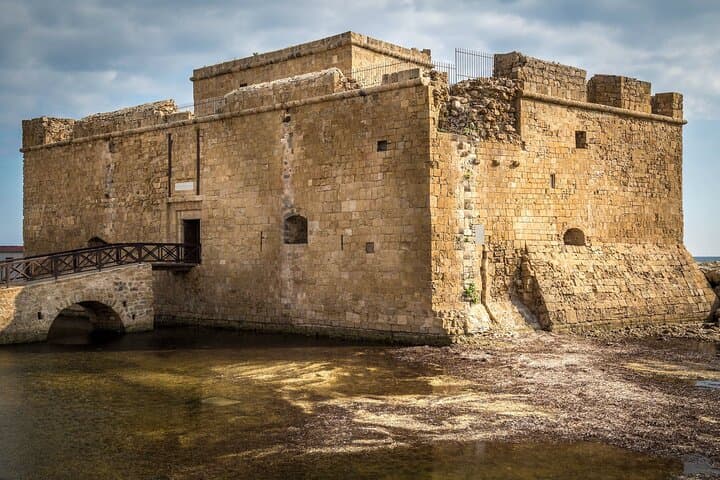
Paphos itself folds history and modern harbor life together. The Tombs of the Kings, a UNESCO necropolis carved directly from beachside limestone, is less an elegy than a lesson in how the living arrange memory. The Villa of Dionysos in Kato Paphos offers mosaics so intact they read like floor plans of feasts, vines and ritual—small windows into how Roman-era Cyprus fitted into Mediterranean networks.
Practicalities: this is a full-day shared tour (about 10 hours total) with hotel pickup from Ayia Napa or Protaras areas. Guides usually handle entrance fees and timing, but expect two long walking stretches—Kourion and the Tombs—each on uneven ancient surfaces. Wear grippy shoes; shade is limited at both archaeological parks, so sun protection and water are non-negotiable. Because the itinerary covers coastal roads, expect some time on a coach and variable stop lengths for photos and short walks.
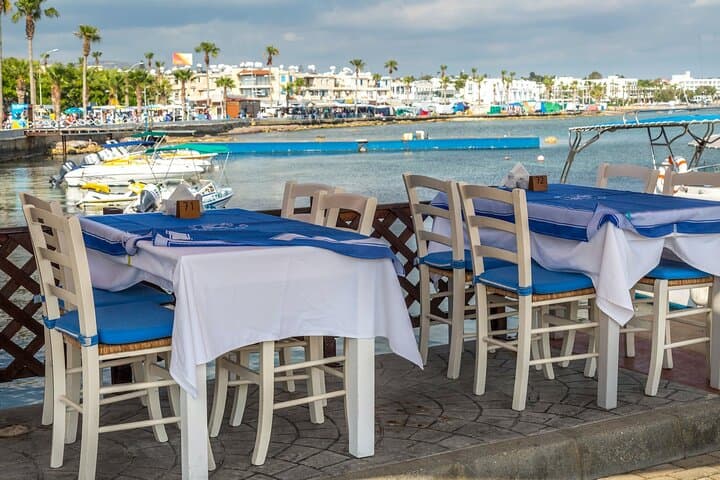
Local tips: aim for the tour early in your stay to orient yourself to Cyprus’s geography and history. If mosaics are your focus, ask your guide to point out iconography in the Dionysian scenes—wine, leopards and processionary figures have neighborhood meanings. Foodwise, Paphos harbor has tavernas where grilled fish and zivania feel earned after a day of walking.
Who this is for: travelers who want a concentrated primer on southwest Cyprus—its myths, its Roman-era prosperity, and its coastal geology—without renting a car. Bring a charged phone for photos, and plan to move at the rhythm set by the ruins: deliberate, respectful and curious.
easy.
10 hours.
Suitable for most fitness levels; expect several short walks on uneven ground and one or two flights of steps.
The tour runs about 10 hours (approximately 600 minutes) from scheduled pickup to drop-off.
Yes—entrance fees for Kourion and the Tombs of the Kings are included in the tour price.
Selected hotels in Ayia Napa and Protaras are included; exact pickup time and place will be confirmed by the operator after booking.
The tour is listed as suitable for all fitness levels; however, there are uneven surfaces and some stairs—infants must sit on laps.
Yes—participants must carry a valid passport or EU ID card.
Light, breathable clothing with sun protection and sturdy shoes for walking on mosaics and limestone.
Cyprus’s coastline held strategic ports through Hellenistic and Roman eras; many sites reflect island life tied to maritime trade and Roman villa culture.
Archaeological sites are fragile—stick to marked paths to protect mosaics and rock-cut tombs; local preservation funds limit visitor numbers during sensitive months.
Destination Services Cyprus operates guided outdoor trips and adventures with an emphasis on safety, stewardship, and memorable experiences.
You step onto the coach before dawn, the inland road folding away as the sea reappears on your left. By the time the group disembarks at Kourion the air tastes of salt and stone; the amphitheater faces the Mediterranean like an old audience watching the horizon. Sunlight slices across the Greco‑Roman mosaics inside the Villa of Dionysos, and the cliff-edge views make the half-moon seating feel less like ruins and more like a place that still judges the present.
You step onto the coach before dawn, the inland road folding away as the sea reappears on your left. By the time the group disembarks at Kourion the air tastes of salt and stone; the amphitheater faces the Mediterranean like an old audience watching the horizon. Sunlight slices across the Greco‑Roman mosaics inside the Villa of Dionysos, and the cliff-edge views make the half-moon seating feel less like ruins and more like a place that still judges the present.
Kourion is one of Cyprus’s major archaeological sites: a patchwork of Roman baths, a restored theater, and homes whose mosaics record daily life, trade and myth. The island’s layered history—Mycenaean traders, Hellenistic city-states, Roman governors—shows in the stones and in the placement of sites along coastal promontories that once controlled sea lanes between East and West. A short drive west brings you to Petra tou Romiou, Aphrodite’s reputed emergence point, a raw sea stack that the waves perpetually polish; locals will tell you to dip your toes here for luck, while the rock simply challenges the sea to keep shaping it.
Paphos itself folds history and modern harbor life together. The Tombs of the Kings, a UNESCO necropolis carved directly from beachside limestone, is less an elegy than a lesson in how the living arrange memory. The Villa of Dionysos in Kato Paphos offers mosaics so intact they read like floor plans of feasts, vines and ritual—small windows into how Roman-era Cyprus fitted into Mediterranean networks.
Practicalities: this is a full-day shared tour (about 10 hours total) with hotel pickup from Ayia Napa or Protaras areas. Guides usually handle entrance fees and timing, but expect two long walking stretches—Kourion and the Tombs—each on uneven ancient surfaces. Wear grippy shoes; shade is limited at both archaeological parks, so sun protection and water are non-negotiable. Because the itinerary covers coastal roads, expect some time on a coach and variable stop lengths for photos and short walks.
Local tips: aim for the tour early in your stay to orient yourself to Cyprus’s geography and history. If mosaics are your focus, ask your guide to point out iconography in the Dionysian scenes—wine, leopards and processionary figures have neighborhood meanings. Foodwise, Paphos harbor has tavernas where grilled fish and zivania feel earned after a day of walking.
Who this is for: travelers who want a concentrated primer on southwest Cyprus—its myths, its Roman-era prosperity, and its coastal geology—without renting a car. Bring a charged phone for photos, and plan to move at the rhythm set by the ruins: deliberate, respectful and curious.