THE ADVENTURE COLLECTIVE® · Independent discovery and booking for outdoor travel

A full-day excursion from Kandy that climbs Yapahuwa’s rock fortress and explores the sprawling ruins and ancient reservoir at Panduwasnuwara — two kingdoms, one compact day of history and climbing.
A full-day excursion from Kandy that climbs Yapahuwa’s rock fortress and explores the sprawling ruins and ancient reservoir at Panduwasnuwara — two kingdoms, one compact day of history and climbing.
You pull away from Kandy’s lake and climb into the cool hill air, the road unspooling toward low, craggy outcrops and flat, irrigated plains. By mid-morning the landscape opens: a solitary rock rises like a ruined watchtower — Yapahuwa — its broad stone stairway daring you to climb. Later, the ground flattens into the wide sweep of Panduwasnuwara, where broken pillars and a vast ancient reservoir, Panda Wewa, lie like chapters of two separate kingdoms laid side by side.
Verified experiences and guided adventures in the surrounding area.
Operated by Lakpura LLC · Kandy, Central Province
You pull away from Kandy’s lake and climb into the cool hill air, the road unspooling toward low, craggy outcrops and flat, irrigated plains. By mid-morning the landscape opens: a solitary rock rises like a ruined watchtower — Yapahuwa — its broad stone stairway daring you to climb. Later, the ground flattens into the wide sweep of Panduwasnuwara, where broken pillars and a vast ancient reservoir, Panda Wewa, lie like chapters of two separate kingdoms laid side by side.
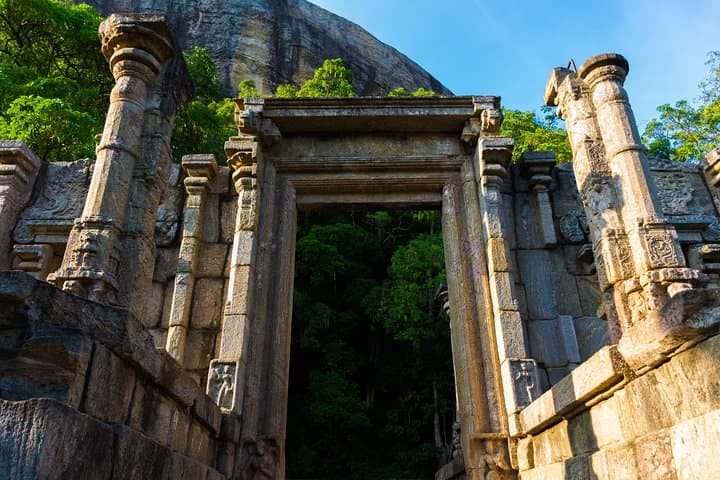
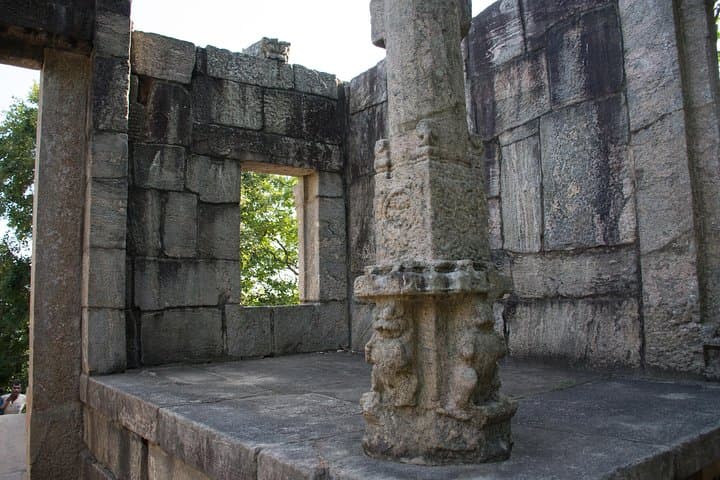
These sites span centuries of Sri Lankan statecraft. Panduwasnuwara shows urban planning and one of the island’s earliest irrigation systems, while Yapahuwa — built in the style of other rock fortresses — displays detailed carvings, a double-storied temple façade, and steep staircases up to a stupa-topped summit. Geologically, you’ll move from deeply weathered Precambrian rock at Yapahuwa to the alluvial plains that supported early reservoirs. Local culture still regards these ruins with quiet respect; village life continues around irrigation tanks that remain in agricultural use.
Practicalities: expect a full day (roughly 8–12 hours including travel), mostly on paved roads with periods of uneven stone steps and compacted dirt at the sites. Wear sturdy shoes for stairs and exposed rock, bring at least 1–2 liters of water, sun protection, and modest clothing for temple areas. Start early to avoid midday heat and allow time for photography and short walks through the ruins. Guides or driver-guides usually provide context; admissions are typically arranged as part of organized day trips. This trip pairs history with light adventure—climbing, exploring, and reading stonework where two kingdoms meet.
moderate.
8–12 hours.
Moderate fitness; able to walk on uneven ground and climb dozens of steep stone steps.
The operator lists a full-day excursion of about 8–12 hours door-to-door depending on pickup point and traffic.
Guided day trips commonly include admissions for Yapahuwa and Panduwasnuwara; confirm at booking to be sure.
The climb involves steep, uneven steps and is not recommended for people with serious back problems or limited mobility; children should be supervised.
Yes — photography is generally allowed, but show respect at religious shrines and avoid tripods in busy areas unless permitted.
Panduwasnuwara preserves remains from an early kingdom and one of Sri Lanka’s earliest irrigation schemes; Yapahuwa served as a rock fortress with detailed carvings reflecting later medieval craftsmanship.
These sites are managed to protect fragile stonework; stick to marked paths, avoid climbing on carved surfaces, and carry out any trash to reduce impact.
Lakpura LLC operates guided outdoor trips and adventures with an emphasis on safety, stewardship, and memorable experiences.
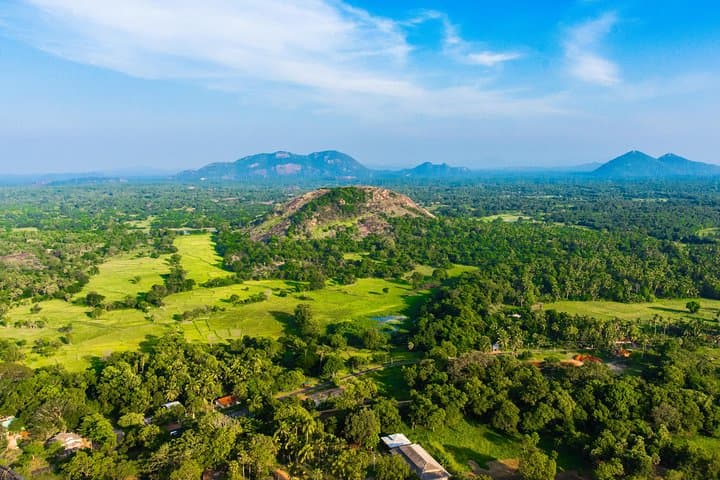
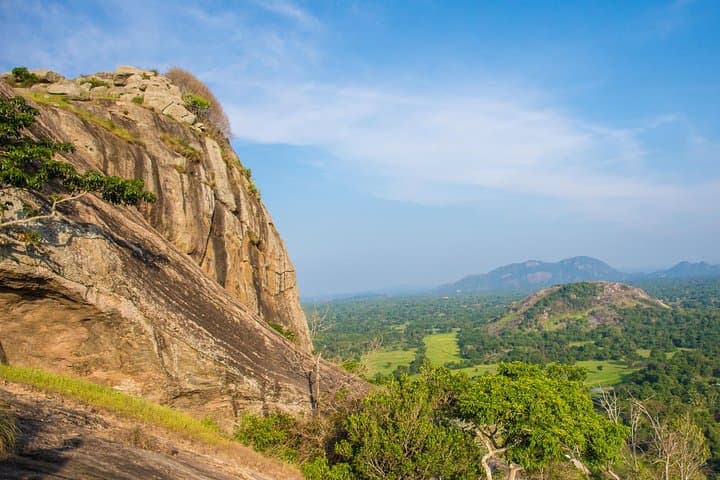
You pull away from Kandy’s lake and climb into the cool hill air, the road unspooling toward low, craggy outcrops and flat, irrigated plains. By mid-morning the landscape opens: a solitary rock rises like a ruined watchtower — Yapahuwa — its broad stone stairway daring you to climb. Later, the ground flattens into the wide sweep of Panduwasnuwara, where broken pillars and a vast ancient reservoir, Panda Wewa, lie like chapters of two separate kingdoms laid side by side.
You pull away from Kandy’s lake and climb into the cool hill air, the road unspooling toward low, craggy outcrops and flat, irrigated plains. By mid-morning the landscape opens: a solitary rock rises like a ruined watchtower — Yapahuwa — its broad stone stairway daring you to climb. Later, the ground flattens into the wide sweep of Panduwasnuwara, where broken pillars and a vast ancient reservoir, Panda Wewa, lie like chapters of two separate kingdoms laid side by side.
These sites span centuries of Sri Lankan statecraft. Panduwasnuwara shows urban planning and one of the island’s earliest irrigation systems, while Yapahuwa — built in the style of other rock fortresses — displays detailed carvings, a double-storied temple façade, and steep staircases up to a stupa-topped summit. Geologically, you’ll move from deeply weathered Precambrian rock at Yapahuwa to the alluvial plains that supported early reservoirs. Local culture still regards these ruins with quiet respect; village life continues around irrigation tanks that remain in agricultural use.
Practicalities: expect a full day (roughly 8–12 hours including travel), mostly on paved roads with periods of uneven stone steps and compacted dirt at the sites. Wear sturdy shoes for stairs and exposed rock, bring at least 1–2 liters of water, sun protection, and modest clothing for temple areas. Start early to avoid midday heat and allow time for photography and short walks through the ruins. Guides or driver-guides usually provide context; admissions are typically arranged as part of organized day trips. This trip pairs history with light adventure—climbing, exploring, and reading stonework where two kingdoms meet.