THE ADVENTURE COLLECTIVE® · Independent discovery and booking for outdoor travel

Spend a full day from Amman exploring Jerash’s Greco‑Roman streets and floating in the mineral‑rich Dead Sea. This one‑day tour combines easy walking through ancient ruins with a restorative beach visit at the lowest point on Earth.
Spend a full day from Amman exploring Jerash’s Greco‑Roman streets and floating in the mineral‑rich Dead Sea. This one‑day tour combines easy walking through ancient ruins with a restorative beach visit at the lowest point on Earth.
You step into the van as Amman's morning light softens the limestone facades, and the road unfurls north toward olive-studded hills. By midmorning the columns of Jerash appear like an orderly crowd frozen in motion—colonnades, the Oval Plaza, and a theater whose stones still carry voices.
Verified experiences and guided adventures in the surrounding area.
Operated by Jordan Landmarks Tours · Amman, Amman Governorate
You step into the van as Amman's morning light softens the limestone facades, and the road unfurls north toward olive-studded hills. By midmorning the columns of Jerash appear like an orderly crowd frozen in motion—colonnades, the Oval Plaza, and a theater whose stones still carry voices.
Jerash (Gerasa) is a Greco‑Roman city with layered history: Roman streets over earlier Nabataean and Byzantine occupation. Geology here is limestone and marl, carved into gentle ridgelines that frame the ruins and give clear sightlines across the site. The contrast comes later at the Dead Sea, the world’s lowest exposed point. The hypersaline coast refuses to let you sink—the water’s density literally lends you arms and legs as you float, and the mineral mud leaves a matte, cooling coat on skin.
Culturally, the route bridges urban Ammani life, agricultural foothills, and desert shoreline. Local guides explain Roman civic life in stone and regional uses of Dead Sea minerals across millennia.
Practical guidance: expect an 8–9 hour door‑to‑door day with short, mostly flat walks at Jerash and a relaxed beach session at a public or resort shore. Bring sturdy walking shoes for ruins, a swimsuit and towel for the Dead Sea, sunscreen, and cash for small museum shops or tea stops. Morning departures beat heat and crowds; plan for hotel pickup in Amman and a drop‑off that leaves time to unwind back in the city.
This is a day that pairs archaeology with effortless buoyancy—accessible, illuminating, and unhurried.
easy.
8–9 hours.
Suitable for most fitness levels—short walks on uneven ruins and relaxed standing/swimming at the Dead Sea.
Some options include entrance and lunch (all‑inclusive); check your booking selection—if not included, you can pay onsite.
Yes—floating is passive due to high salinity, but avoid submerging your face and rinse thoroughly after to prevent skin or eye irritation.
Yes—the itinerary notes suitability for all fitness levels; walking is moderate and the vehicle provides easy access and rest between stops.
Pickup and drop‑off are typically included; pickups start in the morning, and the full loop returns in the evening—confirm your hotel pickup details at booking.
Jerash (ancient Gerasa) flourished under Roman rule as a member of the Decapolis; the Dead Sea has been prized since antiquity for its salts and therapeutic mud.
The Dead Sea’s shoreline is ecologically sensitive—use designated beaches, avoid taking mud or minerals, and support operators who manage waste and beach erosion.
Jordan Landmarks Tours operates guided outdoor trips and adventures with an emphasis on safety, stewardship, and memorable experiences.
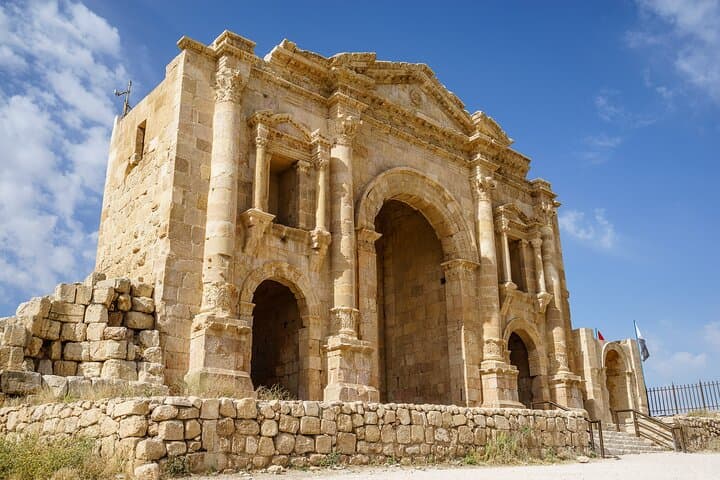
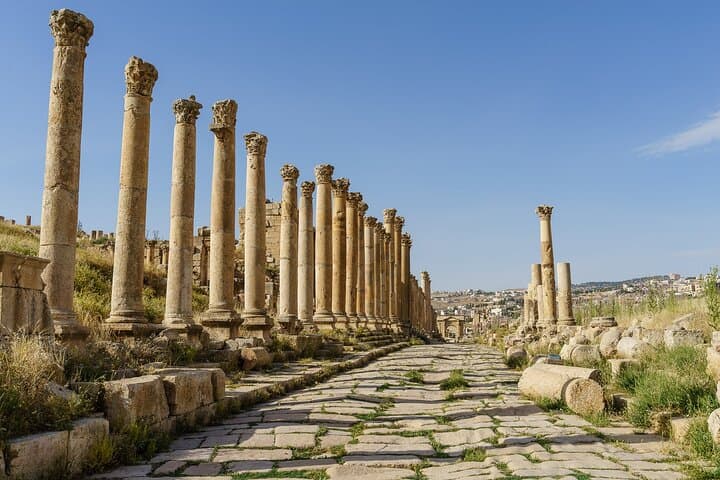
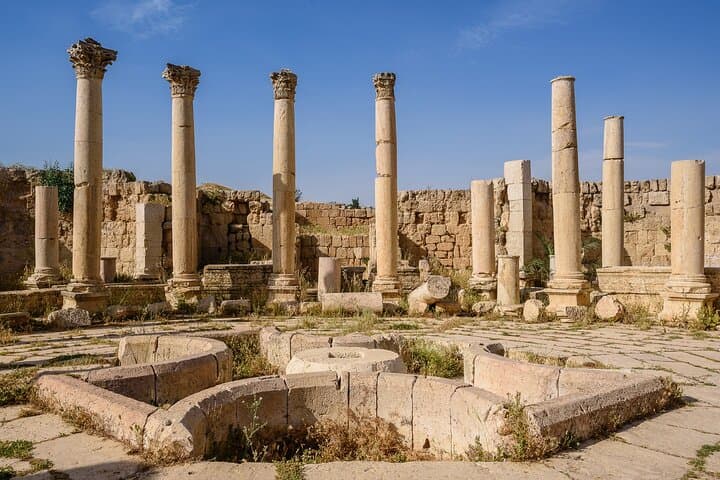
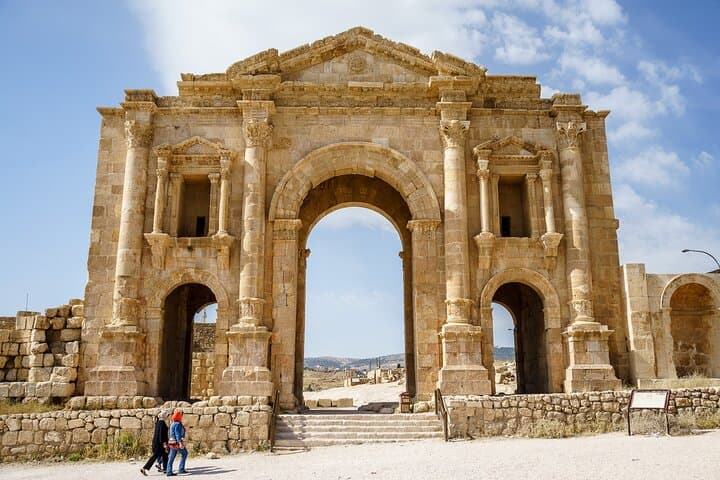
You step into the van as Amman's morning light softens the limestone facades, and the road unfurls north toward olive-studded hills. By midmorning the columns of Jerash appear like an orderly crowd frozen in motion—colonnades, the Oval Plaza, and a theater whose stones still carry voices.
You step into the van as Amman's morning light softens the limestone facades, and the road unfurls north toward olive-studded hills. By midmorning the columns of Jerash appear like an orderly crowd frozen in motion—colonnades, the Oval Plaza, and a theater whose stones still carry voices.
Jerash (Gerasa) is a Greco‑Roman city with layered history: Roman streets over earlier Nabataean and Byzantine occupation. Geology here is limestone and marl, carved into gentle ridgelines that frame the ruins and give clear sightlines across the site. The contrast comes later at the Dead Sea, the world’s lowest exposed point. The hypersaline coast refuses to let you sink—the water’s density literally lends you arms and legs as you float, and the mineral mud leaves a matte, cooling coat on skin.
Culturally, the route bridges urban Ammani life, agricultural foothills, and desert shoreline. Local guides explain Roman civic life in stone and regional uses of Dead Sea minerals across millennia.
Practical guidance: expect an 8–9 hour door‑to‑door day with short, mostly flat walks at Jerash and a relaxed beach session at a public or resort shore. Bring sturdy walking shoes for ruins, a swimsuit and towel for the Dead Sea, sunscreen, and cash for small museum shops or tea stops. Morning departures beat heat and crowds; plan for hotel pickup in Amman and a drop‑off that leaves time to unwind back in the city.
This is a day that pairs archaeology with effortless buoyancy—accessible, illuminating, and unhurried.