THE ADVENTURE COLLECTIVE® · Independent discovery and booking for outdoor travel

Walk the Sacred Way to temples, lion statues and an archaeological museum on Delos, a UNESCO-listed isle reached by boat from Mykonos. This private, three-hour guided tour combines myth, trade history and tangible ruins with practical tips for sun, footing and ferry timing.
Walk the Sacred Way to temples, lion statues and an archaeological museum on Delos, a UNESCO-listed isle reached by boat from Mykonos. This private, three-hour guided tour combines myth, trade history and tangible ruins with practical tips for sun, footing and ferry timing.
You step off the launch and the Aegean wind immediately announces a change — flat limestone terraces replace blue water, and the island seems to watch you back with stone eyes. The path from the landing to the Sacred Way opens into a sun-bleached city: ruins arranged like the bones of a metropolis, columns and staircases where markets and sanctuaries once pulsed with trade and prayer.
Verified experiences and guided adventures in the surrounding area.
Operated by Guide me in Greece · Delos, South Aegean
You step off the launch and the Aegean wind immediately announces a change — flat limestone terraces replace blue water, and the island seems to watch you back with stone eyes. The path from the landing to the Sacred Way opens into a sun-bleached city: ruins arranged like the bones of a metropolis, columns and staircases where markets and sanctuaries once pulsed with trade and prayer.
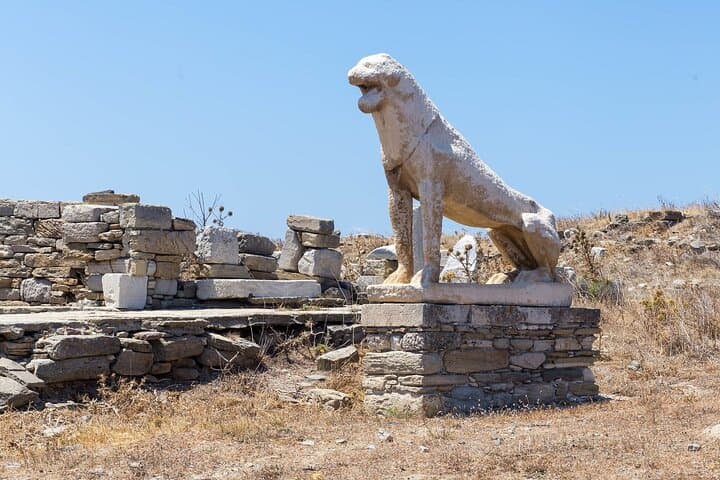
Delos is a UNESCO World Heritage Site and, by legend, the birthplace of Apollo and Artemis. Archaeological layers here record centuries of maritime commerce and cultural exchange; Cycladic bedrock underpins columns of imported marble and Egyptian-influenced reliefs, evidence of its role as a Mediterranean crossroads. You’ll pass the Terrace of the Lions, sanctuaries to Isis and other foreign cults, and small domestic mosaics that whisper about everyday life in an elite port.
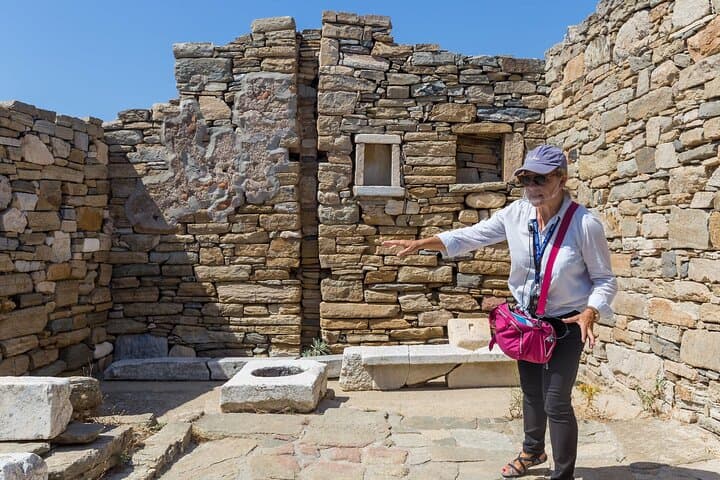
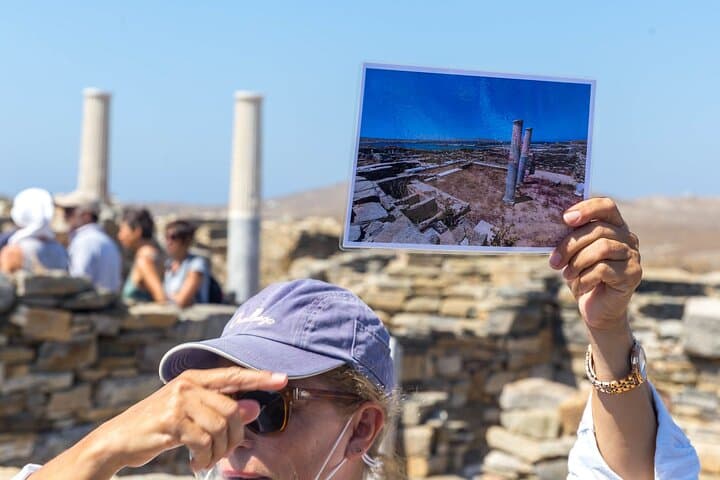
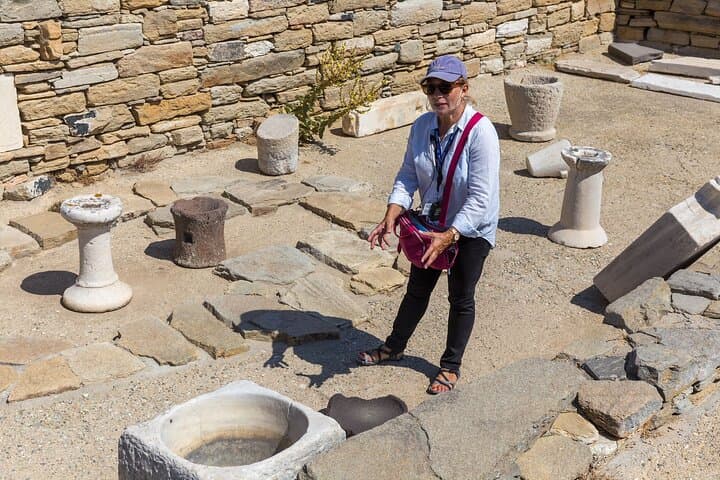
A private guide — often an archaeologist — links the visible stones to the stories and practicalities of the ancient economy. The small on-site museum collects statuary and household items that make the ruins readable.
Practical guidance: the tour runs about three hours and includes boat transfers and entrance. Surfaces are uneven and largely exposed to sun; expect 20–40 minutes of walking between major points. Comfortable, sturdy footwear and layered sun protection matter more than pace. Bring water, a hat, and a camera, and plan ferry timing on Mykonos accordingly. Early-morning departures soften heat and light the reliefs; afternoons can be stark and very hot. The experience rewards curiosity and a steady pace — the island asks you to slow down and read its stones.
easy.
3 hours.
Suitable for most fitness levels; requires the ability to walk 1–2 miles on uneven ground and climb short steps.
Typical transfers are about 20–40 minutes each way depending on sea conditions and the departure point on Mykonos.
Yes — the tour is classified as easy, but participants should be comfortable walking on uneven ground and able to board small vessels.
Yes; this private tour includes museum entrance and round-trip boat tickets between Mykonos and Delos.
Yes; the itinerary includes a visit to the Delos Archaeological Museum to see artifacts that complement the ruins.
Delos was a major trading and religious hub from the Archaic through the Roman periods; its neutrality and sanctuary status made it a magnet for merchants and cults from across the Mediterranean.
Visitor numbers are managed and sensitive zones are restricted to protect fragile mosaics and exposed archaeological layers; stick to paths and avoid touching exposed reliefs.
Guide me in Greece operates guided outdoor trips and adventures with an emphasis on safety, stewardship, and memorable experiences.
You step off the launch and the Aegean wind immediately announces a change — flat limestone terraces replace blue water, and the island seems to watch you back with stone eyes. The path from the landing to the Sacred Way opens into a sun-bleached city: ruins arranged like the bones of a metropolis, columns and staircases where markets and sanctuaries once pulsed with trade and prayer.
You step off the launch and the Aegean wind immediately announces a change — flat limestone terraces replace blue water, and the island seems to watch you back with stone eyes. The path from the landing to the Sacred Way opens into a sun-bleached city: ruins arranged like the bones of a metropolis, columns and staircases where markets and sanctuaries once pulsed with trade and prayer.
Delos is a UNESCO World Heritage Site and, by legend, the birthplace of Apollo and Artemis. Archaeological layers here record centuries of maritime commerce and cultural exchange; Cycladic bedrock underpins columns of imported marble and Egyptian-influenced reliefs, evidence of its role as a Mediterranean crossroads. You’ll pass the Terrace of the Lions, sanctuaries to Isis and other foreign cults, and small domestic mosaics that whisper about everyday life in an elite port.
A private guide — often an archaeologist — links the visible stones to the stories and practicalities of the ancient economy. The small on-site museum collects statuary and household items that make the ruins readable.
Practical guidance: the tour runs about three hours and includes boat transfers and entrance. Surfaces are uneven and largely exposed to sun; expect 20–40 minutes of walking between major points. Comfortable, sturdy footwear and layered sun protection matter more than pace. Bring water, a hat, and a camera, and plan ferry timing on Mykonos accordingly. Early-morning departures soften heat and light the reliefs; afternoons can be stark and very hot. The experience rewards curiosity and a steady pace — the island asks you to slow down and read its stones.