THE ADVENTURE COLLECTIVE® · Independent discovery and booking for outdoor travel

Board a short ferry from Mykonos for a guided, five-hour tour of Delos — one of Greece’s most important archaeological sites. Expect exposed stone pathways, expert historical context, and concentrated ruins including the Temple of Apollo and the Museum of Delos.
Board a short ferry from Mykonos for a guided, five-hour tour of Delos — one of Greece’s most important archaeological sites. Expect exposed stone pathways, expert historical context, and concentrated ruins including the Temple of Apollo and the Museum of Delos.
You step off the morning boat and the Aegean immediately does what it does best: it opens the horizon and pushes a clean, salty wind across the island, as if urging visitors to look outward and back in time.
Verified experiences and guided adventures in the surrounding area.
Operated by YourTransfer.gr · Mykonos, South Aegean
You step off the morning boat and the Aegean immediately does what it does best: it opens the horizon and pushes a clean, salty wind across the island, as if urging visitors to look outward and back in time.
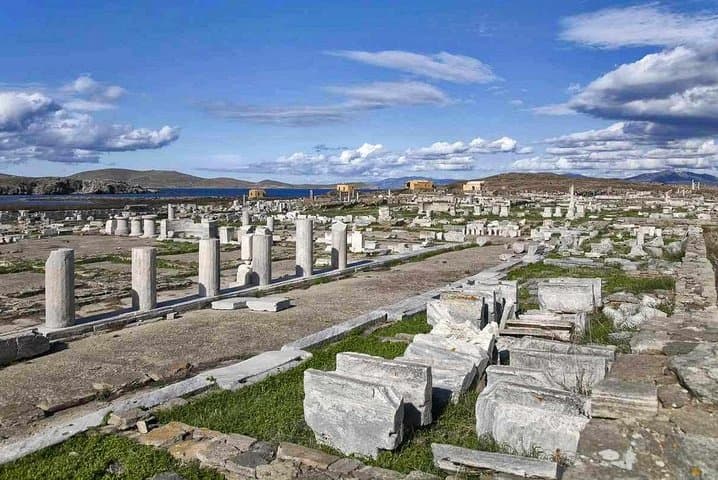
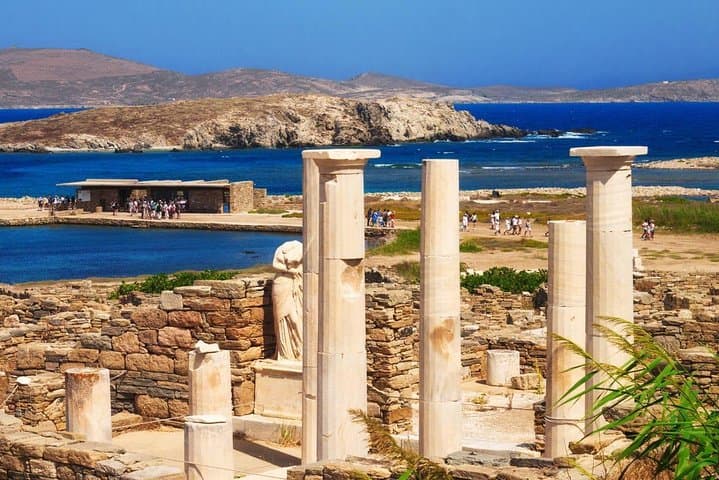
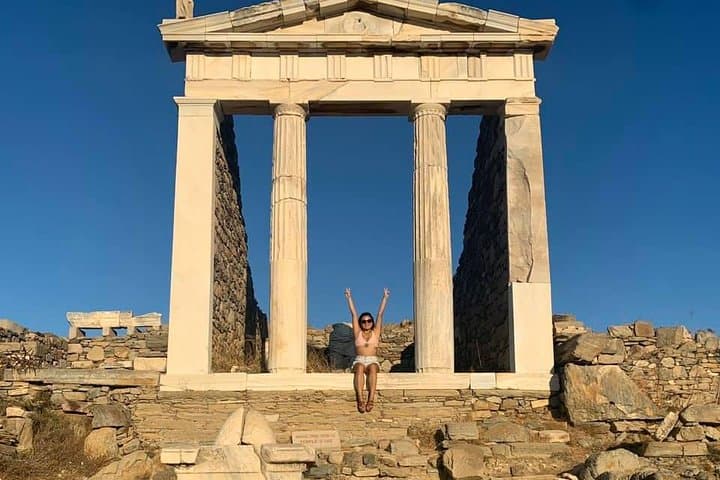
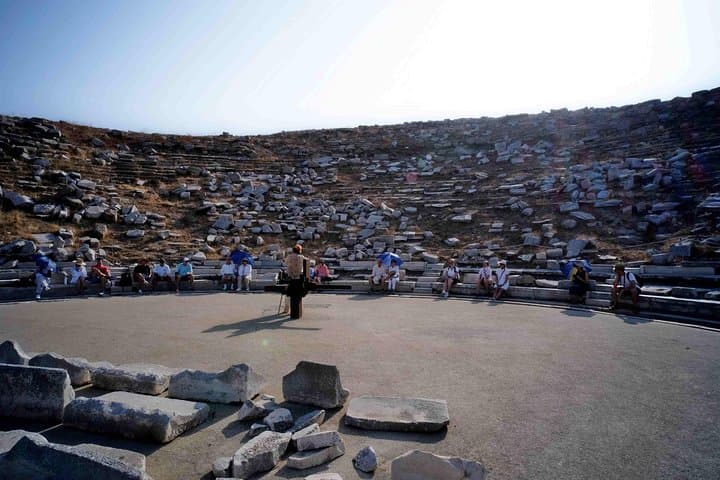
Delos is compact but huge in story — a once-sacred island that served as a commercial and religious hub of the Cyclades. Walks along the Sacred Way bring you past lion statues that once watched a bustling market and toward the Temple of Apollo, where limestone and marble grades tell a geological story of uplifted seabed and ancient quarrying. The amphitheater still carries voices; the museum houses bronzes and household objects that give texture to everyday life in archaic Greece.
Culture here is skeletal but eloquent: absence is part of the point. The island was ritually cleared of permanent inhabitants in antiquity, leaving only ruins, stones, and bird-swept terraces that illustrate how commerce and cult interwove across the Mediterranean.
Practical guidance: the standard tour runs about five hours from Mykonos, primarily on flat, exposed walks across packed earth and stone. Bring sun protection and a full water bottle—shade is scarce and midday heat can be sharp. Good walking shoes with grip are useful on uneven pavements. Transfers can include pickup from Mykonos port or hotel; if you meet at St. Nicholas Church plan to arrive 10–15 minutes early. Expect about two hours on-site for archaeological exploration plus transport time. Photography is excellent in morning light; afternoons are brighter but hotter. Respect fenced areas and signage to protect fragile mosaics and surfaces. The island rewards attention: quiet corners, weathered inscriptions, and a coastline that keeps watch over centuries of ships.
easy.
5 hours.
Suitable for most fitness levels; requires standing and walking on uneven surfaces for extended periods.
Expect about two hours of guided exploration on Delos within the total five-hour tour that includes transport from Mykonos.
Admission to Delos archaeological site and museum is generally not included and should be confirmed at booking; check the tour details for specifics.
Yes; the tour is suitable for cruise ship day stops but allow extra time to disembark and reach the meeting point if you select no-transfer options.
Children are allowed only when accompanied by adults and the terrain includes uneven stones and steps, which may be challenging for limited mobility—ask about accessibility options.
Delos was a major religious and commercial center in antiquity; in certain periods it operated as a free port and a sanctuary dedicated to Apollo and Artemis.
Archaeological preservation is ongoing—visitors must stick to marked paths and avoid touching exposed masonry to protect fragile remains.
YourTransfer.gr operates guided outdoor trips and adventures with an emphasis on safety, stewardship, and memorable experiences.
You step off the morning boat and the Aegean immediately does what it does best: it opens the horizon and pushes a clean, salty wind across the island, as if urging visitors to look outward and back in time.
You step off the morning boat and the Aegean immediately does what it does best: it opens the horizon and pushes a clean, salty wind across the island, as if urging visitors to look outward and back in time.
Delos is compact but huge in story — a once-sacred island that served as a commercial and religious hub of the Cyclades. Walks along the Sacred Way bring you past lion statues that once watched a bustling market and toward the Temple of Apollo, where limestone and marble grades tell a geological story of uplifted seabed and ancient quarrying. The amphitheater still carries voices; the museum houses bronzes and household objects that give texture to everyday life in archaic Greece.
Culture here is skeletal but eloquent: absence is part of the point. The island was ritually cleared of permanent inhabitants in antiquity, leaving only ruins, stones, and bird-swept terraces that illustrate how commerce and cult interwove across the Mediterranean.
Practical guidance: the standard tour runs about five hours from Mykonos, primarily on flat, exposed walks across packed earth and stone. Bring sun protection and a full water bottle—shade is scarce and midday heat can be sharp. Good walking shoes with grip are useful on uneven pavements. Transfers can include pickup from Mykonos port or hotel; if you meet at St. Nicholas Church plan to arrive 10–15 minutes early. Expect about two hours on-site for archaeological exploration plus transport time. Photography is excellent in morning light; afternoons are brighter but hotter. Respect fenced areas and signage to protect fragile mosaics and surfaces. The island rewards attention: quiet corners, weathered inscriptions, and a coastline that keeps watch over centuries of ships.