THE ADVENTURE COLLECTIVE® · Independent discovery and booking for outdoor travel

From Anchorage’s mountain-framed highways to Willow’s legendary kennels, this dog-powered adventure pairs a scenic drive with an exhilarating cart or sled ride behind real Iditarod Huskies. It’s part living history, part all-out fun, and 100% Alaska.
From Anchorage’s mountain-framed highways to Willow’s legendary kennels, this dog-powered adventure pairs a scenic drive with an exhilarating cart or sled ride behind real Iditarod Huskies. It’s part living history, part all-out fun, and 100% Alaska.
The road slips out of Anchorage and the Chugach Mountains walk alongside your window, their snowfields teasing the skyline as the highway unwinds north. Bore tide mudflats flash silver in the light, then give way to the Palmer Hay Flats where sandhill cranes gossip and moose browse willows like they own the place. The Talkeetna Mountains shoulder in, urging you onward. By the time you reach Willow, the air feels different—colder, cleaner, charged—as if the land is clearing its throat for the run to come.
Verified experiences and guided adventures in the surrounding area.
Operated by Frontier Tours · Willow, Alaska
The road slips out of Anchorage and the Chugach Mountains walk alongside your window, their snowfields teasing the skyline as the highway unwinds north. Bore tide mudflats flash silver in the light, then give way to the Palmer Hay Flats where sandhill cranes gossip and moose browse willows like they own the place. The Talkeetna Mountains shoulder in, urging you onward. By the time you reach Willow, the air feels different—colder, cleaner, charged—as if the land is clearing its throat for the run to come.
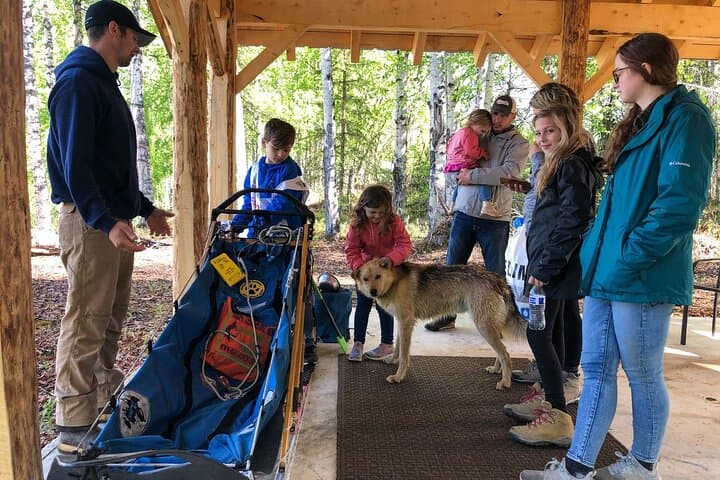
This is the mushing capital of Alaska, a community stitched together by snowy winters, long trails, and the work-hard, treat-your-dogs-right ethos of the Iditarod. You’ll roll into a working kennel run by a veteran racer, meet the athletes—compact, electric Alaska Huskies whose tails flag the moment boots crunch gravel—and learn how a thousand-mile race threads through this state’s modern identity. Guides talk you through the gear and the history: how mail routes became lifelines, how dog teams stitched villages together long before there were roads, and how training never really stops. In summer and fall, wheeled carts stand in for sleds; when winter piles in and the trails set like stone, runners whisper across snow.
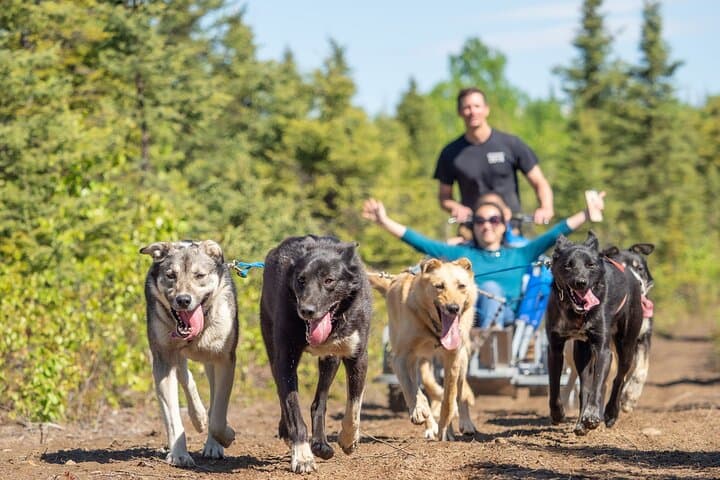
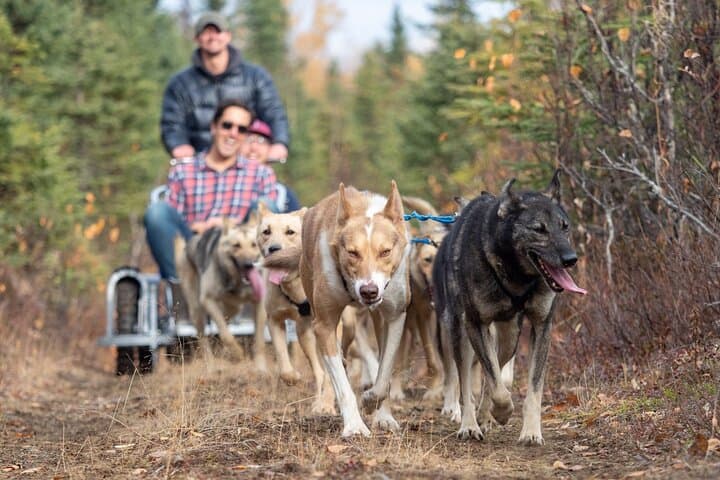
Then comes the part you’ll remember by muscle memory. Buckle in beside your musher, and the team surges—no half-measures, just instant purpose. The dogs pull because that’s what they love, and the trail answers with a metronome of paw pads on dirt or the soft hiss of steel on fresh corduroy. Spruce trees blur. Cold air taps your cheeks. The team reads the route and you feel them think together: a small, fast river with fur and heartbeat. It’s 20–30 minutes of clean, uncomplicated joy.
Between runs and kennel time, you’ll have a scenic loop of Southcentral Alaska baked into your day—about 1.5 hours each way from Anchorage, with plenty of mountain views and chances to spot wildlife. Expect roughly 90 minutes at the kennel for the ride, a tour, and as many ear scratches as the dogs will allow.
Practical notes: Conditions change quickly here. Even midsummer can throw a cool breeze, and winter rewards those who layer smartly. Closed-toe shoes, gloves, and a hat are worth packing year-round. Bring a camera with a strap—the start can jump, and you’ll want steady hands for sharp shots. The experience is accessible to most travelers comfortable with short walks and climbing in and out of a van and two-person cart or sled. If you’re here in winter, battery life drains fast; keep spares warm in an inner pocket and let the dogs do the rest.
easy.
5–6 hours.
Good mobility for short walks and stepping into a van and two-person cart or sled; no endurance required.
Wheeled carts are used when there isn’t sufficient snow; traditional sleds are used in winter once trails are packed.
Expect approximately 20–30 minutes on the trail, plus additional time for a kennel tour and meeting the dogs.
Yes—kids who can sit safely in the cart or sled with a seatbelt typically enjoy the experience; infants must ride on a lap in the vehicle per operator guidance.
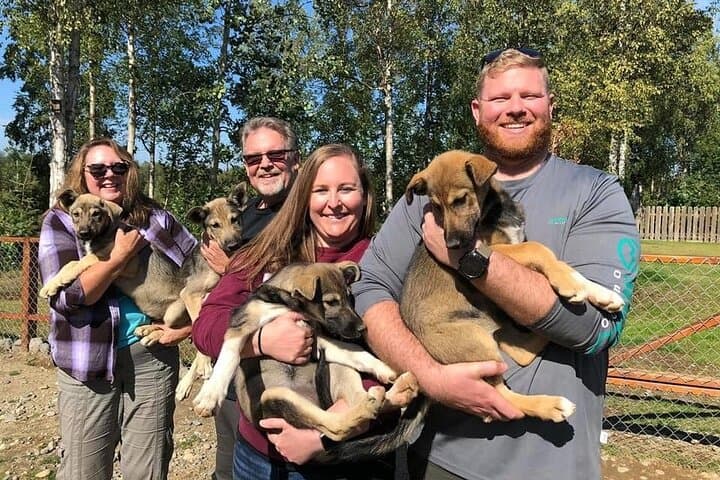
Yes, kennel time includes meeting friendly huskies and learning about their training and care.
Tours run in a wide range of conditions; severe weather or unsafe trail conditions may prompt changes or cancellations per the operator’s policy.
A professional musher controls the team; guests ride in a two-person cart or sled for comfort and safety.
Willow often hosts the Iditarod’s official restart, linking this small community to Alaska’s most storied race and a tradition of dog-powered travel that long predates roads.
Respect kennel operations by following staff guidance and staying in designated areas; these are working athletes on specific training schedules. Pack out all trash and give wildlife wide space along the drive.
Frontier Tours operates guided outdoor trips and adventures with an emphasis on safety, stewardship, and memorable experiences.
The road slips out of Anchorage and the Chugach Mountains walk alongside your window, their snowfields teasing the skyline as the highway unwinds north. Bore tide mudflats flash silver in the light, then give way to the Palmer Hay Flats where sandhill cranes gossip and moose browse willows like they own the place. The Talkeetna Mountains shoulder in, urging you onward. By the time you reach Willow, the air feels different—colder, cleaner, charged—as if the land is clearing its throat for the run to come.
The road slips out of Anchorage and the Chugach Mountains walk alongside your window, their snowfields teasing the skyline as the highway unwinds north. Bore tide mudflats flash silver in the light, then give way to the Palmer Hay Flats where sandhill cranes gossip and moose browse willows like they own the place. The Talkeetna Mountains shoulder in, urging you onward. By the time you reach Willow, the air feels different—colder, cleaner, charged—as if the land is clearing its throat for the run to come.
This is the mushing capital of Alaska, a community stitched together by snowy winters, long trails, and the work-hard, treat-your-dogs-right ethos of the Iditarod. You’ll roll into a working kennel run by a veteran racer, meet the athletes—compact, electric Alaska Huskies whose tails flag the moment boots crunch gravel—and learn how a thousand-mile race threads through this state’s modern identity. Guides talk you through the gear and the history: how mail routes became lifelines, how dog teams stitched villages together long before there were roads, and how training never really stops. In summer and fall, wheeled carts stand in for sleds; when winter piles in and the trails set like stone, runners whisper across snow.
Then comes the part you’ll remember by muscle memory. Buckle in beside your musher, and the team surges—no half-measures, just instant purpose. The dogs pull because that’s what they love, and the trail answers with a metronome of paw pads on dirt or the soft hiss of steel on fresh corduroy. Spruce trees blur. Cold air taps your cheeks. The team reads the route and you feel them think together: a small, fast river with fur and heartbeat. It’s 20–30 minutes of clean, uncomplicated joy.
Between runs and kennel time, you’ll have a scenic loop of Southcentral Alaska baked into your day—about 1.5 hours each way from Anchorage, with plenty of mountain views and chances to spot wildlife. Expect roughly 90 minutes at the kennel for the ride, a tour, and as many ear scratches as the dogs will allow.
Practical notes: Conditions change quickly here. Even midsummer can throw a cool breeze, and winter rewards those who layer smartly. Closed-toe shoes, gloves, and a hat are worth packing year-round. Bring a camera with a strap—the start can jump, and you’ll want steady hands for sharp shots. The experience is accessible to most travelers comfortable with short walks and climbing in and out of a van and two-person cart or sled. If you’re here in winter, battery life drains fast; keep spares warm in an inner pocket and let the dogs do the rest.