THE ADVENTURE COLLECTIVE® · Independent discovery and booking for outdoor travel

Board a heated van in downtown Anchorage and let guides track the aurora with KP indices and cloud models as they move to the clearest vantage points. This guided chase offers multi-night flexibility and local insights to improve your chances of seeing the northern lights.
Board a heated van in downtown Anchorage and let guides track the aurora with KP indices and cloud models as they move to the clearest vantage points. This guided chase offers multi-night flexibility and local insights to improve your chances of seeing the northern lights.
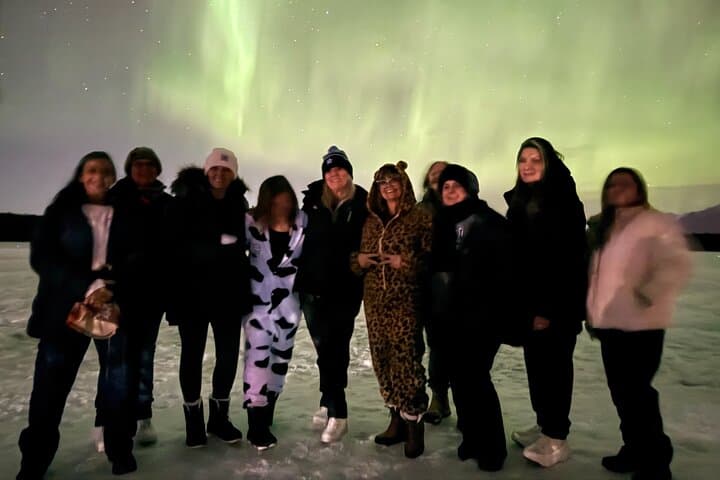
The meeting point is a ring of streetlights and warmed vans outside the Dena’ina Civic and Convention Center. You arrive at night, breath fogging, coffee in a paper cup, and guides already scanning the sky with laptops and radio updates. They speak in a language of KP indices, cloud cover models and satellite imagery; the conversation hums with controlled optimism. When the group piles into the vehicle, the city retreats and the dark of the Alaskan interior presses in — a theater set prepared for whatever the aurora decides to perform.
Verified experiences and guided adventures in the surrounding area.
Operated by PicTours Alaska, Inc. · Anchorage, Alaska
The meeting point is a ring of streetlights and warmed vans outside the Dena’ina Civic and Convention Center. You arrive at night, breath fogging, coffee in a paper cup, and guides already scanning the sky with laptops and radio updates. They speak in a language of KP indices, cloud cover models and satellite imagery; the conversation hums with controlled optimism. When the group piles into the vehicle, the city retreats and the dark of the Alaskan interior presses in — a theater set prepared for whatever the aurora decides to perform.
Alaska’s position beneath the auroral oval is part geography, part magnetosphere. Charged particles from the sun meet Earth’s magnetic field here more often than in lower latitudes, and locals have watched these lights for generations. Indigenous Athabascan and Dena’ina stories treat the aurora as messages and weather-of-the-soul, while modern trackers turn to NOAA models and live KP readings to choose vantage points where skies and forecasts align.
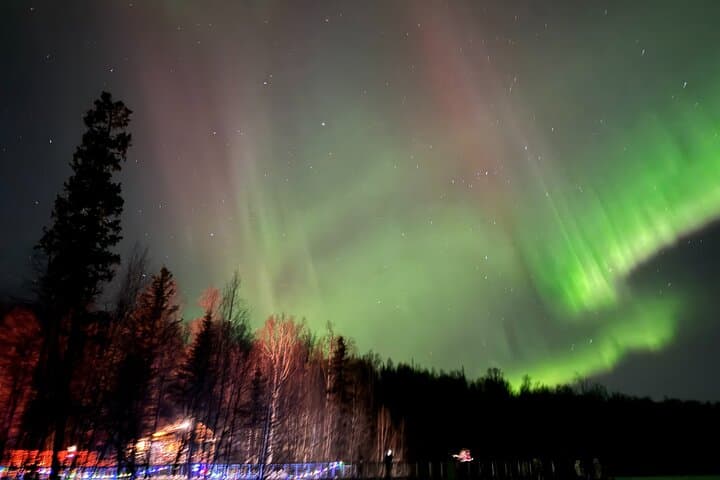
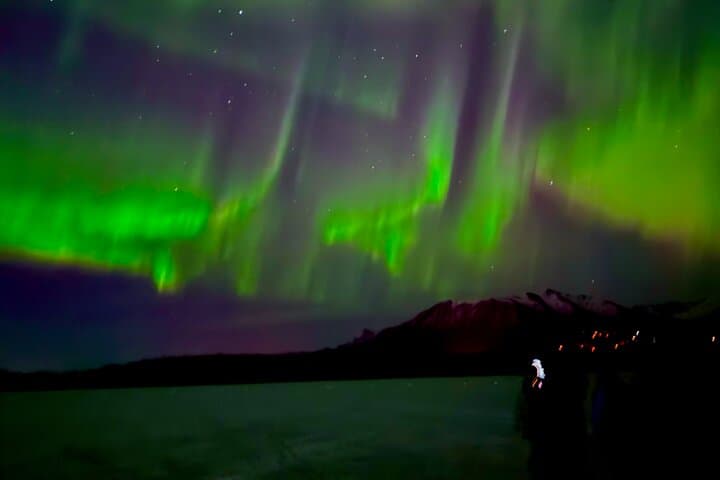
The tour is less a fixed route than a hunt. Guides compare multi-source forecasts throughout the evening and move you to pockets of clear sky — coastal ridgelines, frozen lakes, or turnout points away from Anchorage’s light dome. Terrain is mostly paved or compacted roadside shoulder suitable for short standing pauses; expect minimal walking but sustained exposure to cold, wind, and long periods of standing.
Practical planning begins with attitude: this is a venture, not a guarantee. The operator increases your odds by offering sliding multi-night coverage — one flexible pass spread over several evenings — and by sharing their research and real-time decisions. Tours last roughly 2.5–3 hours from pickup; vehicles are heated, bottled water is included, and groups are small enough for quick repositioning.
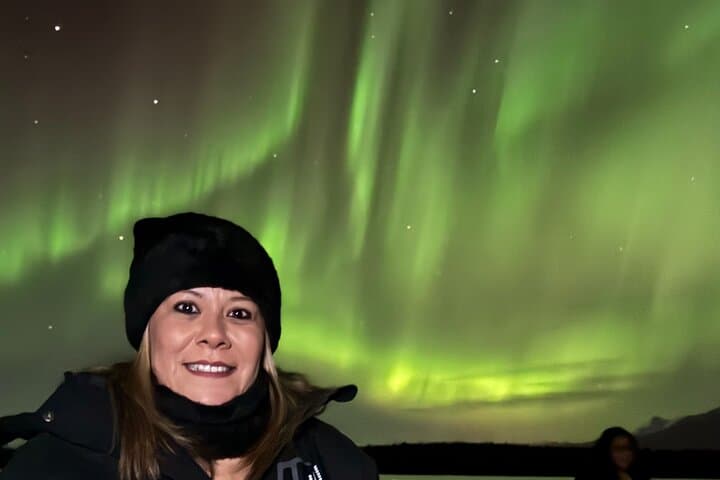
To maximize the evening, layer aggressively: merino base, insulating mid-layer, windproof shell, warm hat and mittens. Bring a tripod and a camera that allows manual exposure; aurora shots typically use wide aperture, ISO 800–3200 and exposures of 5–15 seconds depending on activity. Phone cameras can capture bright displays, but a tripod and intervalometer yield the best results.
Expect local etiquette: keep headlights low, minimize flash and movement when someone is photographing, and follow guides when stopping near private property. Because weather changes fast, book with flexible timing and plan for alternate nights. If you don’t see the lights, the guides will still have shared navigation skills, aurora science and stories that change how you watch the sky on future nights.
This ride is equal parts technology and wonder — a practical chase built around natural unpredictability. Come prepared, keep expectations measured, and the evening can become an education in cold-weather logistics and one of the great live displays the northern sky can offer.
moderate.
2.5–3 hours.
Suitable for most fitness levels; you should be able to stand outdoors in cold for up to three hours with minimal walking.
There is no guarantee—visibility depends on solar activity and cloud cover—but guides use KP indices and local forecasts to increase your chances and the tour’s multi-night coverage option helps spread risk.
Pickup is at the Dena’ina Civic and Convention Center on 6th Avenue between F and G Streets; most guests are returned to the same downtown area.
Nights can be well below freezing; dress in insulating layers, a windproof shell, warm hat, and gloves. Bring spare batteries and chemical hand warmers if you get cold easily.
Bright displays can be captured on recent phones, but for crisp long-exposure images bring a camera with manual settings and a tripod.
Infants must sit on an adult’s lap; the tour is rated easy physically but late-night conditions and cold may not suit very young children.
Cancel at least 24 hours before departure for a full refund; the operator may cancel in bad weather and offer alternatives or refunds according to their policy.
The Dena’ina people and other Athabascan cultures have long-held oral traditions about the aurora, and modern Anchorage sits along well-traveled subsistence and trade routes.
Minimize light pollution and engine idling at stops; stay on public pullouts to avoid disturbing private land and local wildlife.
PicTours Alaska, Inc. operates guided outdoor trips and adventures with an emphasis on safety, stewardship, and memorable experiences.
The meeting point is a ring of streetlights and warmed vans outside the Dena’ina Civic and Convention Center. You arrive at night, breath fogging, coffee in a paper cup, and guides already scanning the sky with laptops and radio updates. They speak in a language of KP indices, cloud cover models and satellite imagery; the conversation hums with controlled optimism. When the group piles into the vehicle, the city retreats and the dark of the Alaskan interior presses in — a theater set prepared for whatever the aurora decides to perform.
The meeting point is a ring of streetlights and warmed vans outside the Dena’ina Civic and Convention Center. You arrive at night, breath fogging, coffee in a paper cup, and guides already scanning the sky with laptops and radio updates. They speak in a language of KP indices, cloud cover models and satellite imagery; the conversation hums with controlled optimism. When the group piles into the vehicle, the city retreats and the dark of the Alaskan interior presses in — a theater set prepared for whatever the aurora decides to perform.
Alaska’s position beneath the auroral oval is part geography, part magnetosphere. Charged particles from the sun meet Earth’s magnetic field here more often than in lower latitudes, and locals have watched these lights for generations. Indigenous Athabascan and Dena’ina stories treat the aurora as messages and weather-of-the-soul, while modern trackers turn to NOAA models and live KP readings to choose vantage points where skies and forecasts align.
The tour is less a fixed route than a hunt. Guides compare multi-source forecasts throughout the evening and move you to pockets of clear sky — coastal ridgelines, frozen lakes, or turnout points away from Anchorage’s light dome. Terrain is mostly paved or compacted roadside shoulder suitable for short standing pauses; expect minimal walking but sustained exposure to cold, wind, and long periods of standing.
Practical planning begins with attitude: this is a venture, not a guarantee. The operator increases your odds by offering sliding multi-night coverage — one flexible pass spread over several evenings — and by sharing their research and real-time decisions. Tours last roughly 2.5–3 hours from pickup; vehicles are heated, bottled water is included, and groups are small enough for quick repositioning.
To maximize the evening, layer aggressively: merino base, insulating mid-layer, windproof shell, warm hat and mittens. Bring a tripod and a camera that allows manual exposure; aurora shots typically use wide aperture, ISO 800–3200 and exposures of 5–15 seconds depending on activity. Phone cameras can capture bright displays, but a tripod and intervalometer yield the best results.
Expect local etiquette: keep headlights low, minimize flash and movement when someone is photographing, and follow guides when stopping near private property. Because weather changes fast, book with flexible timing and plan for alternate nights. If you don’t see the lights, the guides will still have shared navigation skills, aurora science and stories that change how you watch the sky on future nights.
This ride is equal parts technology and wonder — a practical chase built around natural unpredictability. Come prepared, keep expectations measured, and the evening can become an education in cold-weather logistics and one of the great live displays the northern sky can offer.