THE ADVENTURE COLLECTIVE® · Independent discovery and booking for outdoor travel

Spend a full day fly-fishing within an hour of Anchorage, guided on small Southcentral Alaska streams. Expect 4–6 hours on the water targeting rainbow trout, arctic grayling and dolly varden with all gear and hip waders provided.
Spend a full day fly-fishing within an hour of Anchorage, guided on small Southcentral Alaska streams. Expect 4–6 hours on the water targeting rainbow trout, arctic grayling and dolly varden with all gear and hip waders provided.
The morning arrives cold and precise — a thin ribbon of mist lifts from the stream and the mountains around Anchorage cut clean into the blue. By the time your guide unloads the rods, you can see as many as four ranges on a clear day: jagged ridgelines that square off the horizon and remind you how recent this country’s glaciers are. The river moves with a personality of its own, pushing and pulling you toward seams where trout and arctic grayling hold; the current dares you to read it right.
Verified experiences and guided adventures in the surrounding area.
Operated by Alaska Adventure Guides · Anchorage, Alaska
The morning arrives cold and precise — a thin ribbon of mist lifts from the stream and the mountains around Anchorage cut clean into the blue. By the time your guide unloads the rods, you can see as many as four ranges on a clear day: jagged ridgelines that square off the horizon and remind you how recent this country’s glaciers are. The river moves with a personality of its own, pushing and pulling you toward seams where trout and arctic grayling hold; the current dares you to read it right.
This is a fly-fishing day within an hour of downtown Anchorage, an easy escape from the city’s coffee shops into a landscape shaped by ice and fire. Streams here run in valleys scoured by Pleistocene glaciers; riffles tumble over cobbles smoothed by millennia of meltwater. For millennia Alaska Native peoples fished these waters, and today sport anglers share that line — quietly competitive, always respectful. The guides you’ll meet blend local knowledge with practical school-of-fish instincts: where the dolly varden stack, when grayling rise, which dry fly imitates a drab mayfly hatch.
Expect between four and six hours of on-river time inside a full-day outing that includes pickup and return to Anchorage. You’ll cover roughly a mile of walking total, often on uneven, wet river rock and short trails to access classic runs. Rods are high-quality Orvis fly gear (regular spinning tackle is also available), and the operator provides hip waders so the only thing wet should be the fish. Species to watch for: rainbow trout, arctic grayling, and dolly varden — fish commonly 12"–24", with the occasional lunker near 28".
Practical edge: layer fast and keep footwear grippy. Alaska weather changes faster than a cast — sun can appear midday and a wind-driven squall can roll in by afternoon. Guides will teach casting basics, knot work and how to read a seam; first-timers routinely land fish on their first outing. This is a catch-and-release trip, which keeps populations healthy and ensures those long, lean trout will test another angler.
Logistics are straightforward: hotel pickup in downtown and midtown Anchorage is usually included, or meet at a central Midtown point. Bring a valid Alaska fishing license unless your operator confirms it’s covered — check before you go. Pack sunscreen, polarized sunglasses for spotting fish, a warm midlayer, and a waterproof shell. Snacks and hydration are essential; you’re outdoors all day.
By late afternoon, with wet hands and a slim film of river smell on your jacket, you’ll appreciate why anglers keep coming back — because the water changes every hour, and because for a few concentrated miles the river rewards patience with strikes and bright, tumbling silver.
moderate.
4–8 hours (4–6 hours on river).
Moderate fitness—able to walk roughly a mile on slippery, uneven terrain and stand for several hours.
Check with the operator—some guides include non-resident licenses, but if not you must buy an Alaska sport-fishing license before the trip.
No — guides teach casting basics and knot work, making this suitable for first-timers and experienced anglers alike.
Common species are rainbow trout, arctic grayling, and dolly varden, typically 12"–24"; occasional larger fish appear.
Yes — hip waders and quality Orvis fly rods are provided; spinning gear is also available as an alternative.
The full-day excursion runs roughly 4–8 hours total with 4–6 hours on the river; pickup from downtown/midtown Anchorage or meet at a central Midtown location.
Yes — the trip practices catch-and-release to protect local fish populations and sustain future angling.
These streams flow through valleys carved by glaciers and were traditional fishing grounds for Alaska Native communities long before sport fishing developed here.
Operators emphasize catch-and-release and low-impact river access; avoid trampling vegetation and pack out all trash to protect spawning habitat.
Alaska Adventure Guides operates guided outdoor trips and adventures with an emphasis on safety, stewardship, and memorable experiences.
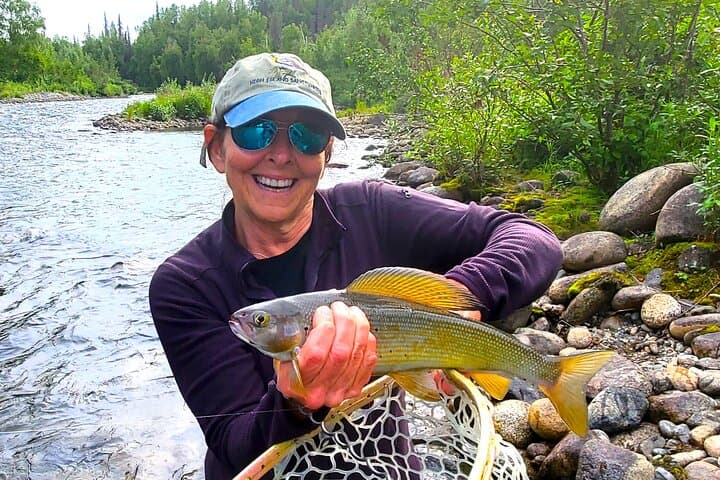
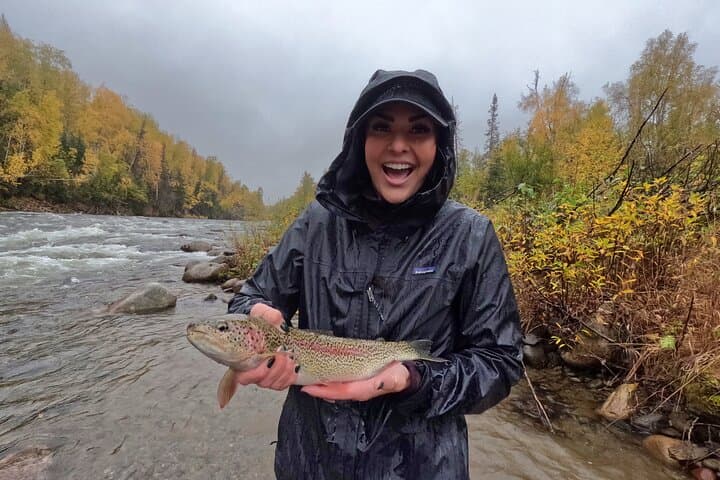
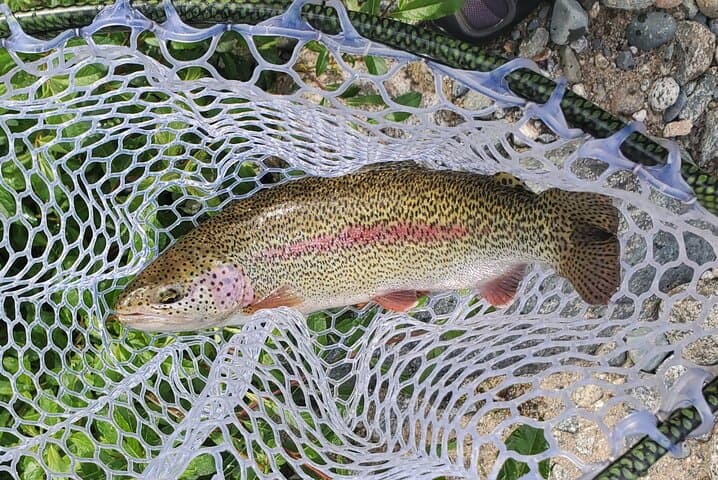
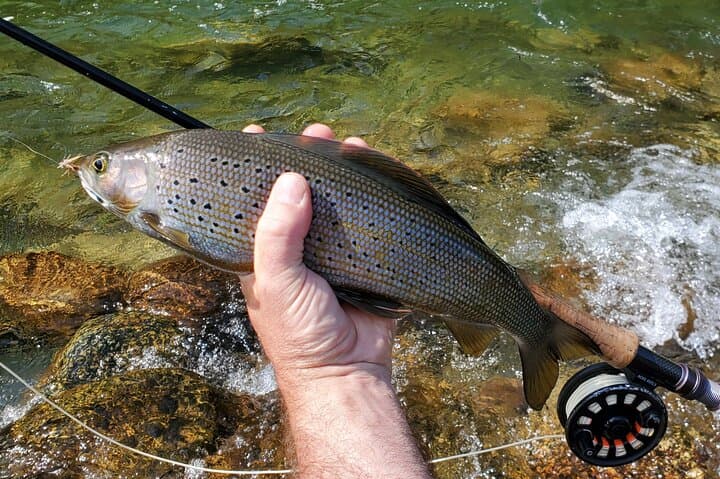
The morning arrives cold and precise — a thin ribbon of mist lifts from the stream and the mountains around Anchorage cut clean into the blue. By the time your guide unloads the rods, you can see as many as four ranges on a clear day: jagged ridgelines that square off the horizon and remind you how recent this country’s glaciers are. The river moves with a personality of its own, pushing and pulling you toward seams where trout and arctic grayling hold; the current dares you to read it right.
The morning arrives cold and precise — a thin ribbon of mist lifts from the stream and the mountains around Anchorage cut clean into the blue. By the time your guide unloads the rods, you can see as many as four ranges on a clear day: jagged ridgelines that square off the horizon and remind you how recent this country’s glaciers are. The river moves with a personality of its own, pushing and pulling you toward seams where trout and arctic grayling hold; the current dares you to read it right.
This is a fly-fishing day within an hour of downtown Anchorage, an easy escape from the city’s coffee shops into a landscape shaped by ice and fire. Streams here run in valleys scoured by Pleistocene glaciers; riffles tumble over cobbles smoothed by millennia of meltwater. For millennia Alaska Native peoples fished these waters, and today sport anglers share that line — quietly competitive, always respectful. The guides you’ll meet blend local knowledge with practical school-of-fish instincts: where the dolly varden stack, when grayling rise, which dry fly imitates a drab mayfly hatch.
Expect between four and six hours of on-river time inside a full-day outing that includes pickup and return to Anchorage. You’ll cover roughly a mile of walking total, often on uneven, wet river rock and short trails to access classic runs. Rods are high-quality Orvis fly gear (regular spinning tackle is also available), and the operator provides hip waders so the only thing wet should be the fish. Species to watch for: rainbow trout, arctic grayling, and dolly varden — fish commonly 12"–24", with the occasional lunker near 28".
Practical edge: layer fast and keep footwear grippy. Alaska weather changes faster than a cast — sun can appear midday and a wind-driven squall can roll in by afternoon. Guides will teach casting basics, knot work and how to read a seam; first-timers routinely land fish on their first outing. This is a catch-and-release trip, which keeps populations healthy and ensures those long, lean trout will test another angler.
Logistics are straightforward: hotel pickup in downtown and midtown Anchorage is usually included, or meet at a central Midtown point. Bring a valid Alaska fishing license unless your operator confirms it’s covered — check before you go. Pack sunscreen, polarized sunglasses for spotting fish, a warm midlayer, and a waterproof shell. Snacks and hydration are essential; you’re outdoors all day.
By late afternoon, with wet hands and a slim film of river smell on your jacket, you’ll appreciate why anglers keep coming back — because the water changes every hour, and because for a few concentrated miles the river rewards patience with strikes and bright, tumbling silver.