THE ADVENTURE COLLECTIVE® · Independent discovery and booking for outdoor travel

Travel from Agadir into the sculpted granite of the Anti-Atlas on a two-day trip that combines Ait Mansour’s palm groves with the cliffside granaries of Amtoudi. Expect hands-on cultural moments, dramatic geology, and practical, low‑technical hiking.
Travel from Agadir into the sculpted granite of the Anti-Atlas on a two-day trip that combines Ait Mansour’s palm groves with the cliffside granaries of Amtoudi. Expect hands-on cultural moments, dramatic geology, and practical, low‑technical hiking.
A narrow road peels away from Agadir and the asphalt yields to red dust; by late afternoon the palm shade of Ait Mansour marks the first pause. The oasis breathes cool air into a landscape of pink granite outcrops, and water threads through the palm trunks as if the valley itself insists on keeping life. Overnight here feels like stepping into a lived-in map: stone houses, irrigation channels, and the low murmur of conversation.
Verified experiences and guided adventures in the surrounding area.
Operated by Sahara Enjoy · Amtoudi, Souss-Massa
A narrow road peels away from Agadir and the asphalt yields to red dust; by late afternoon the palm shade of Ait Mansour marks the first pause. The oasis breathes cool air into a landscape of pink granite outcrops, and water threads through the palm trunks as if the valley itself insists on keeping life. Overnight here feels like stepping into a lived-in map: stone houses, irrigation channels, and the low murmur of conversation.
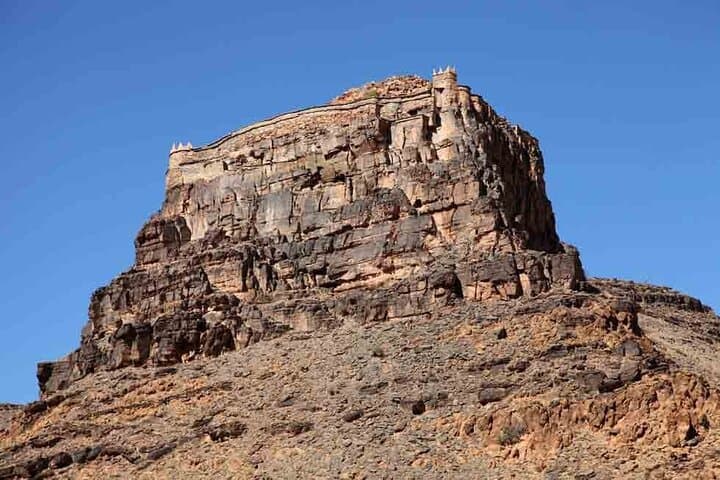
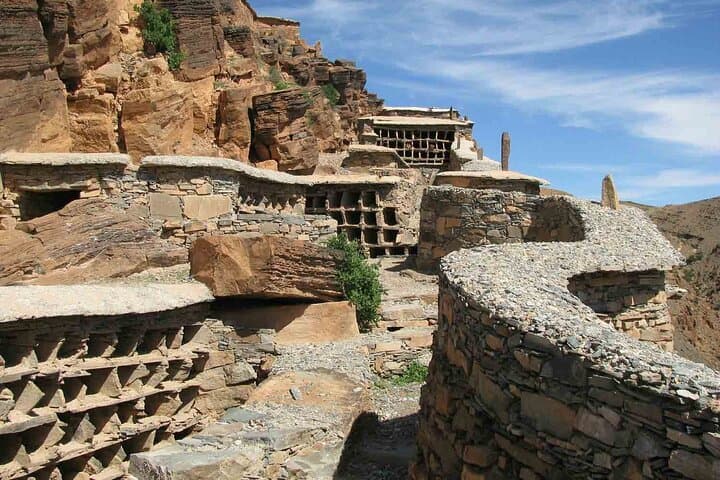
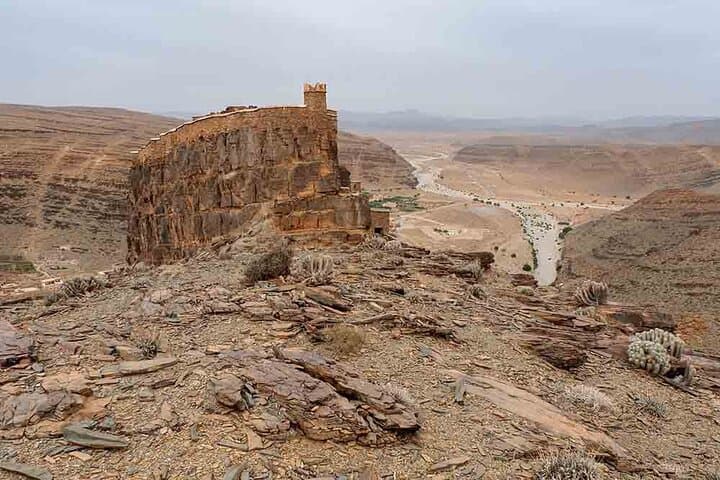
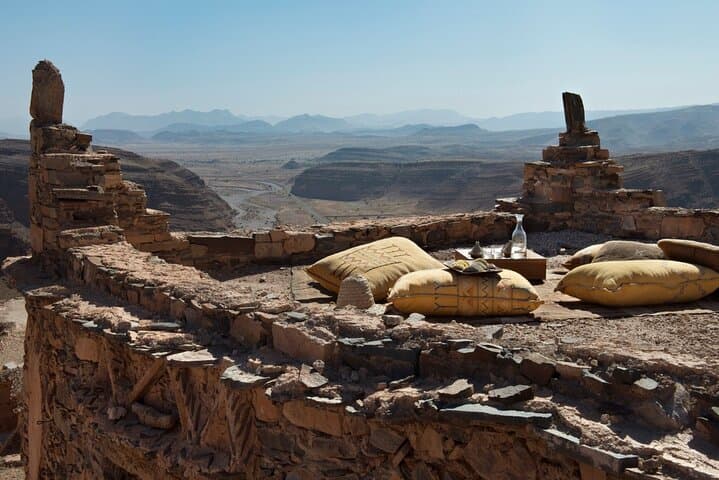
This route follows centuries-old routes of the Anti-Atlas. Amtoudi’s agadir—stone granaries stacked against the cliff—are engineered to protect grain and valuables and reflect Berber communal life. The region’s geology is dominated by rounded, weathered granite tors that were sculpted by wind and frost over millions of years, creating dramatic shapes that make Tafraoute and the surrounding passes a photographer’s dream.
Culturally, expect warm hospitality: shared meals in family homes, mint tea poured with practiced economy, and markets where local silverwork and argan products appear. Stops include the hilltop Kasbah of Tizourgane, the Idikle pass overlooking the Ameln valley, and a stroll through Tiznit’s fortified medina on the return.
Practically, this is a low-technical, two-day circuit best taken with an experienced local operator in an air-conditioned vehicle. Pack layered clothing for cool desert nights, sturdy shoes for uneven rock and oasis paths, and a daypack with water and sun protection. Group size minimums apply; accessibility varies by site—ask your operator about vehicle and path access. Timing your visit outside peak summer heat makes the landscape easier to move through and the light kinder for photography.
easy.
2 days (1 night).
Suitable for travelers in average physical condition; involves short walks on uneven ground and minimal climbing
Amtoudi is remote—expect a multi-hour drive from Agadir with photo stops; the itinerary typically includes a night in Ait Mansour or Tafraoute en route.
Overnight is usually in a local guesthouse or small hotel in the oasis area with shared facilities and meals with hosts.
Yes, many granaries can be viewed up close; access varies by site—some require short, steep approaches and walking over rocky terrain.
The tour lists wheelchair-accessible transport for some parts, but cliffside granaries and narrow village paths may be challenging—check with the operator beforehand.
The agadir system is a communal storage tradition used for centuries across the Anti-Atlas, reflecting cooperative Berber social structures and local defense strategies.
Water is scarce—respect local irrigation channels and avoid wasting water; support local economies by buying artisanal goods and following leave-no-trace practices.
Sahara Enjoy operates guided outdoor trips and adventures with an emphasis on safety, stewardship, and memorable experiences.
A narrow road peels away from Agadir and the asphalt yields to red dust; by late afternoon the palm shade of Ait Mansour marks the first pause. The oasis breathes cool air into a landscape of pink granite outcrops, and water threads through the palm trunks as if the valley itself insists on keeping life. Overnight here feels like stepping into a lived-in map: stone houses, irrigation channels, and the low murmur of conversation.
A narrow road peels away from Agadir and the asphalt yields to red dust; by late afternoon the palm shade of Ait Mansour marks the first pause. The oasis breathes cool air into a landscape of pink granite outcrops, and water threads through the palm trunks as if the valley itself insists on keeping life. Overnight here feels like stepping into a lived-in map: stone houses, irrigation channels, and the low murmur of conversation.
This route follows centuries-old routes of the Anti-Atlas. Amtoudi’s agadir—stone granaries stacked against the cliff—are engineered to protect grain and valuables and reflect Berber communal life. The region’s geology is dominated by rounded, weathered granite tors that were sculpted by wind and frost over millions of years, creating dramatic shapes that make Tafraoute and the surrounding passes a photographer’s dream.
Culturally, expect warm hospitality: shared meals in family homes, mint tea poured with practiced economy, and markets where local silverwork and argan products appear. Stops include the hilltop Kasbah of Tizourgane, the Idikle pass overlooking the Ameln valley, and a stroll through Tiznit’s fortified medina on the return.
Practically, this is a low-technical, two-day circuit best taken with an experienced local operator in an air-conditioned vehicle. Pack layered clothing for cool desert nights, sturdy shoes for uneven rock and oasis paths, and a daypack with water and sun protection. Group size minimums apply; accessibility varies by site—ask your operator about vehicle and path access. Timing your visit outside peak summer heat makes the landscape easier to move through and the light kinder for photography.