THE ADVENTURE COLLECTIVE® · Independent discovery and booking for outdoor travel

Walk the Red Light District with a local and learn the pragmatic history behind Amsterdam’s most talked‑about neighborhood. This two‑hour tour mixes medieval ruins, canalfront stories, and clear rules about safety and respect.
Walk the Red Light District with a local and learn the pragmatic history behind Amsterdam’s most talked‑about neighborhood. This two‑hour tour mixes medieval ruins, canalfront stories, and clear rules about safety and respect.
You step off a tram onto Zeedijk and the city rearranges itself: canals hum, bicycles weave like shoals, and the narrow streets press close with history.
Verified experiences and guided adventures in the surrounding area.
Operated by Europe prime tours · Amsterdam, North Holland
You step off a tram onto Zeedijk and the city rearranges itself: canals hum, bicycles weave like shoals, and the narrow streets press close with history.
This two‑hour walking tour threads through the Red Light District’s oldest lanes, beginning where sailors and merchants once traded news and rum. At Nieuwmarkt the remaining fragments of Amsterdam’s medieval wall and gate mark a city that grew fast on trade and tolerance; the square’s stones have seen political drama, public punishment, and scientific debate. The Condomerie appears as a modern, cheeky punctuation—proof of the Dutch approach to public health and pragmatic social policy. The journey ends at the Oude Kerk, an austere 13th‑century church that holds art, memorials, and the quiet contradictions of a neighborhood that mixes devotion and nightlife.
Geology here is modest—reclaimed peat and man‑made quays—but the canals themselves shape the city, pushing commerce and culture along their banks. Local guides emphasize stories: the merchants who bankrolled the Golden Age, the regulations that created Amsterdam’s liberal reputation, and the ongoing negotiation between residents and visitors.
Practical notes: tours run about two hours, usually in English, with groups capped near 15. Streets are cobbled and can be slick—wear shoes with good grip. Respect privacy: photography of window workers is prohibited and illegal in practice; follow your guide’s instructions. Public transport is excellent, and most visitors stay in central Amsterdam. Morning or early evening tours offer different moods—daylight for history, dusk for atmosphere—but both require situational awareness for crowds and pickpockets.
This walk balances history, urban character, and clear guidance: arrive curious, dress for wet cobbles, and be prepared to listen as the canals and alleys tell their plain, surprising stories.
easy.
2 hours.
Suitable for most fitness levels; requires standing and walking on uneven cobbles for up to two hours.
Yes for general streets and architecture, but photographing sex workers or their windows is not allowed—obey your guide and local rules.
The route uses cobbled streets and some narrow sidewalks; it’s not ideal for wheelchairs or strollers without advance arrangements—check with the operator if you need accessibility support.
Most public tours run in English; private tours or special dates may offer other languages—confirm at booking.
Generally safe in terms of violent crime, but nighttime brings crowds, nightlife, and pickpockets—stay aware and travel in groups or with a guide.
The district grew alongside Amsterdam’s Golden Age trade; regulated vice and pragmatic lawmaking helped shape the city’s tolerant reputation since the 17th century.
High visitor numbers stress narrow residential streets and historic structures—respect signage, avoid littering, and support local businesses to keep the neighborhood sustainable.
Europe prime tours operates guided outdoor trips and adventures with an emphasis on safety, stewardship, and memorable experiences.
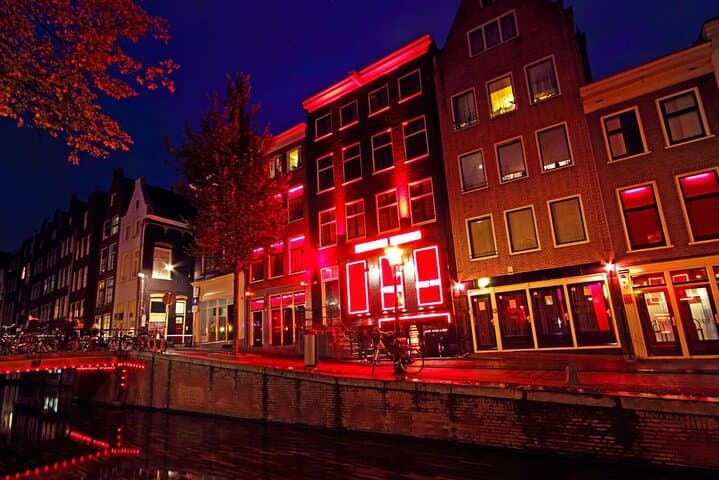
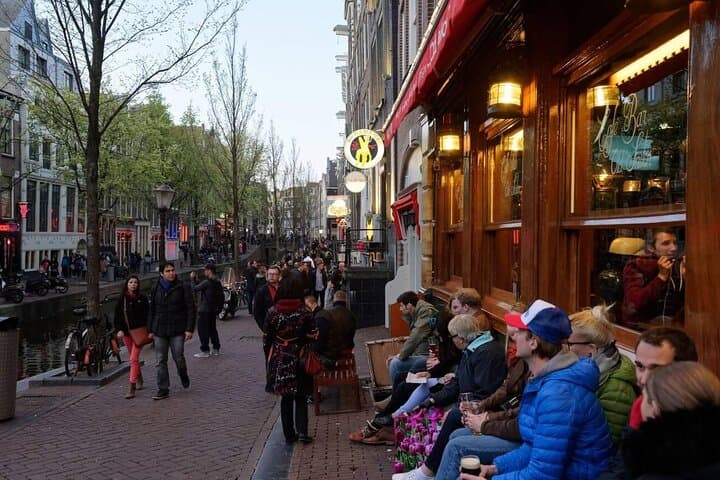
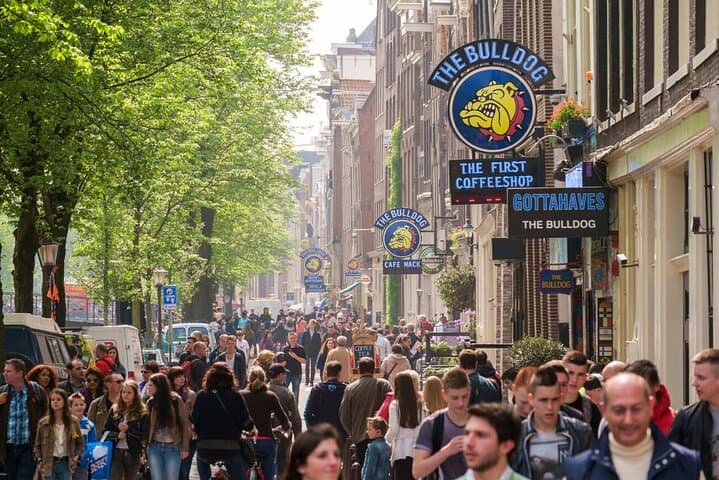
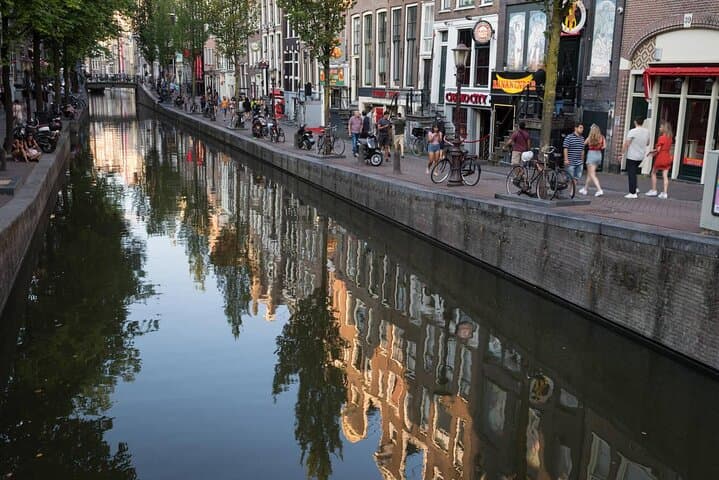
You step off a tram onto Zeedijk and the city rearranges itself: canals hum, bicycles weave like shoals, and the narrow streets press close with history.
You step off a tram onto Zeedijk and the city rearranges itself: canals hum, bicycles weave like shoals, and the narrow streets press close with history.
This two‑hour walking tour threads through the Red Light District’s oldest lanes, beginning where sailors and merchants once traded news and rum. At Nieuwmarkt the remaining fragments of Amsterdam’s medieval wall and gate mark a city that grew fast on trade and tolerance; the square’s stones have seen political drama, public punishment, and scientific debate. The Condomerie appears as a modern, cheeky punctuation—proof of the Dutch approach to public health and pragmatic social policy. The journey ends at the Oude Kerk, an austere 13th‑century church that holds art, memorials, and the quiet contradictions of a neighborhood that mixes devotion and nightlife.
Geology here is modest—reclaimed peat and man‑made quays—but the canals themselves shape the city, pushing commerce and culture along their banks. Local guides emphasize stories: the merchants who bankrolled the Golden Age, the regulations that created Amsterdam’s liberal reputation, and the ongoing negotiation between residents and visitors.
Practical notes: tours run about two hours, usually in English, with groups capped near 15. Streets are cobbled and can be slick—wear shoes with good grip. Respect privacy: photography of window workers is prohibited and illegal in practice; follow your guide’s instructions. Public transport is excellent, and most visitors stay in central Amsterdam. Morning or early evening tours offer different moods—daylight for history, dusk for atmosphere—but both require situational awareness for crowds and pickpockets.
This walk balances history, urban character, and clear guidance: arrive curious, dress for wet cobbles, and be prepared to listen as the canals and alleys tell their plain, surprising stories.