THE ADVENTURE COLLECTIVE® · Independent discovery and booking for outdoor travel

From a train threading through a market to a temple gripped by banyan roots and a night boat lit by fireflies, this private shore excursion packs river life and local flavor into a single day. Read on for timing, what to bring, and tips to make the most of your visit.
From a train threading through a market to a temple gripped by banyan roots and a night boat lit by fireflies, this private shore excursion packs river life and local flavor into a single day. Read on for timing, what to bring, and tips to make the most of your visit.
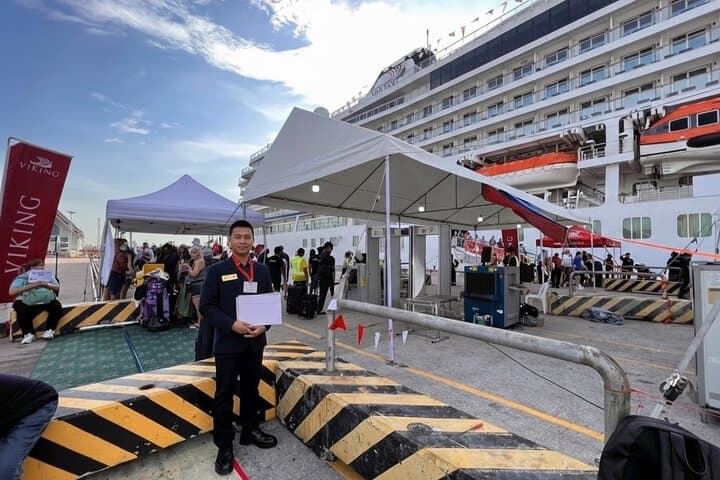
The day begins on the road out of the port, with broad rice paddies sliding past the windows and the air tasting of salt and fried street food. At Mae Klong Railway Market vendors fold umbrellas with machine-timed precision as a train threads through the stalls; the scene moves so quickly it feels choreographed. Later, a small temple appears wrapped by banyan roots at Wat Bang Kung, where stone and tree have grown into a single, patient structure.
Verified experiences and guided adventures in the surrounding area.
Operated by Thailand Insight Travel · Amphawa, Samut Songkhram Province
The day begins on the road out of the port, with broad rice paddies sliding past the windows and the air tasting of salt and fried street food. At Mae Klong Railway Market vendors fold umbrellas with machine-timed precision as a train threads through the stalls; the scene moves so quickly it feels choreographed. Later, a small temple appears wrapped by banyan roots at Wat Bang Kung, where stone and tree have grown into a single, patient structure.
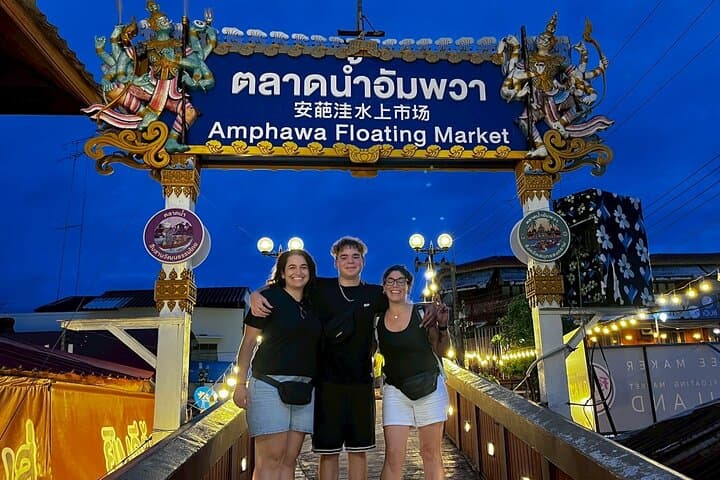
The region around Amphawa sits on the Mae Klong delta; low-lying alluvial plains have supported river-based trade for centuries and shaped a culture tied to canals and seafood. Amphawa Floating Market grew from that river economy — wooden houses on stilts, long-tail boats selling grilled prawns and dessert, and a rhythm set by tides more than clocks.
As dusk falls, the canals take on another character: the riverbanks seem to breathe, and thousands of fireflies cue a silent light show that draws small wooden boats into respectful lines. This is a short, sensory itinerary—market bustle, temple calm, and a nocturnal wildlife spectacle—packaged with port pickup and a private guide to keep timings tight for cruise schedules.
Practical guidance: go late afternoon to avoid midday heat, bring cash for small vendors, wear comfortable shoes for uneven market walkways, and carry a lightweight rain layer in monsoon months. If you plan the firefly ride, expect low light—avoid flash photography and keep noise to a minimum to protect the habitat.
easy.
10–13 hours.
Suitable for most fitness levels; involves short walks over uneven ground and a calm boat ride in the evening
The listed duration covers around 12–13 hours including port transfers; the tour is private and can be scheduled to return with enough time to reboard your cruise—confirm your ship’s required return time when booking.
Firefly sightings depend on season, weather, and river conditions; guides aim for prime times but sightings can't be absolutely guaranteed.
Yes—infants must sit on an adult’s lap and the activity is generally suitable for families, but keep in mind low light and limited space on small boats during the firefly portion.
Most stall vendors are cash-only; larger shops may take cards but bring Thai baht for purchases, small snacks, and tips.
The Mae Klong delta has supported river commerce for centuries; the railway market grew organically where the line bisected traditional trading routes, and Wat Bang Kung dates back several hundred years, notable for being enveloped by banyan roots.
Firefly colonies are sensitive to light pollution, pesticides, and habitat loss; support local guides who follow low-impact boat routes and avoid flash photography to reduce disturbance.
Thailand Insight Travel operates guided outdoor trips and adventures with an emphasis on safety, stewardship, and memorable experiences.


The day begins on the road out of the port, with broad rice paddies sliding past the windows and the air tasting of salt and fried street food. At Mae Klong Railway Market vendors fold umbrellas with machine-timed precision as a train threads through the stalls; the scene moves so quickly it feels choreographed. Later, a small temple appears wrapped by banyan roots at Wat Bang Kung, where stone and tree have grown into a single, patient structure.
The day begins on the road out of the port, with broad rice paddies sliding past the windows and the air tasting of salt and fried street food. At Mae Klong Railway Market vendors fold umbrellas with machine-timed precision as a train threads through the stalls; the scene moves so quickly it feels choreographed. Later, a small temple appears wrapped by banyan roots at Wat Bang Kung, where stone and tree have grown into a single, patient structure.
The region around Amphawa sits on the Mae Klong delta; low-lying alluvial plains have supported river-based trade for centuries and shaped a culture tied to canals and seafood. Amphawa Floating Market grew from that river economy — wooden houses on stilts, long-tail boats selling grilled prawns and dessert, and a rhythm set by tides more than clocks.
As dusk falls, the canals take on another character: the riverbanks seem to breathe, and thousands of fireflies cue a silent light show that draws small wooden boats into respectful lines. This is a short, sensory itinerary—market bustle, temple calm, and a nocturnal wildlife spectacle—packaged with port pickup and a private guide to keep timings tight for cruise schedules.
Practical guidance: go late afternoon to avoid midday heat, bring cash for small vendors, wear comfortable shoes for uneven market walkways, and carry a lightweight rain layer in monsoon months. If you plan the firefly ride, expect low light—avoid flash photography and keep noise to a minimum to protect the habitat.