THE ADVENTURE COLLECTIVE® · Independent discovery and booking for outdoor travel

Five days of classic Kenyan safari: Amboseli’s Kilimanjaro views, a boat ride and walk at Lake Naivasha, and the wildlife-rich plains of the Maasai Mara. Expect long drives, early game drives, rustic tented camps and high rates of wildlife encounters.
Five days of classic Kenyan safari: Amboseli’s Kilimanjaro views, a boat ride and walk at Lake Naivasha, and the wildlife-rich plains of the Maasai Mara. Expect long drives, early game drives, rustic tented camps and high rates of wildlife encounters.
Dawn arrives on a cracked red track as a 4x4 rumbles toward open plains; Mt. Kilimanjaro keeps its silent watch to the south while elephants cross the low scrub as if on a deliberate timetable. Over the next five days the road moves between volcanic shoulders and freshwater wetlands — Amboseli’s broad salt flats and the shallow expanse of Lake Naivasha give way to the grassy sea of the Maasai Mara.
Verified experiences and guided adventures in the surrounding area.
Dawn arrives on a cracked red track as a 4x4 rumbles toward open plains; Mt. Kilimanjaro keeps its silent watch to the south while elephants cross the low scrub as if on a deliberate timetable. Over the next five days the road moves between volcanic shoulders and freshwater wetlands — Amboseli’s broad salt flats and the shallow expanse of Lake Naivasha give way to the grassy sea of the Maasai Mara.
Geology and human history meet here: the Great Rift Valley carved the basins you cross, and Kilimanjaro’s volcanic massif forms the horizon in Amboseli. Lake Naivasha is a freshwater lake fed by springs and Rift hydrology; Crescent Island is an uplifted islet where walking safaris take place. The Mara is classic East African savanna, shaped by seasonal rains and the rhythms of the Great Migration. Maasai communities remain culturally present, offering insight into pastoral life alongside conservation efforts.
Practically, expect early game drives, dirt tracks that slow progress, and nights in tented camps with basic facilities. Wildlife viewing is the trip’s core — elephants and Kilimanjaro views in Amboseli, hippos and waterbirds at Naivasha, and big cat encounters in the Mara. Best travel windows are the dry months when animals concentrate around water.
Bring layered clothing for cool mornings, binoculars, and waterproof protection for road dust or rain. Carry malaria precautions, refillable water, and a camera with a telephoto lens. Drivers handle logistics and navigation; campers should be ready for rustic nights under an immense African sky.
moderate.
5 days.
Moderate fitness: you’ll sit for long drives and do short walks; be able to step in/out of a vehicle and walk short uneven trails.
Routine vaccines are recommended; malaria prophylaxis is advised for many travelers and yellow fever proof may be required depending on your origin—check with a travel clinic.
A professional driver-guide is included who handles navigation, game spotting and logistics.
The migration peaks vary yearly; typically July–October sees large herds in the Mara, but resident predators and high wildlife density can be seen year-round.
The parks sit along the Great Rift Valley, a geological rift that shaped East Africa’s basins; Maasai pastoralists have maintained cultural ties and grazing practices in the region for generations.
Community conservancies and national park protections drive anti-poaching efforts, but water use at Lake Naivasha and human-wildlife conflict remain active conservation challenges.
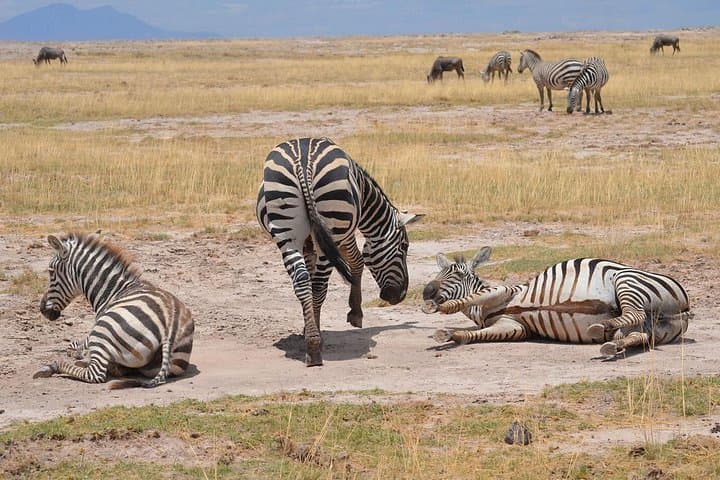
Dawn arrives on a cracked red track as a 4x4 rumbles toward open plains; Mt. Kilimanjaro keeps its silent watch to the south while elephants cross the low scrub as if on a deliberate timetable. Over the next five days the road moves between volcanic shoulders and freshwater wetlands — Amboseli’s broad salt flats and the shallow expanse of Lake Naivasha give way to the grassy sea of the Maasai Mara.
Dawn arrives on a cracked red track as a 4x4 rumbles toward open plains; Mt. Kilimanjaro keeps its silent watch to the south while elephants cross the low scrub as if on a deliberate timetable. Over the next five days the road moves between volcanic shoulders and freshwater wetlands — Amboseli’s broad salt flats and the shallow expanse of Lake Naivasha give way to the grassy sea of the Maasai Mara.
Geology and human history meet here: the Great Rift Valley carved the basins you cross, and Kilimanjaro’s volcanic massif forms the horizon in Amboseli. Lake Naivasha is a freshwater lake fed by springs and Rift hydrology; Crescent Island is an uplifted islet where walking safaris take place. The Mara is classic East African savanna, shaped by seasonal rains and the rhythms of the Great Migration. Maasai communities remain culturally present, offering insight into pastoral life alongside conservation efforts.
Practically, expect early game drives, dirt tracks that slow progress, and nights in tented camps with basic facilities. Wildlife viewing is the trip’s core — elephants and Kilimanjaro views in Amboseli, hippos and waterbirds at Naivasha, and big cat encounters in the Mara. Best travel windows are the dry months when animals concentrate around water.
Bring layered clothing for cool mornings, binoculars, and waterproof protection for road dust or rain. Carry malaria precautions, refillable water, and a camera with a telephoto lens. Drivers handle logistics and navigation; campers should be ready for rustic nights under an immense African sky.