THE ADVENTURE COLLECTIVE® · Independent discovery and booking for outdoor travel

Travel from Osaka to three of Kyoto Prefecture’s most atmospheric sites: the pine-lined sandbar of Amanohashidate, the water-front funaya of Ine, and Miyama’s thatched-roof village. This full-day tour mixes coastal geology, living fishing traditions, and preserved rural architecture with walkable exploration and local seafood.
Travel from Osaka to three of Kyoto Prefecture’s most atmospheric sites: the pine-lined sandbar of Amanohashidate, the water-front funaya of Ine, and Miyama’s thatched-roof village. This full-day tour mixes coastal geology, living fishing traditions, and preserved rural architecture with walkable exploration and local seafood.
You arrive on a highway that eases away from Osaka’s city roar and the coastline unfurls like a slow breath—salted wind pulling needles from pine on a long, low sandbar.
Verified experiences and guided adventures in the surrounding area.
Operated by TrevoTour Travels · Miyazu, Kyoto Prefecture
You arrive on a highway that eases away from Osaka’s city roar and the coastline unfurls like a slow breath—salted wind pulling needles from pine on a long, low sandbar.
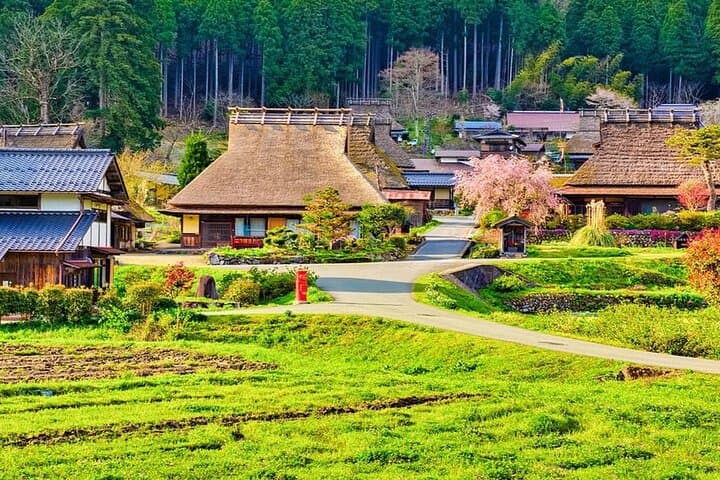
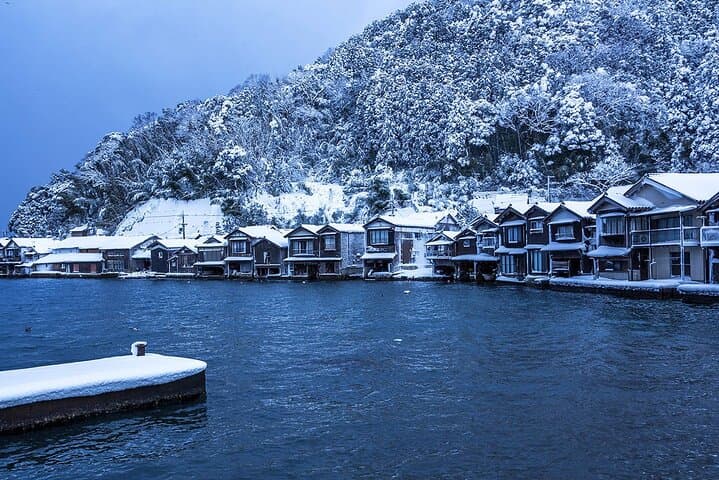
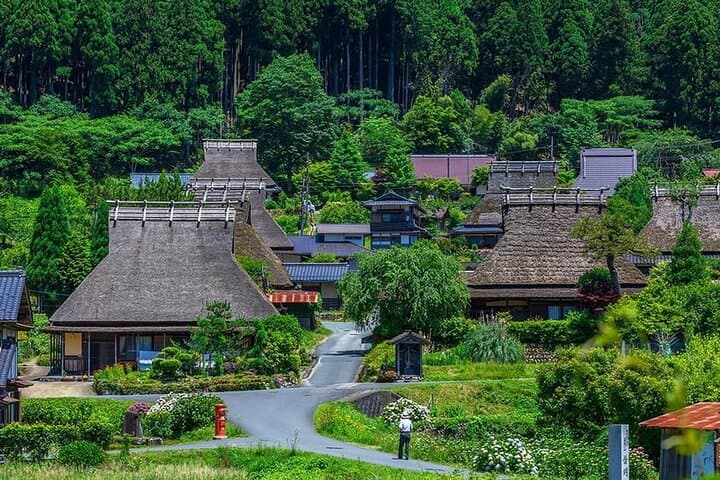
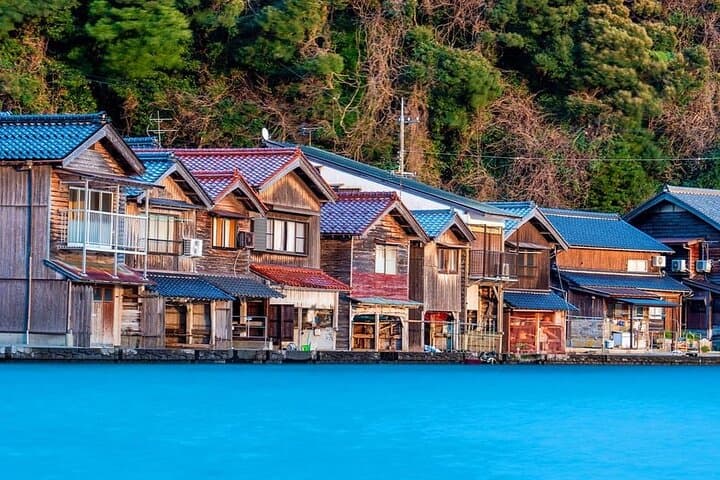
Amanohashidate’s 3.6‑kilometre sandbar stretches across Miyazu Bay, its 8,000 pines leaning into the sea as if to watch the tide. Nearby, Ine’s funaya—wooden boat-houses with garages at the waterline—stand with their feet in the surf, practical architectures shaped by centuries of fishing life. In the hills behind the sandbar, Chionji Temple keeps a quieter rhythm; students still hang ema for exams beneath weathered beams. Miyama’s thatched roofs preserve a rural building craft that dates to the Edo period, showing how local communities lived with heavy snow and steep winters.
Geologically the sandbar is a product of longshore drift and bay currents that pile sediment into a low spit; culturally it has been admired since Heian-era travelogues. Expect a mix of paved promenades, compact sand paths, and narrow village lanes—walkable but requiring steady footing and respect for private homes.
Practical guidance: this is a long day (about 9–10 hours) with several short stops—wear supportive walking shoes, carry a lightweight rain layer, and bring cash for small restaurants and bike rentals. Hydrate before and during the sandbar walk; the “matanozoki” upside-down view is best mid-morning or late afternoon to avoid crowds. Be ready for variable weather and brief changes to the schedule due to traffic or local conditions—the guide can reorder stops but aims to keep all visits intact.
easy.
9–10 hours.
Suitable for most people who can walk several kilometres across flat and gently rolling terrain; minimal climbing required.
No, lunch is at Amanohashidate on your own; fresh seafood and local snacks are popular and many small restaurants take cash.
Yes—bike rentals are available locally but the cost is not included in the tour price; bring suitable clothing for cycling.
Transportation and some areas are accessible, but historic sites, narrow lanes, and boat-houses may have steps or uneven ground—check specific needs with the operator beforehand.
Yes—this is a full-day shared tour that departs from Osaka; bookings secure your seat and the itinerary can be adjusted for traffic but not for late arrivals.
Amanohashidate has been celebrated as a sacred landscape since the Heian period, while Miyama’s thatched houses preserve Edo-period rural construction techniques; Ine’s funaya reflect a fishing culture adapted to living on the water.
Local groups maintain thatched-roof repair programs and funaya preservation; visitors are asked to stick to paths, avoid disturbing private property, and minimize single-use plastic when sampling local food.
TrevoTour Travels operates guided outdoor trips and adventures with an emphasis on safety, stewardship, and memorable experiences.
You arrive on a highway that eases away from Osaka’s city roar and the coastline unfurls like a slow breath—salted wind pulling needles from pine on a long, low sandbar.
You arrive on a highway that eases away from Osaka’s city roar and the coastline unfurls like a slow breath—salted wind pulling needles from pine on a long, low sandbar.
Amanohashidate’s 3.6‑kilometre sandbar stretches across Miyazu Bay, its 8,000 pines leaning into the sea as if to watch the tide. Nearby, Ine’s funaya—wooden boat-houses with garages at the waterline—stand with their feet in the surf, practical architectures shaped by centuries of fishing life. In the hills behind the sandbar, Chionji Temple keeps a quieter rhythm; students still hang ema for exams beneath weathered beams. Miyama’s thatched roofs preserve a rural building craft that dates to the Edo period, showing how local communities lived with heavy snow and steep winters.
Geologically the sandbar is a product of longshore drift and bay currents that pile sediment into a low spit; culturally it has been admired since Heian-era travelogues. Expect a mix of paved promenades, compact sand paths, and narrow village lanes—walkable but requiring steady footing and respect for private homes.
Practical guidance: this is a long day (about 9–10 hours) with several short stops—wear supportive walking shoes, carry a lightweight rain layer, and bring cash for small restaurants and bike rentals. Hydrate before and during the sandbar walk; the “matanozoki” upside-down view is best mid-morning or late afternoon to avoid crowds. Be ready for variable weather and brief changes to the schedule due to traffic or local conditions—the guide can reorder stops but aims to keep all visits intact.