THE ADVENTURE COLLECTIVE® · Independent discovery and booking for outdoor travel

Scale wind-sculpted sandstone above Nabatean tombs on a guided rock-climbing session in AlUla. Small groups, full instruction, and unforgettable views make this 2.5-hour climb a compact way to experience the region’s geology and history.
Scale wind-sculpted sandstone above Nabatean tombs on a guided rock-climbing session in AlUla. Small groups, full instruction, and unforgettable views make this 2.5-hour climb a compact way to experience the region’s geology and history.
The morning wind in AlUla smells of warm stone. Climbers gather at the Adventure Hub as the sun slides across ribbed sandstone faces, the rock cool to the touch but already radiating heat for the day. Ropes clack, harness buckles click, and a guide points to a narrow crack that will be a student’s first victory — fingers finding holds that the desert carved over millennia.
Verified experiences and guided adventures in the surrounding area.
Operated by Golden Destination · AlUla, Al Madinah Region
The morning wind in AlUla smells of warm stone. Climbers gather at the Adventure Hub as the sun slides across ribbed sandstone faces, the rock cool to the touch but already radiating heat for the day. Ropes clack, harness buckles click, and a guide points to a narrow crack that will be a student’s first victory — fingers finding holds that the desert carved over millennia.
This is not a standard crag. The cliffs around AlUla are the folded remains of an ancient seabed, their layers of sandstone carved by wind and flash floods into towers, alcoves and sharp arêtes. Nearby Hegra (Madâin Sâlih), Saudi Arabia’s first UNESCO World Heritage Site, is a short drive away; its Nabatean tombs and rock-cut facades give the landscape human history measured in centuries rather than hours. Climbing here feels like moving through a geological museum — each hold a page of time.
Local guides weave in cultural details between technical tips: the Nabateans who controlled trade routes, Bedouin stories tied to particular gullies, and how seasonal rains sculpt the stone. The rock itself has a personality — wind-smoothed faces that polish handholds, and soft pockets that bloom with tiny desert plants after rare rains.
Practicalities are straightforward. Sessions run about 2.5 hours and are suited to beginners through experienced climbers; groups are small (maximum five). Routes use fixed anchors and top-roping or short trad pitches depending on the line. There’s minimal elevation gain from the meeting point to the base, but expect scrambling over loose scree and short approaches across uneven desert footing.
Expect full safety briefings, English/Arabic instruction, and all necessary equipment. Weight and size limits apply (20–120 kg; minimum height 110 cm); age minimum is six. Plan to climb early morning or late afternoon to avoid the heat. Hydration, sun protection and steady shoes are non-negotiable.
Travelers should allow time to pair this climb with archaeological touring — a sunrise hike in the valley or a late-afternoon drive to Elephant Rock rounds out the day. Respect local customs: modest dress at the hub and quiet behavior near heritage sites. Finally, leave no trace: the fragile desert soils and archaeological context need minimal impact.
For anyone curious about climbing in an ancient landscape, AlUla delivers a compact, high-value session: technical enough to learn rope work, scenic enough to feel transported, and cultural enough to remind climbers they’re scaling a living landscape shaped by people and weather alike.
moderate.
2–3 hours.
Suitable for average fitness; you should be comfortable with short scrambles and sustained arm use for top-rope moves.
No — the experience caters to beginners through advanced climbers; guides provide instruction and safety briefings for novices.
Participants must be at least 6 years old, with weight between 20 kg and 120 kg and minimum height 110 cm.
The activity is about 2.5 hours with short approaches; expect moderate exertion with some upper-body moves on the rock.
Yes — harnesses, helmets, ropes, and anchors are supplied; bring your own shoes if you prefer personal climbing footwear.
Yes — Hegra and other archaeological sites are nearby and often visited on the same day; coordinate timing to avoid midday heat.
Sessions may proceed in mild conditions, but operators may cancel for safety in the event of heavy rain or dangerous winds—check cancellation policy for refunds.
AlUla sits along ancient trade routes; nearby Nabatean tombs at Hegra mark the region’s role in incense and caravan networks during the first millennium BCE.
Climbing routes avoid archaeological features and guides emphasize staying on durable rock and packing out waste to protect fragile desert soils.
Golden Destination operates guided outdoor trips and adventures with an emphasis on safety, stewardship, and memorable experiences.
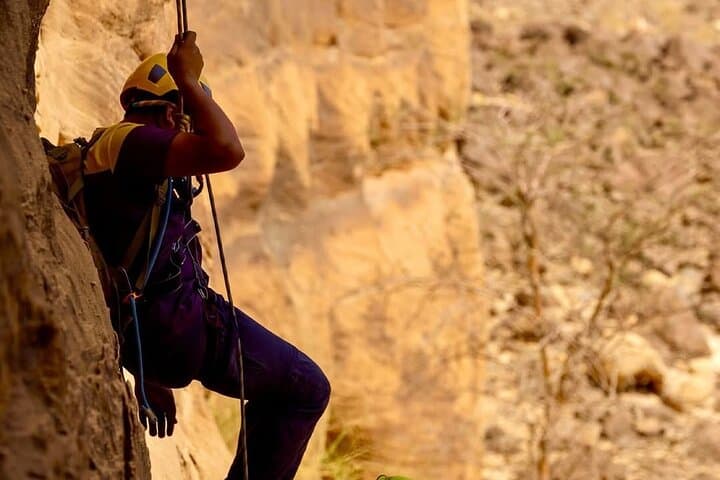
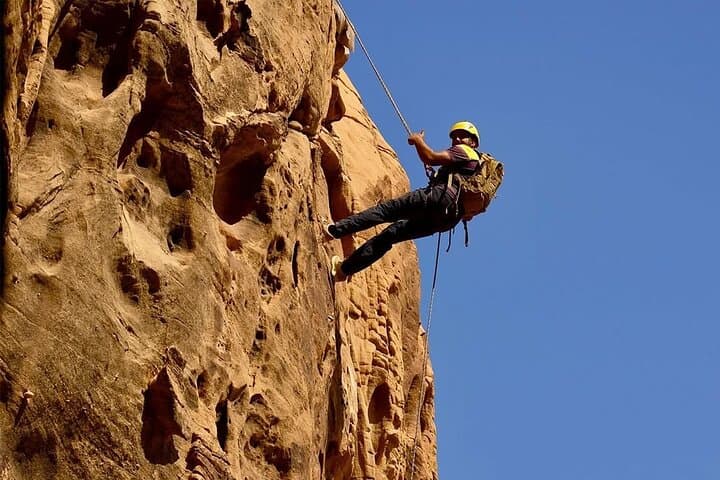
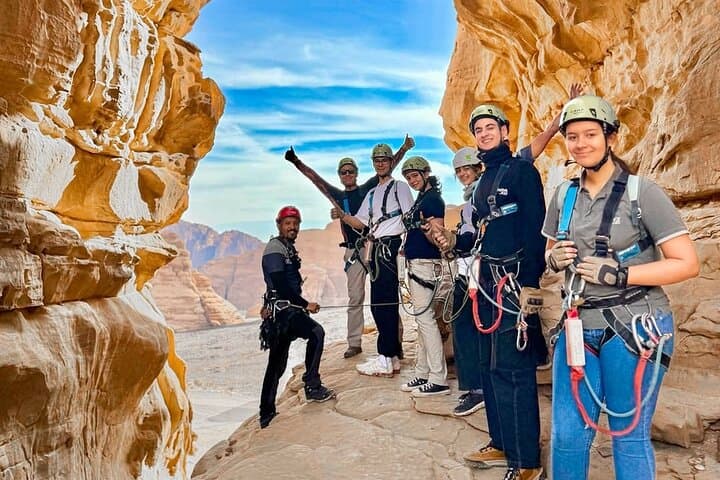
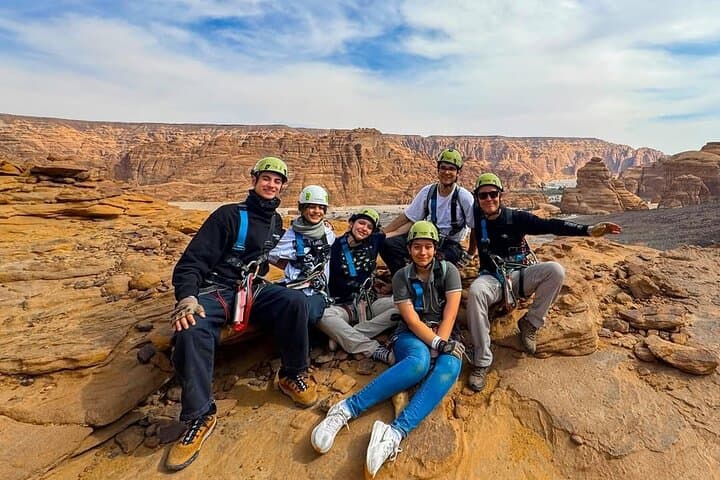
The morning wind in AlUla smells of warm stone. Climbers gather at the Adventure Hub as the sun slides across ribbed sandstone faces, the rock cool to the touch but already radiating heat for the day. Ropes clack, harness buckles click, and a guide points to a narrow crack that will be a student’s first victory — fingers finding holds that the desert carved over millennia.
The morning wind in AlUla smells of warm stone. Climbers gather at the Adventure Hub as the sun slides across ribbed sandstone faces, the rock cool to the touch but already radiating heat for the day. Ropes clack, harness buckles click, and a guide points to a narrow crack that will be a student’s first victory — fingers finding holds that the desert carved over millennia.
This is not a standard crag. The cliffs around AlUla are the folded remains of an ancient seabed, their layers of sandstone carved by wind and flash floods into towers, alcoves and sharp arêtes. Nearby Hegra (Madâin Sâlih), Saudi Arabia’s first UNESCO World Heritage Site, is a short drive away; its Nabatean tombs and rock-cut facades give the landscape human history measured in centuries rather than hours. Climbing here feels like moving through a geological museum — each hold a page of time.
Local guides weave in cultural details between technical tips: the Nabateans who controlled trade routes, Bedouin stories tied to particular gullies, and how seasonal rains sculpt the stone. The rock itself has a personality — wind-smoothed faces that polish handholds, and soft pockets that bloom with tiny desert plants after rare rains.
Practicalities are straightforward. Sessions run about 2.5 hours and are suited to beginners through experienced climbers; groups are small (maximum five). Routes use fixed anchors and top-roping or short trad pitches depending on the line. There’s minimal elevation gain from the meeting point to the base, but expect scrambling over loose scree and short approaches across uneven desert footing.
Expect full safety briefings, English/Arabic instruction, and all necessary equipment. Weight and size limits apply (20–120 kg; minimum height 110 cm); age minimum is six. Plan to climb early morning or late afternoon to avoid the heat. Hydration, sun protection and steady shoes are non-negotiable.
Travelers should allow time to pair this climb with archaeological touring — a sunrise hike in the valley or a late-afternoon drive to Elephant Rock rounds out the day. Respect local customs: modest dress at the hub and quiet behavior near heritage sites. Finally, leave no trace: the fragile desert soils and archaeological context need minimal impact.
For anyone curious about climbing in an ancient landscape, AlUla delivers a compact, high-value session: technical enough to learn rope work, scenic enough to feel transported, and cultural enough to remind climbers they’re scaling a living landscape shaped by people and weather alike.