THE ADVENTURE COLLECTIVE® · Independent discovery and booking for outdoor travel

Wander a 3km guided trail through AlUla’s verdant Oasis, shaded by date palms and threaded with ancient irrigation channels. This easy heritage walk pairs local stories and farm-to-table culture with quiet desert geology.
Wander a 3km guided trail through AlUla’s verdant Oasis, shaded by date palms and threaded with ancient irrigation channels. This easy heritage walk pairs local stories and farm-to-table culture with quiet desert geology.
You step under a rank of towering date palms and the heat changes—shade gathers like a roof and the air smells of citrus and earth. The AlUla Oasis Heritage Trail is a short, deliberate walk where springs carve green into desert rock and a local guide sets the pace, pausing to point out mudbrick ruins and irrigated plots that still feed nearby kitchens.
Verified experiences and guided adventures in the surrounding area.
Operated by Golden Destination · AlUla, Al Madinah
You step under a rank of towering date palms and the heat changes—shade gathers like a roof and the air smells of citrus and earth. The AlUla Oasis Heritage Trail is a short, deliberate walk where springs carve green into desert rock and a local guide sets the pace, pausing to point out mudbrick ruins and irrigated plots that still feed nearby kitchens.
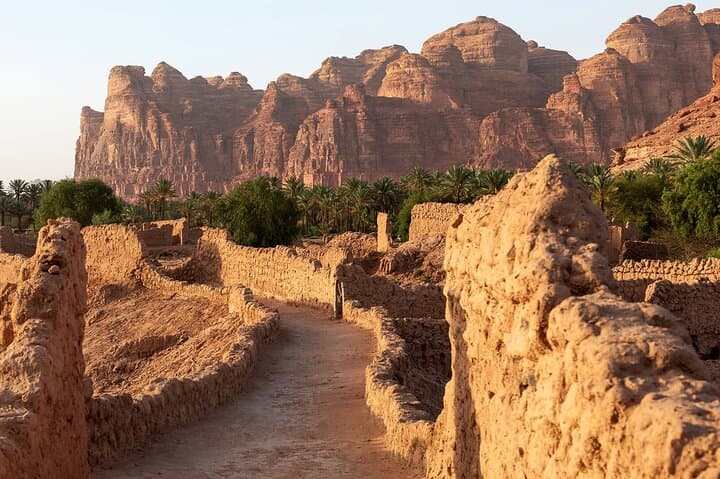
This landscape has been shaped by human hands for millennia: ancient qanat-style channels and terraced farms are layered on geology of sandstone and volcanic escarpments. The Old Town’s mudbrick houses and the Wadi Al Qura basin tell a pragmatic history of trade, agriculture and survival in a dry climate.
Culture here is tactile—dates offered at the start, coffee poured, and stories about farming practices passed between guide and visitor. The palms lean toward water and seem to dare you to notice the springs; rock faces hold fossilized ripples and wind-sculpted hollows that mark deep time.
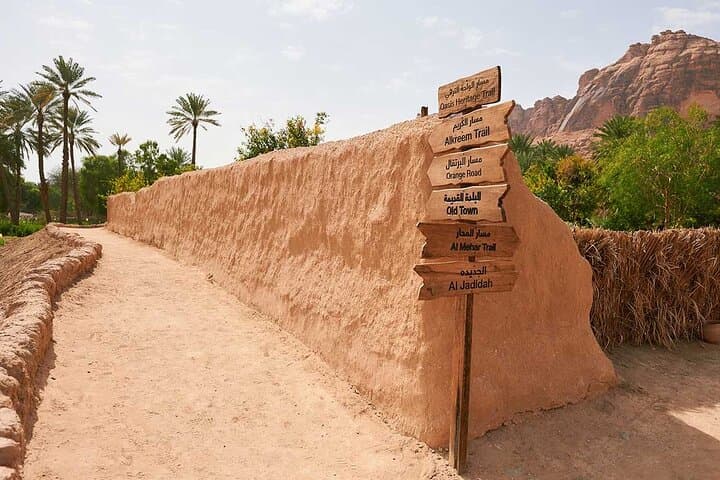
Practical guidance: the route is roughly 3 km on mostly flat, compacted paths with some loose sand and brief paved sections. Expect low elevation change, clear signage near the town, and a calm, interpretive pace suited to families and older walkers. Hydrate before you go, wear closed-toe walking shoes for sandy stretches, and bring sun protection—shade is frequent but not continuous.
Timing: early morning or late afternoon gives cooler temperatures and better light for photos. Respect private farmlands, follow your guide’s directions, and leave no trace—this oasis depends on careful stewardship.
easy.
1.5 hours.
Suitable for most fitness levels; minimal elevation gain and a steady, relaxed pace.
The guided tour runs about 90 minutes and covers roughly 3 km on mostly flat terrain.
Yes—this is an easy, family-friendly walk with frequent shade and minimal elevation gain.
Hosts typically offer dates, dried fruit and Arabic coffee at the start; bring additional water for the walk.
No special permit is required beyond your booking; dress modestly and wear sun protection appropriate for Saudi Arabia.
AlUla’s oasis supported settlements and trade routes for millennia; nearby archaeological sites include Nabatean and pre-Nabatean ruins that reflect continuous occupation.
The oasis relies on groundwater and restored traditional irrigation; visitors are encouraged to minimize water use and avoid disturbing cultivated plots.
Golden Destination operates guided outdoor trips and adventures with an emphasis on safety, stewardship, and memorable experiences.
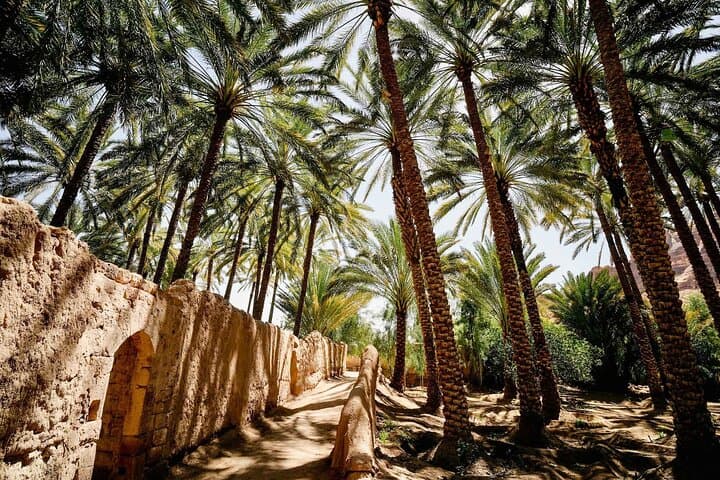
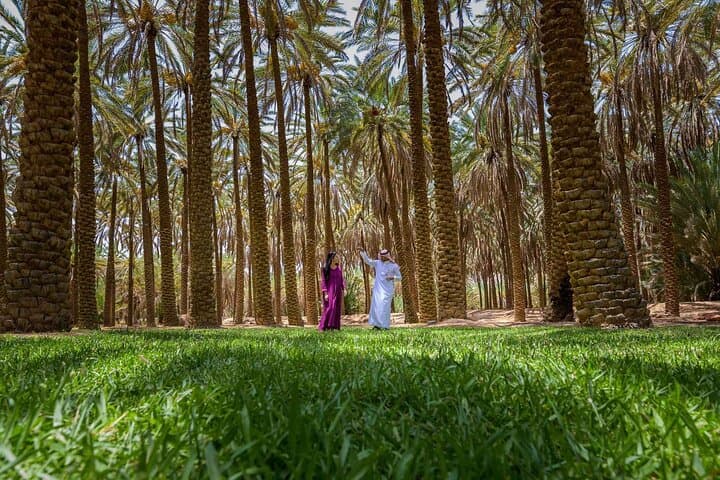
You step under a rank of towering date palms and the heat changes—shade gathers like a roof and the air smells of citrus and earth. The AlUla Oasis Heritage Trail is a short, deliberate walk where springs carve green into desert rock and a local guide sets the pace, pausing to point out mudbrick ruins and irrigated plots that still feed nearby kitchens.
You step under a rank of towering date palms and the heat changes—shade gathers like a roof and the air smells of citrus and earth. The AlUla Oasis Heritage Trail is a short, deliberate walk where springs carve green into desert rock and a local guide sets the pace, pausing to point out mudbrick ruins and irrigated plots that still feed nearby kitchens.
This landscape has been shaped by human hands for millennia: ancient qanat-style channels and terraced farms are layered on geology of sandstone and volcanic escarpments. The Old Town’s mudbrick houses and the Wadi Al Qura basin tell a pragmatic history of trade, agriculture and survival in a dry climate.
Culture here is tactile—dates offered at the start, coffee poured, and stories about farming practices passed between guide and visitor. The palms lean toward water and seem to dare you to notice the springs; rock faces hold fossilized ripples and wind-sculpted hollows that mark deep time.
Practical guidance: the route is roughly 3 km on mostly flat, compacted paths with some loose sand and brief paved sections. Expect low elevation change, clear signage near the town, and a calm, interpretive pace suited to families and older walkers. Hydrate before you go, wear closed-toe walking shoes for sandy stretches, and bring sun protection—shade is frequent but not continuous.
Timing: early morning or late afternoon gives cooler temperatures and better light for photos. Respect private farmlands, follow your guide’s directions, and leave no trace—this oasis depends on careful stewardship.