THE ADVENTURE COLLECTIVE® · Independent discovery and booking for outdoor travel

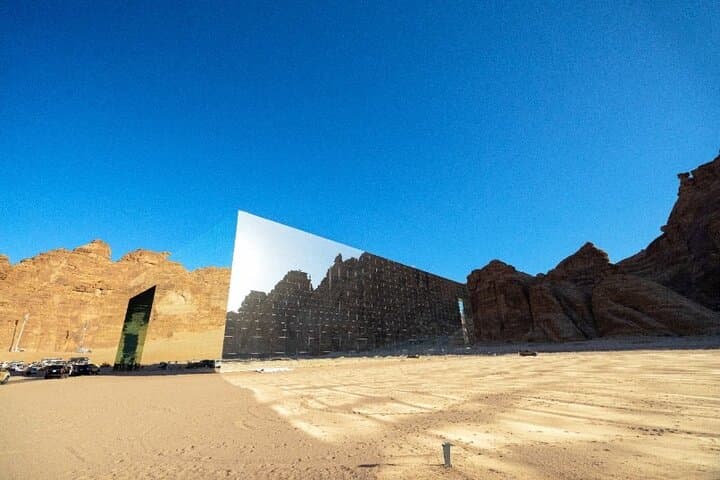
This three-day tour threads AlUla’s mirrored modern architecture, Nabataean tombs at Hegra, dramatic rock formations like Elephant Rock, and the historic Khaybar oasis into a single route. Expect guided walks, short hikes on uneven desert terrain, and immersive cultural stops.
This three-day tour threads AlUla’s mirrored modern architecture, Nabataean tombs at Hegra, dramatic rock formations like Elephant Rock, and the historic Khaybar oasis into a single route. Expect guided walks, short hikes on uneven desert terrain, and immersive cultural stops.
You arrive at dawn and the sandstone wakes beneath the light—mirrored panels of Maraya reflecting a desert that feels older than time, date palms edging small irrigated farms, and a road that leads toward rock-cut tombs carved by the Nabataeans. Over three days the landscape moves from cultivated oases to raw volcanic fields and monumental stone carvings, each stop layered with human story and geology.
Verified experiences and guided adventures in the surrounding area.
Operated by Desert Paths · AlUla, Al Madinah Region
You arrive at dawn and the sandstone wakes beneath the light—mirrored panels of Maraya reflecting a desert that feels older than time, date palms edging small irrigated farms, and a road that leads toward rock-cut tombs carved by the Nabataeans. Over three days the landscape moves from cultivated oases to raw volcanic fields and monumental stone carvings, each stop layered with human story and geology.
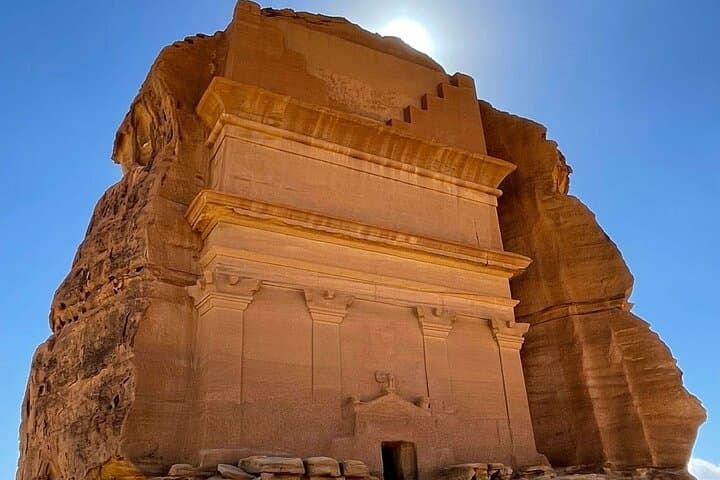
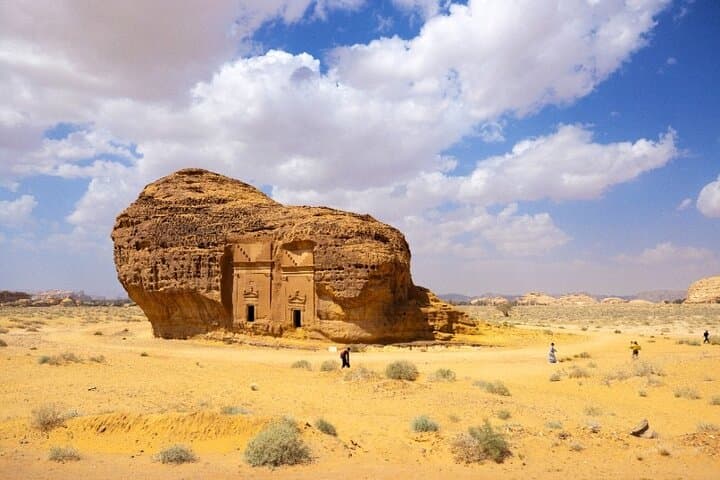
Hegra (Madâin Sâlih) is the region’s centerpiece: a UNESCO site where Nabataean tomb facades pierce sandstone cliffs and inscriptions mark ancient trade routes. Jabal Ikmah and Dadan present rock-carved alphabets—Aramaic, Thamudic and early Arabic—that trace the region’s linguistic evolution. Harrat’s lava flows and the arching forms of Ship Rock and Elephant Rock reveal the volcanic and erosional forces shaping this terrain.
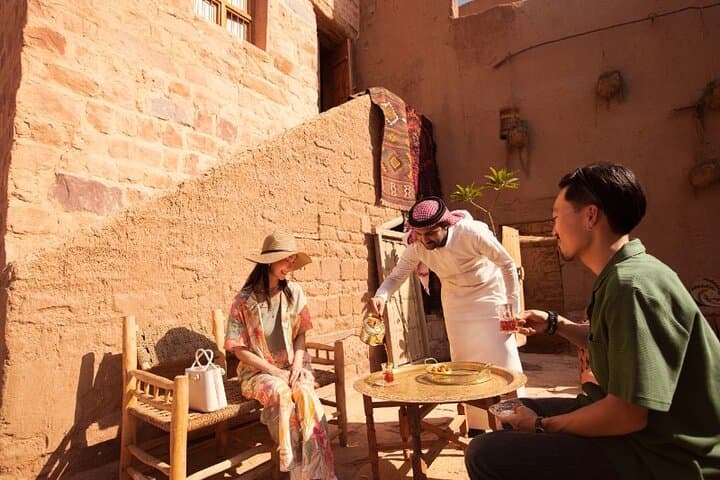
Culturally, the area is still lived-in: AlUla’s old town, palm groves and markets tie modern communities to centuries of oasis agriculture. The Royal Commission for AlUla has increased visitor access while protecting fragile sites—expect guided paths and regulated viewpoints.
Practical guidance: plan early starts to avoid midday heat, carry 2–3 liters of water, and use closed-toe shoes for rubble and short climbs. Respect restricted areas at Hegra and follow your guide for safe approaches to fragile formations. Nights can be cold—pack layers. With moderate fitness you can walk between viewpoints, while the full three-day itinerary requires comfortable mobility for uneven desert tracks and short stair climbs into tomb areas.
moderate.
3 days.
Moderate fitness; participants should be comfortable walking on uneven desert terrain for several hours across multiple days and climbing short stone steps.
Admission depends on the operator and site management; confirm at booking—some tours include site tickets while others require separate purchase at the ticket office administered by the local heritage authority.
The itinerary is moderate: expect multiple short walks (0.5–3 km) on uneven surfaces each day with occasional stone steps; no technical climbing required.
The advertised itinerary includes breakfasts, lunches and dinners across the three days and hotel apartment accommodation in AlUla; confirm dietary needs at booking.
Dress conservatively in public spaces, ask permission before photographing people, and follow guide instructions at heritage sites to protect sensitive areas.
AlUla was a crossroad of caravan routes; Hegra served as the Nabataean kingdom’s northern necropolis and preserves elaborately carved tomb facades dating to the 1st century BCE–1st century CE.
The Royal Commission for AlUla limits access to fragile sites, uses guided routes and visitor education to minimize impact—stay on marked paths and avoid touching rock art.
Desert Paths operates guided outdoor trips and adventures with an emphasis on safety, stewardship, and memorable experiences.
You arrive at dawn and the sandstone wakes beneath the light—mirrored panels of Maraya reflecting a desert that feels older than time, date palms edging small irrigated farms, and a road that leads toward rock-cut tombs carved by the Nabataeans. Over three days the landscape moves from cultivated oases to raw volcanic fields and monumental stone carvings, each stop layered with human story and geology.
You arrive at dawn and the sandstone wakes beneath the light—mirrored panels of Maraya reflecting a desert that feels older than time, date palms edging small irrigated farms, and a road that leads toward rock-cut tombs carved by the Nabataeans. Over three days the landscape moves from cultivated oases to raw volcanic fields and monumental stone carvings, each stop layered with human story and geology.
Hegra (Madâin Sâlih) is the region’s centerpiece: a UNESCO site where Nabataean tomb facades pierce sandstone cliffs and inscriptions mark ancient trade routes. Jabal Ikmah and Dadan present rock-carved alphabets—Aramaic, Thamudic and early Arabic—that trace the region’s linguistic evolution. Harrat’s lava flows and the arching forms of Ship Rock and Elephant Rock reveal the volcanic and erosional forces shaping this terrain.
Culturally, the area is still lived-in: AlUla’s old town, palm groves and markets tie modern communities to centuries of oasis agriculture. The Royal Commission for AlUla has increased visitor access while protecting fragile sites—expect guided paths and regulated viewpoints.
Practical guidance: plan early starts to avoid midday heat, carry 2–3 liters of water, and use closed-toe shoes for rubble and short climbs. Respect restricted areas at Hegra and follow your guide for safe approaches to fragile formations. Nights can be cold—pack layers. With moderate fitness you can walk between viewpoints, while the full three-day itinerary requires comfortable mobility for uneven desert tracks and short stair climbs into tomb areas.