THE ADVENTURE COLLECTIVE® · Independent discovery and booking for outdoor travel

Explore Hegra’s Nabataean tombs, wander AlUla Old Town’s mud‑brick alleys, and catch Elephant Rock at sunset on a six‑hour, guide‑led full‑day tour. Practical transport, short walks, and deep local stories make it ideal for culturally curious adventurers.
Explore Hegra’s Nabataean tombs, wander AlUla Old Town’s mud‑brick alleys, and catch Elephant Rock at sunset on a six‑hour, guide‑led full‑day tour. Practical transport, short walks, and deep local stories make it ideal for culturally curious adventurers.
You step out of the air-conditioned vehicle into a wide desert basin where sandstone ribs rise like folded pages. Wind-carved tomb facades at Hegra loom ahead, ochre walls catching the sun; the guide’s voice threads local stories into the silence as you walk between carved doorways and inscriptions.
Verified experiences and guided adventures in the surrounding area.
Operated by Madinah Tours · AlUla, Al Madinah Region
You step out of the air-conditioned vehicle into a wide desert basin where sandstone ribs rise like folded pages. Wind-carved tomb facades at Hegra loom ahead, ochre walls catching the sun; the guide’s voice threads local stories into the silence as you walk between carved doorways and inscriptions.
Hegra (Madain Salih) is the star attraction — a Nabataean city from the 1st century BCE whose monumental rock-cut tombs and preserved inscriptions explain a trading civilization that once linked Arabia to the Mediterranean. The Old Town offers a contrasting human scale: narrow mud-brick lanes, compact houses and centuries of daily life stacked into alleyways that still smell faintly of dates and brewed coffee. Geologically, AlUla’s landscape is sandstone and volcanic intrusions sculpted by wind and episodic water, which also fed the oases and ancient falaj irrigation systems that sustained settlements here.
Culturally, expect a blend of pre-Islamic Nabataean craft, later Islamic architecture, and modern conservation projects aiming to keep the area accessible without erasing local identity.
Practical guidance: the full-day shared tour runs about six hours with transportation and a guide included. Much of the visit involves short, easy walks on packed sand and stone; bring sun protection, at least 2 liters of water, and closed shoes for uneven surfaces. Timing matters — mornings or late afternoons deliver cooler temperatures and the best light for photography. Respect fenced ruins, follow your guide’s route, and leave no trace — fragile inscriptions and desert plants recover slowly from disturbance.
easy.
6 hours.
Suitable for most fitness levels; mostly seated transfer with short, easy walks on uneven desert and paved village lanes.
The shared full‑day tour is approximately six hours and includes air‑conditioned transport, an English-speaking guide, and admission to included sites like Hegra.
The itinerary is described as physically easy with short walks; transportation and many areas are wheelchair/stroller accessible, but some archaeological sites have uneven ground and limited ramps.
Yes — photography is allowed for personal use, but avoid flash on delicate inscriptions and follow signage that restricts access to certain tomb interiors.
Light, breathable clothing, closed-toe shoes, sun protection, and at least 2 liters of water are recommended; bring any necessary medications and respect conservative dress norms in public areas.
AlUla sits on ancient trade routes; Hegra was the Nabataean kingdom’s second city after Petra and later a crossroads under Roman influence.
Recent restoration projects balance tourism with heritage preservation; visitors should stick to paths and avoid touching rock art to limit erosion and damage.
Madinah Tours operates guided outdoor trips and adventures with an emphasis on safety, stewardship, and memorable experiences.
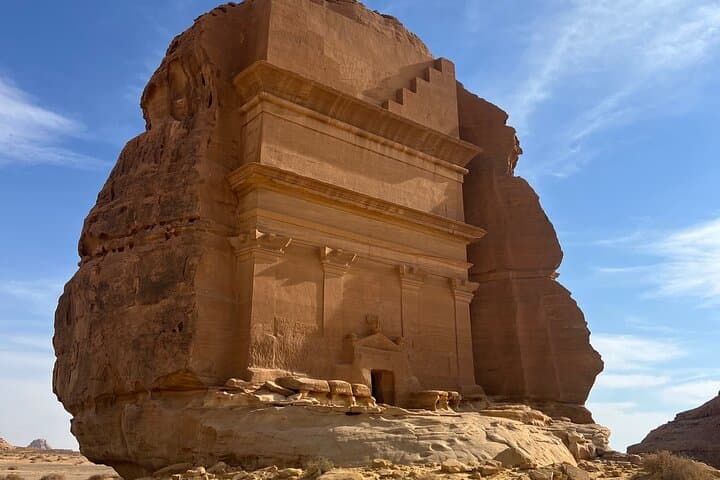
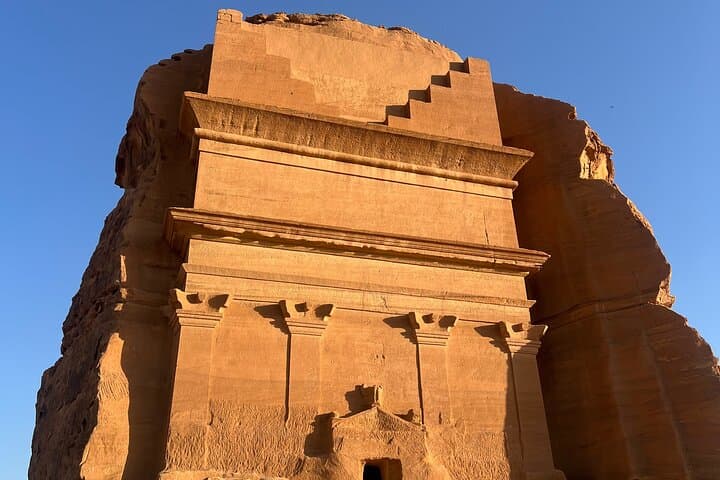
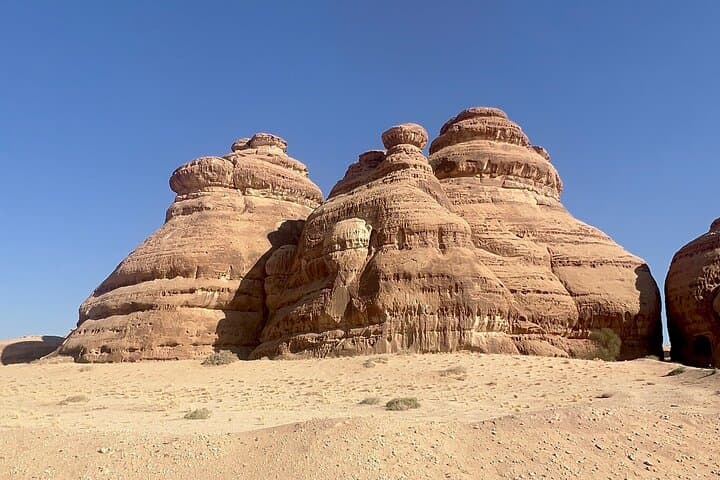
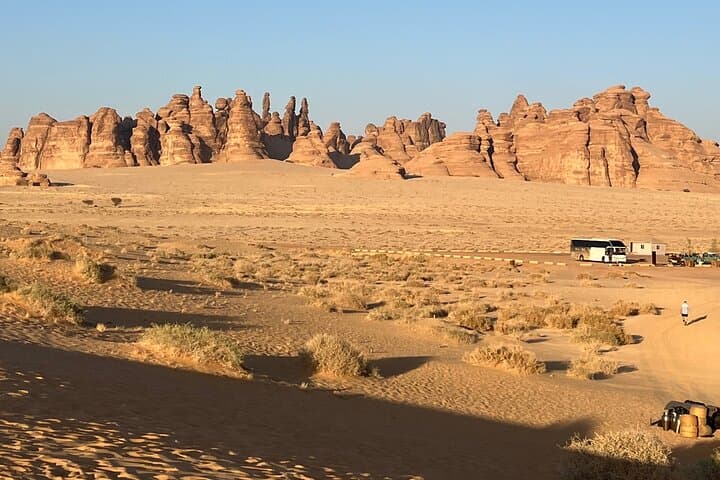
You step out of the air-conditioned vehicle into a wide desert basin where sandstone ribs rise like folded pages. Wind-carved tomb facades at Hegra loom ahead, ochre walls catching the sun; the guide’s voice threads local stories into the silence as you walk between carved doorways and inscriptions.
You step out of the air-conditioned vehicle into a wide desert basin where sandstone ribs rise like folded pages. Wind-carved tomb facades at Hegra loom ahead, ochre walls catching the sun; the guide’s voice threads local stories into the silence as you walk between carved doorways and inscriptions.
Hegra (Madain Salih) is the star attraction — a Nabataean city from the 1st century BCE whose monumental rock-cut tombs and preserved inscriptions explain a trading civilization that once linked Arabia to the Mediterranean. The Old Town offers a contrasting human scale: narrow mud-brick lanes, compact houses and centuries of daily life stacked into alleyways that still smell faintly of dates and brewed coffee. Geologically, AlUla’s landscape is sandstone and volcanic intrusions sculpted by wind and episodic water, which also fed the oases and ancient falaj irrigation systems that sustained settlements here.
Culturally, expect a blend of pre-Islamic Nabataean craft, later Islamic architecture, and modern conservation projects aiming to keep the area accessible without erasing local identity.
Practical guidance: the full-day shared tour runs about six hours with transportation and a guide included. Much of the visit involves short, easy walks on packed sand and stone; bring sun protection, at least 2 liters of water, and closed shoes for uneven surfaces. Timing matters — mornings or late afternoons deliver cooler temperatures and the best light for photography. Respect fenced ruins, follow your guide’s route, and leave no trace — fragile inscriptions and desert plants recover slowly from disturbance.