THE ADVENTURE COLLECTIVE® · Independent discovery and booking for outdoor travel

A rugged 7-day trek into Mongolia’s Altai Tavan Bogd combines off-road travel, a 16 km approach to a 3,000 m basecamp, and a 4,050 m climb of Malchin Peak. Expect glaciers, Kazakh culture, and high-mountain weather that requires planning.
A rugged 7-day trek into Mongolia’s Altai Tavan Bogd combines off-road travel, a 16 km approach to a 3,000 m basecamp, and a 4,050 m climb of Malchin Peak. Expect glaciers, Kazakh culture, and high-mountain weather that requires planning.
A cold wind slices across the Tsagaan Gol valley as your 4x4 threads a track toward basalt ridges and the high, white shoulders of Potanin Glacier. By late afternoon tents pepper a grassy plain at 3,000 m — camels have already dropped packs and a stove hisses while guides sort rope and maps. The air here feels thinner, purposeful; every step is earned.
Verified experiences and guided adventures in the surrounding area.
Operated by Grand Altai Travels · Ulgii, Bayan-Ölgii
A cold wind slices across the Tsagaan Gol valley as your 4x4 threads a track toward basalt ridges and the high, white shoulders of Potanin Glacier. By late afternoon tents pepper a grassy plain at 3,000 m — camels have already dropped packs and a stove hisses while guides sort rope and maps. The air here feels thinner, purposeful; every step is earned.
Altai Tavan Bogd sits at Mongolia’s western edge where five sacred peaks meet Russia and China. The range is geologically young, folded and faulted by plate collisions that lifted metamorphic rock and fed long valley glaciers such as Potanin Glacier, the country’s largest. Cultural life around Ulgii is predominantly Kazakh: eagle hunters, nomadic families and Tuva visitors carry traditions that predate national borders.
The itinerary is pragmatic: a short domestic flight to Ulgii, off-road crossings in Russian vans or Land Cruisers, a 16 km approach hike to basecamp, and a push to Malchin Peak (4,050 m) — a mostly rocky, category-3 alpine climb taking 6–7 hours roundtrip. Expect loose scree, short steep pitches and sudden weather swings.
Plan for altitude acclimatization, layered clothing and solid boots. Water sources exist but disinfect or carry filtration. Allow extra time for pack transfers by camels and for cultural stops with eagle hunters or nomad families. Permits are handled by the operator, but minimize impact: carry out trash, respect grazing areas and follow guide instructions on glacier approaches and steep rock sections.
challenging.
7 days.
Participants should have good aerobic fitness and experience with multi-day hikes and high-elevation trekking; be comfortable carrying a daypack on rocky terrain.
The tour operator includes special protected area permits as part of the trip; confirm details at booking and carry ID for border-area checkpoints.
Malchin is rated around category 3: it involves sustained uphill hiking, loose rock and short scrambling; no technical ice climbing is generally required but good footing and head for exposure are needed.
Mid-June through August offers the most stable access and mildest conditions; shoulder seasons can be quieter but bring colder nights and snow risk.
Some operators can arrange shorter cultural components around Ulgii and eagle-hunter visits, but the advertised trip includes significant hiking and should be booked by those prepared for multi-day trekking.
The Altai Tavan Bogd area is culturally important to regional Kazakh and Tuvan peoples; the park protects glacial landscapes and traditional grazing routes near international borders.
High-mountain meadows and glacial headwaters are fragile—minimize campfire impact, pack out waste, and avoid trampling grazing pastures used by nomads.
Grand Altai Travels operates guided outdoor trips and adventures with an emphasis on safety, stewardship, and memorable experiences.
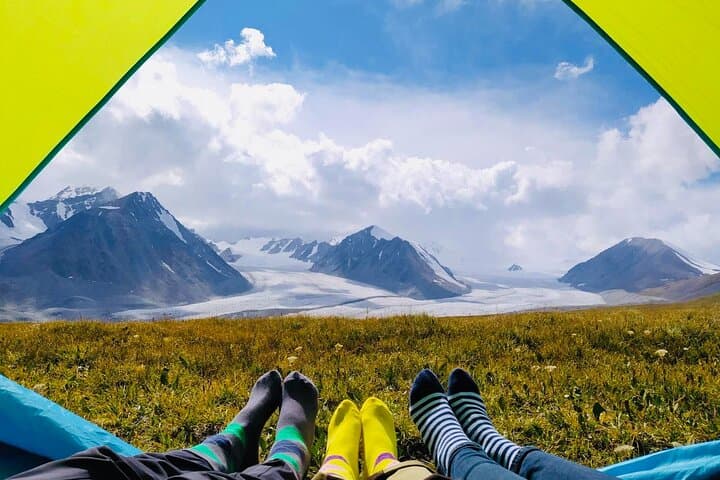
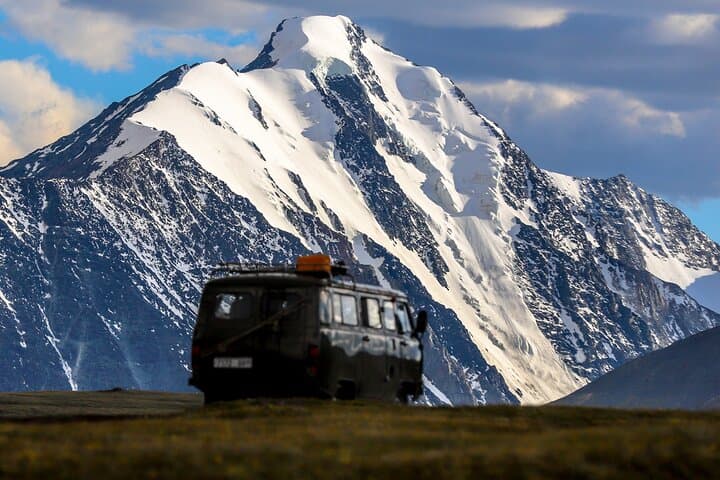
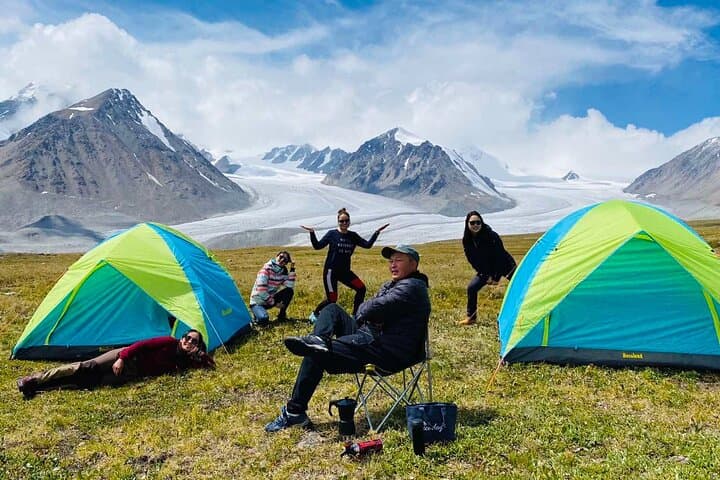
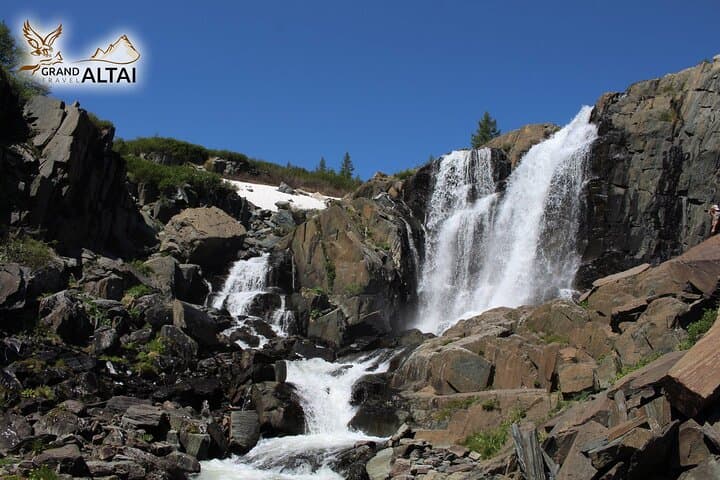
A cold wind slices across the Tsagaan Gol valley as your 4x4 threads a track toward basalt ridges and the high, white shoulders of Potanin Glacier. By late afternoon tents pepper a grassy plain at 3,000 m — camels have already dropped packs and a stove hisses while guides sort rope and maps. The air here feels thinner, purposeful; every step is earned.
A cold wind slices across the Tsagaan Gol valley as your 4x4 threads a track toward basalt ridges and the high, white shoulders of Potanin Glacier. By late afternoon tents pepper a grassy plain at 3,000 m — camels have already dropped packs and a stove hisses while guides sort rope and maps. The air here feels thinner, purposeful; every step is earned.
Altai Tavan Bogd sits at Mongolia’s western edge where five sacred peaks meet Russia and China. The range is geologically young, folded and faulted by plate collisions that lifted metamorphic rock and fed long valley glaciers such as Potanin Glacier, the country’s largest. Cultural life around Ulgii is predominantly Kazakh: eagle hunters, nomadic families and Tuva visitors carry traditions that predate national borders.
The itinerary is pragmatic: a short domestic flight to Ulgii, off-road crossings in Russian vans or Land Cruisers, a 16 km approach hike to basecamp, and a push to Malchin Peak (4,050 m) — a mostly rocky, category-3 alpine climb taking 6–7 hours roundtrip. Expect loose scree, short steep pitches and sudden weather swings.
Plan for altitude acclimatization, layered clothing and solid boots. Water sources exist but disinfect or carry filtration. Allow extra time for pack transfers by camels and for cultural stops with eagle hunters or nomad families. Permits are handled by the operator, but minimize impact: carry out trash, respect grazing areas and follow guide instructions on glacier approaches and steep rock sections.