THE ADVENTURE COLLECTIVE® · Independent discovery and booking for outdoor travel

Ride across the Mongolian Altai to Potanin Glacier, summit non-technical Malchin Peak, visit Kazakh eagle hunters, and camp beside Khoton and Khurgan lakes on this immersive 10-day expedition. Expect high-altitude riding, glacial scenery, and deep cultural exchange.
Ride across the Mongolian Altai to Potanin Glacier, summit non-technical Malchin Peak, visit Kazakh eagle hunters, and camp beside Khoton and Khurgan lakes on this immersive 10-day expedition. Expect high-altitude riding, glacial scenery, and deep cultural exchange.
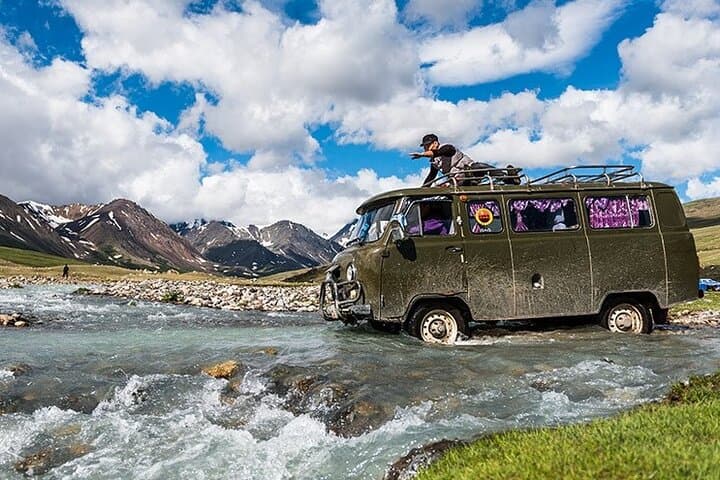
A cold wind pushes across the steppe and the jagged teeth of Altai Tavan Bogd rise into the sky like a worn fortress. Travelers arrive in Ölgii, trade city at the edge of the Mongolian Altai, then cross 180 km of river-cut plains and larch forests to stand beneath Potanin Glacier and the 4,050 m flank of Malchin Peak.
Verified experiences and guided adventures in the surrounding area.
Operated by Nomadic Hospitality Mongolia · Olgii, Bayan-Ölgii Province
A cold wind pushes across the steppe and the jagged teeth of Altai Tavan Bogd rise into the sky like a worn fortress. Travelers arrive in Ölgii, trade city at the edge of the Mongolian Altai, then cross 180 km of river-cut plains and larch forests to stand beneath Potanin Glacier and the 4,050 m flank of Malchin Peak.
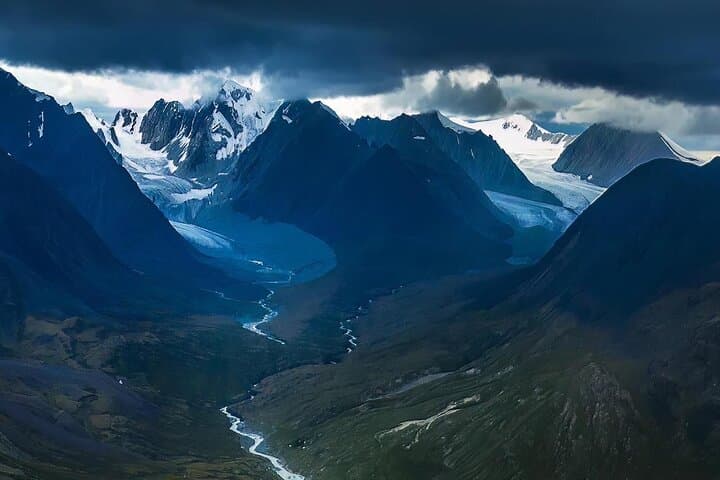
This is a route that reads like layered geology: Precambrian granites uplifted into glaciated cirques, long moraines that channel turquoise meltwater, and high alpine meadows where nomadic Kazakh families camp through the summer. The region is as much cultural as it is physical—Bayan-Ölgii is the global center of Kazakh eagle hunting, a living practice passed down through generations, and visitors often meet eagle hunters in Sagsai to see birds flown from horseback.
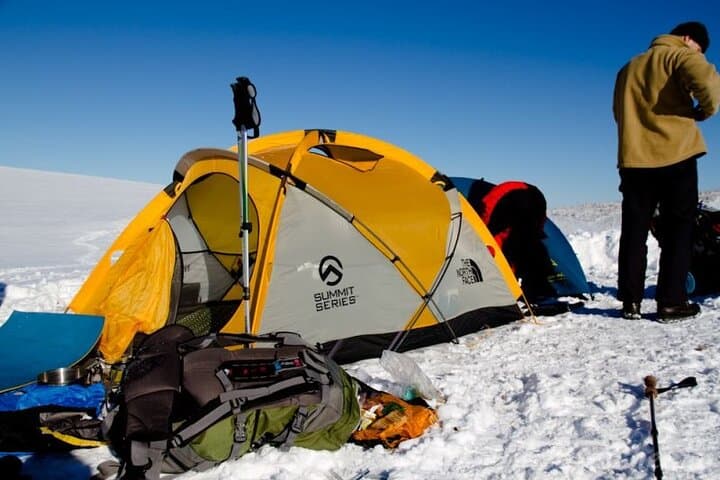
Expect multi-day riding across uneven trails, a non-technical ascent of Malchin with steep scree near the summit, and shoreline walks at Khoton and Khurgan lakes with good birding and fishing options. Camping is the norm—tents and yurts replace hotels—and camels carry baggage on the longer horse legs.
Practical edge: the best window is mid-June to early September when passes melt and lakes thaw; altitude and weather change quickly—plan for strong sun, sudden wind, and cold nights. Footwear should handle wet scree and ankle-twisting trails; bring layered insulation, waterproofs, high-SPF sun protection, and a reliable water-treatment method. Respect private family camps, ask before photographing, and leave no trace—this landscape is fragile and remote, and self-reliance pays here.
challenging.
10 days.
High—participants should be comfortable with long days of riding, multi-day hiking at altitude, and camping; prior backpacking or equestrian experience is strongly recommended.
Yes—comfortable, independent riding over varied terrain is expected; guides assist but you should control your mount for long stretches.
Mid-June through early September offers the most stable access to passes, melted trails, and warmer camp nights.
Malchin (≈4,050 m) is generally non-technical but includes steep scree and high-altitude exposure; proper boots and acclimatization are important.
The tour lists national park entrance fees included; confirm with the operator for any additional local fees or border-area regulations.
The Altai Tavan Bogd massif marks the meeting point of Mongolian highland cultures and has long been traversed by nomadic Kazakh herders; eagle hunting there is a centuries-old tradition still practiced today.
The area is remote but ecologically sensitive—stick to established campsites, pack out waste, and minimize disturbance to pastures and breeding bird areas.
Nomadic Hospitality Mongolia operates guided outdoor trips and adventures with an emphasis on safety, stewardship, and memorable experiences.
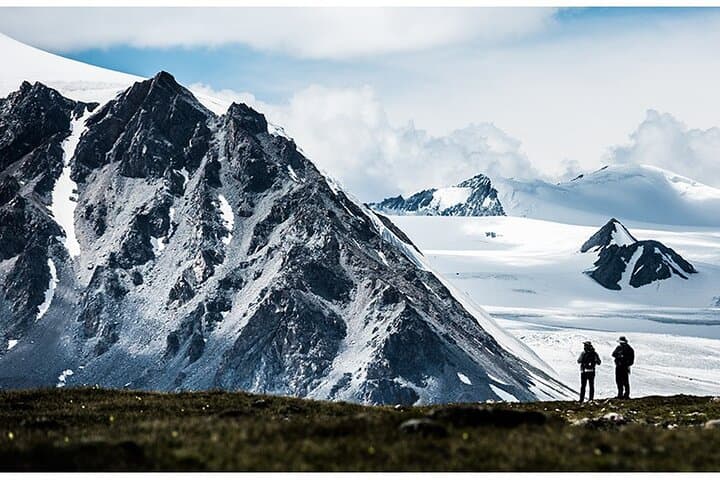
A cold wind pushes across the steppe and the jagged teeth of Altai Tavan Bogd rise into the sky like a worn fortress. Travelers arrive in Ölgii, trade city at the edge of the Mongolian Altai, then cross 180 km of river-cut plains and larch forests to stand beneath Potanin Glacier and the 4,050 m flank of Malchin Peak.
A cold wind pushes across the steppe and the jagged teeth of Altai Tavan Bogd rise into the sky like a worn fortress. Travelers arrive in Ölgii, trade city at the edge of the Mongolian Altai, then cross 180 km of river-cut plains and larch forests to stand beneath Potanin Glacier and the 4,050 m flank of Malchin Peak.
This is a route that reads like layered geology: Precambrian granites uplifted into glaciated cirques, long moraines that channel turquoise meltwater, and high alpine meadows where nomadic Kazakh families camp through the summer. The region is as much cultural as it is physical—Bayan-Ölgii is the global center of Kazakh eagle hunting, a living practice passed down through generations, and visitors often meet eagle hunters in Sagsai to see birds flown from horseback.
Expect multi-day riding across uneven trails, a non-technical ascent of Malchin with steep scree near the summit, and shoreline walks at Khoton and Khurgan lakes with good birding and fishing options. Camping is the norm—tents and yurts replace hotels—and camels carry baggage on the longer horse legs.
Practical edge: the best window is mid-June to early September when passes melt and lakes thaw; altitude and weather change quickly—plan for strong sun, sudden wind, and cold nights. Footwear should handle wet scree and ankle-twisting trails; bring layered insulation, waterproofs, high-SPF sun protection, and a reliable water-treatment method. Respect private family camps, ask before photographing, and leave no trace—this landscape is fragile and remote, and self-reliance pays here.