THE ADVENTURE COLLECTIVE® · Independent discovery and booking for outdoor travel

Escape Granada for a day and follow a mountain road into the Alpujarra’s white villages. This small-group tour blends dramatic Poqueira Gorge views with Moorish architecture, artisan shops and rural mountain air.
Escape Granada for a day and follow a mountain road into the Alpujarra’s white villages. This small-group tour blends dramatic Poqueira Gorge views with Moorish architecture, artisan shops and rural mountain air.
You step out of Granada’s morning bustle into a van that hums south toward the Sierra Nevada’s lower slopes, and the air changes—cooler, drier, threaded with rosemary and thyme. By mid-morning the road winds above a deep gorge; the Poqueira river dares you to move closer to the rim. Below, three white villages cling to terraces: Capileira, Bubión and Pampaneira. The group disperses along narrow lanes under slate roofs and covered tinaos as the guide points out Moorish-era stonework and traditional jarapa weaving shops.
Verified experiences and guided adventures in the surrounding area.
Operated by Discovering Spain · Granada, Andalusia
You step out of Granada’s morning bustle into a van that hums south toward the Sierra Nevada’s lower slopes, and the air changes—cooler, drier, threaded with rosemary and thyme. By mid-morning the road winds above a deep gorge; the Poqueira river dares you to move closer to the rim. Below, three white villages cling to terraces: Capileira, Bubión and Pampaneira. The group disperses along narrow lanes under slate roofs and covered tinaos as the guide points out Moorish-era stonework and traditional jarapa weaving shops.
Geology here is honest: schist and slate cut by glacial and fluvial action, producing steep gorges and broad high-altitude plains that feed down to the Mediterranean. Culturally, the Alpujarra preserves a layered history—Berber farming systems, Reconquista-era repopulation and modern artisan crafts that keep old techniques alive. Local springs such as Fuente Agria add an iron tang and a footnote to the landscape’s chemistry.
Practically, expect walking on uneven cobbles, short steep streets and panoramic pullouts. The small-group format grants access to narrow lanes and a tiny detour not available to larger coaches. Bring a packed lunch or plan to buy local goat cheese and tapas in Pampaneira; lunch is not included. Wear grippy shoes and layered clothing—the mountains can be cool even in summer, and mornings are the clearest time for views of Mulhacén. Photography windows are frequent: keep a lightweight jacket and water within reach. The trip is low-impact but leave no trace—support village shops and respect spring sources. This is a cultural daywalk: scenic, tactile, and richly human.
easy.
8 hours.
Suitable for travelers in normal good health who can walk short distances on uneven village streets and manage modest elevation changes.
The tour is approximately 8 hours; most itineraries depart Granada in the morning and return late afternoon—check your booking for exact times.
Yes—this small-group daytrip is rated easy, but participants should be able to walk short distances on uneven ground; infant seats are available in the vehicle.
No, lunch is not included. The itinerary provides free time in Pampaneira to buy food at local cafes or markets.
The small max‑8 van can reach narrow roads and a short detour (like Fuente Agria) that larger coaches cannot, but some viewpoints require brief walks from parking areas.
The Alpujarra’s settlements reflect centuries of Moorish agricultural engineering and post-Reconquista repopulation, visible in terraced fields and flat-slab roofs (terreaos).
The high-mountain environment is fragile—stick to paths, avoid disturbing springs and support local artisans to promote sustainable village economies.
Discovering Spain operates guided outdoor trips and adventures with an emphasis on safety, stewardship, and memorable experiences.
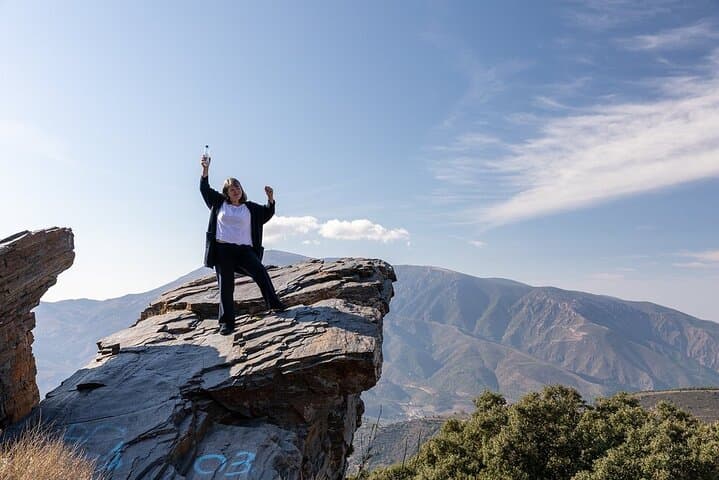
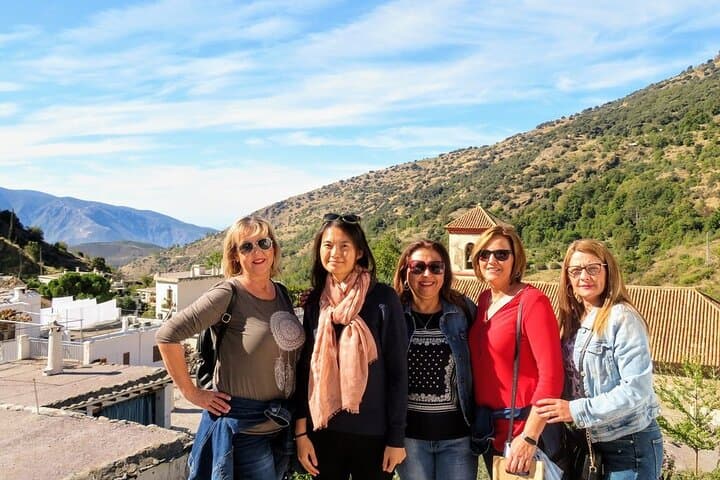
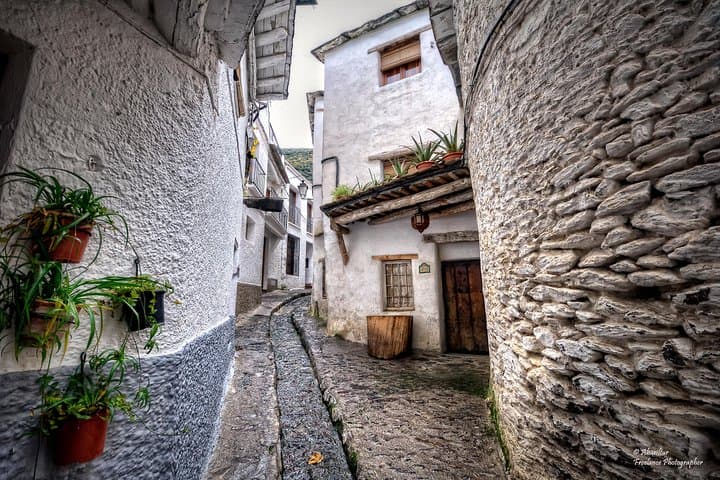
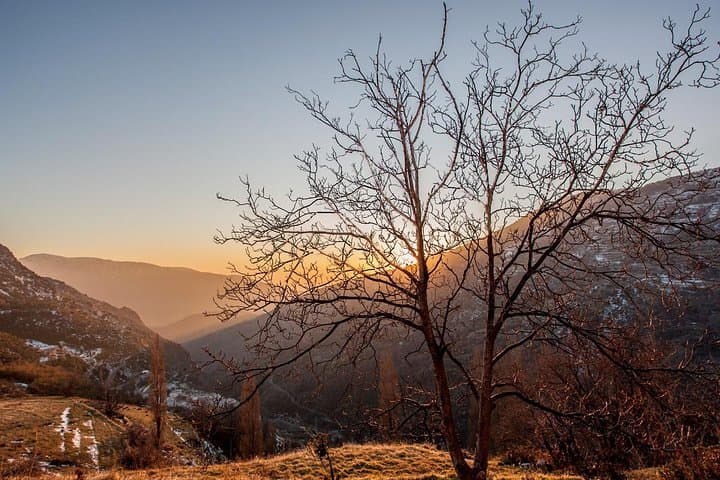
You step out of Granada’s morning bustle into a van that hums south toward the Sierra Nevada’s lower slopes, and the air changes—cooler, drier, threaded with rosemary and thyme. By mid-morning the road winds above a deep gorge; the Poqueira river dares you to move closer to the rim. Below, three white villages cling to terraces: Capileira, Bubión and Pampaneira. The group disperses along narrow lanes under slate roofs and covered tinaos as the guide points out Moorish-era stonework and traditional jarapa weaving shops.
You step out of Granada’s morning bustle into a van that hums south toward the Sierra Nevada’s lower slopes, and the air changes—cooler, drier, threaded with rosemary and thyme. By mid-morning the road winds above a deep gorge; the Poqueira river dares you to move closer to the rim. Below, three white villages cling to terraces: Capileira, Bubión and Pampaneira. The group disperses along narrow lanes under slate roofs and covered tinaos as the guide points out Moorish-era stonework and traditional jarapa weaving shops.
Geology here is honest: schist and slate cut by glacial and fluvial action, producing steep gorges and broad high-altitude plains that feed down to the Mediterranean. Culturally, the Alpujarra preserves a layered history—Berber farming systems, Reconquista-era repopulation and modern artisan crafts that keep old techniques alive. Local springs such as Fuente Agria add an iron tang and a footnote to the landscape’s chemistry.
Practically, expect walking on uneven cobbles, short steep streets and panoramic pullouts. The small-group format grants access to narrow lanes and a tiny detour not available to larger coaches. Bring a packed lunch or plan to buy local goat cheese and tapas in Pampaneira; lunch is not included. Wear grippy shoes and layered clothing—the mountains can be cool even in summer, and mornings are the clearest time for views of Mulhacén. Photography windows are frequent: keep a lightweight jacket and water within reach. The trip is low-impact but leave no trace—support village shops and respect spring sources. This is a cultural daywalk: scenic, tactile, and richly human.